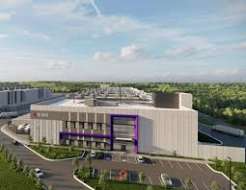
Commercial real estate is entering a period of significant structural change as investors reconsider the value of traditional office buildings and direct more capital toward data centers, digital infrastructure, and technology focused logistics facilities. Growing demand for artificial intelligence, cloud computing, online services, and digital storage is changing the priorities of property developers and institutional investors worldwide. What was once a market dominated by office towers, shopping centers, and conventional industrial properties is increasingly being influenced by electricity capacity, fiber connectivity, cooling systems, and access to strategic technology networks. As of November 1, 2026, this shift reflects a broader reassessment of which commercial properties are best positioned to generate sustainable income in an increasingly technology dependent economy.
Why Commercial Property Investors Are Rethinking Traditional Office Space
For many years, office buildings represented one of the most recognizable investment categories in commercial real estate. Major business districts attracted financial institutions, technology companies, professional service providers, and multinational corporations seeking centrally located workplaces. Long term leases and established corporate tenants often made office properties attractive to institutional investors.
However, workplace patterns have changed considerably. Remote and hybrid working arrangements have reduced the need for some companies to maintain large office footprints. Businesses are reassessing how much space employees actually require, while tenants increasingly prioritize flexible layouts, modern facilities, convenient transportation, and energy efficient buildings.
This does not mean office real estate has lost its value. High quality buildings in desirable locations can continue to attract strong tenants, particularly when they offer modern amenities and adaptable working environments. The challenge is that older properties with outdated infrastructure may require substantial investment before they can compete effectively.
At the same time, technology companies and institutional investors are searching for properties capable of supporting growing digital infrastructure requirements. This has encouraged developers to reconsider industrial land, vacant commercial buildings, and strategically located sites that could accommodate data center operations.
Data Centers Are Becoming a Major Commercial Real Estate Investment Category
Data centers are specialized facilities that house servers, networking equipment, storage systems, and other computing infrastructure. They provide the physical foundation for services that millions of people use every day, including cloud storage, digital payments, video streaming, artificial intelligence applications, and business software.
Unlike conventional office properties, data centers require highly specialized infrastructure. Their value depends on more than location and building size. Reliable electricity, advanced cooling, backup power, secure access, and high capacity telecommunications connections are essential.
The growing demand for artificial intelligence has made these facilities particularly important. Training and operating advanced AI models can require substantial computing resources, creating demand for specialized facilities with powerful electrical systems and sophisticated cooling technology.
Cloud computing is another major source of demand. Companies increasingly depend on remote computing infrastructure rather than maintaining all their technology systems internally. This creates opportunities for data center operators that can provide reliable capacity to businesses across different industries.
Artificial Intelligence Is Increasing Demand for Computing Capacity
Artificial intelligence has become a significant driver of infrastructure investment. AI applications require specialized processors, high speed networking, and large amounts of electricity. As businesses introduce automated customer services, predictive analytics, generative AI tools, and advanced research systems, demand for computing capacity continues to influence data center development decisions.
For commercial property investors, this creates a different way to evaluate real estate opportunities. A property with access to substantial electrical capacity and reliable fiber connections may become more valuable to a data center developer than a conventional office building with a larger floor area but limited infrastructure.
However, not every property can be converted into a data center. Electrical infrastructure, planning permission, cooling requirements, environmental restrictions, and construction costs can make development difficult. Investors must evaluate these conditions carefully before committing capital.
Power Availability Is Becoming One of the Most Valuable Property Features
One of the most important changes in digital infrastructure real estate is the growing importance of electricity. Traditional commercial property analysis often focuses on location, rental income, occupancy, and nearby transportation. Data center investment requires an additional level of technical assessment.
A facility may occupy an attractive site, but without sufficient electricity supply it cannot support the computing equipment required by major technology customers. Securing access to the power grid, obtaining approvals, and arranging reliable backup systems can therefore influence whether a proposed development is financially viable.
In some markets, electricity availability has become a major constraint on new data center construction. Grid connection delays and limited transmission capacity can affect development schedules, while growing competition for electricity creates additional pressure on infrastructure planning.
Cooling is another critical consideration. Servers generate substantial heat during operation, and facilities must maintain suitable temperatures to protect equipment and ensure reliable performance. Developers are exploring advanced liquid cooling systems, more efficient ventilation, and improved building designs to manage these requirements.
Technology Logistics Hubs Are Expanding Beyond Traditional Warehouses
Data centers are not the only technology related properties attracting attention. Modern logistics facilities are also becoming more important as businesses expand digital commerce, automated distribution, and technology supply chains.
Traditional warehouses were primarily designed to store and distribute physical products. Newer facilities increasingly incorporate robotics, automated inventory systems, advanced tracking technology, and specialized equipment designed to improve operational efficiency.
Electronics manufacturers, cloud infrastructure providers, telecommunications companies, and technology distributors require reliable facilities for storing and moving sensitive equipment. This creates demand for industrial properties with secure access, dependable transportation links, specialized power systems, and modern connectivity.
These technology focused logistics hubs can serve as an important connection between digital infrastructure and the physical economy. While data centers process and store information, logistics facilities help move the hardware, components, and equipment needed to maintain expanding technology networks.
Global Investment Is Moving Toward Digital Infrastructure
The growing interest in data centers is attracting different types of investors, including private equity firms, pension funds, infrastructure investment groups, real estate investment trusts, and major institutional property owners. These organizations are increasingly viewing digital infrastructure as a long term investment opportunity rather than a specialized technology business.
Research published by JLL in January 2026 projected that global data center capacity could nearly double between 2025 and 2030, reaching approximately 200 gigawatts. The report also estimated that the sector could require up to $3 trillion in total investment, including property development and the technology equipment needed to operate these facilities.
These projections illustrate the scale of the opportunity. Investors are not simply purchasing buildings. They are financing an infrastructure network that supports artificial intelligence, financial services, telecommunications, enterprise software, and digital commerce.
According to JLL’s 2026 Global Data Center Market Outlook, the industry could add nearly 100 gigawatts of capacity between 2026 and 2030. This expected expansion is encouraging developers to secure suitable land, negotiate power agreements, and establish partnerships with technology operators well before construction begins.
Major Markets Face Growing Competition for Data Center Space
Established technology markets continue to attract substantial development activity. Northern Virginia, London, Frankfurt, Singapore, Tokyo, and Dallas are among the locations that have developed important data center ecosystems. Their existing telecommunications networks, business communities, and infrastructure make them attractive to operators seeking reliable access to customers.
However, competition for available space is becoming increasingly intense. In some established markets, demand has grown faster than developers can deliver new facilities. This creates opportunities for investors with access to suitable land, reliable electricity, and the financial resources needed to complete complex construction projects.
CBRE reported that global data center vacancy declined to 6.7 percent in the first quarter of 2026 across the 16 largest markets covered by its research. The figures indicate that available capacity remains limited despite continued construction activity.
As a result, developers are exploring additional locations beyond traditional technology centers. Markets with available electricity, supportive planning policies, suitable land, and strong fiber connectivity may attract investment that previously concentrated in established metropolitan areas.
Emerging Markets Are Attracting Greater Attention
Developing economies are becoming increasingly relevant to global digital infrastructure strategies. Countries such as India, Indonesia, Malaysia, Vietnam, Brazil, and Saudi Arabia are investing in digital services, telecommunications networks, and technology infrastructure.
Growing internet adoption, expanding online businesses, digital banking, and government technology initiatives are creating additional demand for local computing capacity. Companies may also prefer regional data centers because they can improve service responsiveness and support local data storage requirements.
For example, Southeast Asia offers opportunities through expanding digital economies and demand for cloud services. Malaysia’s Johor region has attracted interest because of its proximity to Singapore and its potential to support additional data center development.
India also represents a significant opportunity because of its large digital consumer base, growing technology industry, and increasing enterprise adoption of cloud computing. However, development still depends on electricity availability, regulatory approvals, infrastructure quality, and access to suitable construction resources.
The Middle East is pursuing similar opportunities. Governments and private investors are supporting artificial intelligence development, cloud computing, and digital transformation projects. These initiatives could encourage additional demand for data center properties and specialized industrial facilities.
Environmental Concerns Could Influence Future Property Values
The rapid expansion of data centers introduces environmental challenges that investors and developers cannot ignore. These facilities consume substantial amounts of electricity, while cooling systems require careful management of heat and, in some cases, water resources.
As demand increases, communities may question whether new facilities place excessive pressure on local electricity networks or water supplies. Planning authorities may also introduce additional requirements involving energy efficiency, environmental reporting, and infrastructure development.
Developers are responding through several approaches, including renewable electricity agreements, advanced cooling technologies, battery storage, and more efficient server equipment. Some operators are also investigating opportunities to reuse waste heat for nearby buildings and industrial operations.
These decisions can affect the long term financial performance of a property. Facilities with efficient energy systems and dependable electricity arrangements may become more attractive to technology tenants seeking predictable operating costs.
Investors should therefore evaluate environmental performance alongside rental income, construction expenses, and expected occupancy. A building that appears financially attractive today may face higher operating costs or regulatory challenges if its infrastructure cannot meet future requirements.
Why Converting Empty Office Buildings Into Data Centers Is Not Simple
The growing availability of underused office properties has encouraged discussions about converting traditional commercial buildings into data centers. Although the idea appears attractive, the technical requirements make most conversions difficult.
Data centers need substantial electrical capacity, specialized cooling equipment, reinforced infrastructure, secure server areas, and carefully designed telecommunications connections. Conventional office buildings are generally not constructed to support these requirements.
Some properties may offer useful opportunities, particularly industrial buildings or sites located near strong electrical and fiber networks. However, developers must conduct detailed engineering assessments before determining whether conversion is economically practical.
In many cases, constructing a purpose built facility may provide better long term results than attempting to redesign an unsuitable building. This means that the commercial real estate shift is not simply a matter of replacing office tenants with technology companies. It requires a different approach to property selection, construction, and financing.
What Investors Should Evaluate Before Entering the Data Center Market
Although data centers offer significant growth potential, the sector also involves substantial financial and operational risks. High construction costs, electricity shortages, equipment delays, changing technology requirements, and lengthy approval processes can affect project profitability.
Investors considering this property category should examine several important factors before committing capital:
- Electricity access: Confirm available power capacity, grid connection timelines, and long term supply arrangements.
- Connectivity: Evaluate fiber networks, telecommunications providers, and proximity to important customers.
- Tenant demand: Assess whether established operators or technology companies are interested in leasing the proposed facility.
- Construction feasibility: Review engineering requirements, cooling systems, equipment availability, and expected development expenses.
- Environmental compliance: Examine energy consumption, water requirements, emissions, and local planning regulations.
- Financial structure: Consider financing costs, construction delays, operating expenses, and the length of tenant agreements.
These considerations are particularly important because data center investments often require substantial capital before generating rental income. Securing a suitable tenant and confirming infrastructure availability can reduce some of the uncertainty associated with development.
What This Shift Means for the Future of Commercial Real Estate
The growing demand for digital infrastructure is changing how commercial property markets evaluate land, buildings, and long term investment opportunities. Traditional offices will remain important, but their position within institutional real estate portfolios may continue to evolve as businesses reconsider workplace requirements and technology companies seek additional infrastructure.
Data centers are becoming an increasingly important property category because they support services that modern businesses and consumers rely on every day. Technology logistics facilities are also gaining relevance as the physical equipment behind artificial intelligence, cloud computing, and digital commerce requires specialized storage and distribution networks.
We believe the most important development is the closer relationship between real estate, energy, and technology. Property investors must now consider factors that were once associated primarily with infrastructure companies. Electricity supply, network connectivity, cooling efficiency, and technical adaptability can influence the commercial value of a site as much as its traditional location advantages.
However, the shift should not be interpreted as the disappearance of conventional commercial property. Well located offices, retail developments, residential properties, and modern industrial buildings will continue to serve important economic purposes. The more likely outcome is a broader and more diversified property market in which digital infrastructure receives a larger share of investor attention.
Conclusion: Digital Infrastructure Is Redefining Property Investment Priorities
The growing demand for artificial intelligence, cloud computing, digital storage, and technology logistics is creating new opportunities across the global commercial real estate industry. Investors are increasingly examining properties based on their ability to support essential digital infrastructure rather than relying exclusively on traditional office and retail investment models.
For developers, access to electricity, reliable connectivity, suitable land, and efficient cooling systems will remain central to future project decisions. For institutional investors, data centers offer exposure to a growing infrastructure market, although high capital requirements and operational risks demand careful evaluation.
The transition will not happen overnight, and traditional commercial property will continue to play an important role. Nevertheless, the direction of investment is becoming increasingly clear. Buildings are no longer valued only for the people who work inside them. Their ability to support the technology that connects businesses, stores information, and powers modern economies is becoming an important measure of their future commercial value.
As the global property industry moves through this period of adjustment, digital infrastructure is positioned to become one of the defining investment categories of the coming decade.