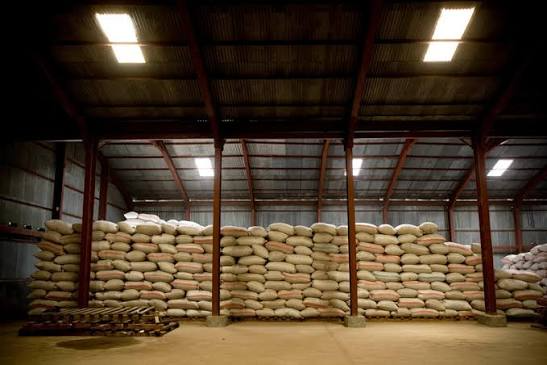
The global grain trade is entering a more uncertain period as weather disruptions, changing production forecasts and transportation risks reshape the routes through which wheat, maize, rice and other cereals reach international markets. The Food and Agriculture Organization of the United Nations has not published a separate emergency report on September 16, 2026 matching the exact description of the supplied announcement, but its latest September cereal assessment shows why climate resilience and supply route diversification have become urgent priorities for governments, traders and food importing countries.
Global Grain Markets Face a More Complicated Supply Picture
FAO’s September 4 cereal update reduced its forecast for global cereal production in 2026 to about 2.98 billion tonnes. That represents a decline of about 2 percent from the previous year and marks the largest annual reduction since 2018. At the same time, global cereal trade for the 2026 to 2027 marketing season is forecast at about 509.3 million tonnes.
The numbers do not describe a global grain shortage by themselves. FAO continues to expect substantial cereal stocks and relatively large supplies. The concern is that production, transportation and trade are becoming more sensitive to disruptions occurring at different points in the system. A strong harvest in one exporting country cannot always compensate quickly when another supplier faces extreme weather or when an important shipping route becomes difficult to use.
For people who buy flour, rice or maize products, the complexity is easy to miss. A bag of grain on a shop shelf may represent months of planting, harvesting, storage, inland transportation, port handling and ocean shipping. A disruption at any stage can eventually affect prices and availability.
Climate Risk Is Moving From Farms to Trade Routes
Climate change affects international grain markets first through agricultural production, but its consequences can travel far beyond the farm. Drought can reduce harvests, flooding can damage fields and transport infrastructure, and extreme heat can affect crop yields. When production changes significantly in a major exporting region, international buyers may turn to alternative suppliers.
That adjustment can place additional pressure on ports, rail networks, highways and shipping routes. The result is a supply chain problem that extends beyond the original weather event.
FAO’s 2026 market assessments have repeatedly highlighted weather as a significant source of uncertainty. Its Food Outlook reported that cereal production was expected to ease from record levels while remaining historically high, but warned that weather developments, including the emergence of El Niño conditions, could create important risks for agricultural production.
El Niño Adds Another Layer of Uncertainty
FAO monitoring has also identified an ongoing El Niño event as a factor that could increase agricultural production risks. El Niño can alter rainfall and temperature patterns across different regions, although the effects vary by location and crop.
For grain traders, the challenge is not simply predicting whether global production will rise or fall. They need to understand where production will occur, when crops will be available, how much can be exported and whether transportation systems can move those supplies to importing countries at the required time.
The Black Sea Remains a Critical Variable
One of the clearest examples of route uncertainty is the Black Sea region. Russia and Ukraine remain major participants in international grain markets, particularly for wheat and other cereals. FAO’s September assessment said exports from both countries were expected to remain substantial, but changing shipping conditions, logistics risks and capacity constraints on alternative routes have increased uncertainty about the pace and distribution of supplies.
This uncertainty encourages importers to diversify their purchases. A buyer that traditionally depends heavily on one geographic source may look toward North America, South America, Western Europe or other exporting regions when transportation conditions become less predictable.
Such diversification can improve resilience, but it can also increase costs. Alternative routes may be longer, ports may have limited capacity and exporters may already have commitments to other buyers.
Why Supply Chain Diversification Matters
FAO’s broader work on trade and food security provides an important context for the current grain market. The organization reported in its 2026 assessment of agricultural commodity markets that global food and agricultural trade increased fivefold between 2000 and 2024, while low and middle income countries became more integrated into global markets.
That integration has delivered major benefits by allowing countries to access food from a wider range of producers. It also means that international markets are more exposed to disruptions originating far from the consumer.
FAO has identified extreme weather, conflicts, pandemics, economic pressures and financial shocks as sources of stress for global food markets. Its analysis also points toward resilience as a central part of future food policy.
We should therefore think of grain security as more than maintaining large inventories. It also involves maintaining alternative suppliers, reliable infrastructure, functioning trade relationships and the financial capacity to respond when conditions change.
Ports and Transport Networks Are Becoming Part of Food Security
A modern grain supply chain depends on infrastructure that consumers rarely see. Grain must move from farms to storage facilities and then toward processing centers or export terminals. From there, shipments may travel across oceans before moving again by rail, road or inland waterways.
When extreme weather damages a road or railway, the effect can spread through the entire chain. Flooding near a major port can delay shipments even when grain supplies themselves remain available. Drought can also affect river transportation in regions where waterways carry large volumes of agricultural commodities.
This makes infrastructure resilience increasingly relevant to food policy. Governments and private operators may need to invest in stronger storage facilities, improved port capacity, better forecasting systems and alternative transportation routes.
What Climate Resilience Could Look Like for Grain Trade
Climate resilience does not have one universal solution. Different countries face different combinations of agricultural, geographic and economic risks.
For major exporting countries, resilience can include climate adapted farming practices, improved irrigation where appropriate, better crop varieties, stronger storage systems and more accurate weather forecasting. For importing countries, diversification of suppliers and strategic food reserves can provide additional protection.
Trade policy also matters. Excessive restrictions during periods of stress can amplify volatility by limiting the amount of grain available to international buyers. Predictable trade relationships can help producers and importers plan more effectively.
Digital technology is becoming another part of the resilience conversation. Satellite monitoring, weather forecasting, crop modelling and supply chain data can give governments and businesses earlier indications of production or transportation problems.
Food Importing Countries Face the Greatest Pressure
The consequences of supply disruption are not distributed evenly. Countries that depend heavily on imported cereals can be particularly vulnerable when global prices rise or shipping becomes more expensive.
FAO’s July 2026 Crop Prospects and Food Situation report estimated that 41 countries and territories required external assistance for food. Thirty one were in Africa, eight were in Asia, one was in Latin America and the Caribbean, and one was in Europe.
For households already spending a large share of their income on food, even moderate price increases can be painful. Higher grain costs can also move through the wider food economy because cereals are used not only for direct human consumption but also as animal feed and industrial inputs.
This is why international grain resilience has a human dimension. Behind the statistics are families deciding whether they can afford bread, rice, flour or other basic foods. A disruption in a distant agricultural region can eventually reach a household budget thousands of miles away.
Global Cereal Stocks Provide Some Protection
The current situation is not one of unrestricted scarcity. FAO’s September forecast puts global cereal utilization for the 2026 to 2027 season at about 2.965 billion tonnes. World cereal stocks remain substantial, although the relationship between inventories and consumption varies by crop and region.
Stocks can provide an important buffer when harvests or shipping schedules are disrupted. However, reserves are not evenly distributed, and moving grain from one country to another still depends on functioning transport systems and the willingness of exporters to sell.
This distinction matters when interpreting global production figures. A large global harvest does not automatically guarantee affordable food in every market. Location, infrastructure, purchasing power and trade policy all influence how effectively supplies reach consumers.
The Grain Trade Is Likely to Become More Flexible
FAO’s September assessment already shows signs of changing trade patterns. The organization expects global cereal trade to remain below the record level of the previous season, while maize trade is expected to grow and wheat trade faces greater pressure. The United States is expected to strengthen its position as the leading maize exporter, while Argentina is also forecast to increase exports.
European import requirements are expected to rise following downward revisions to production forecasts. Meanwhile, uncertainty around Black Sea logistics is encouraging buyers to consider alternative sources.
These changes demonstrate why the future of grain trade will depend not only on how much farmers produce but also on how quickly the international system can adjust when conditions change.
A More Resilient Grain System Will Require Cooperation
The strongest lesson from the latest FAO assessments is that food security cannot be separated from climate resilience, transportation and international trade. A farmer can produce a successful harvest, yet that grain still needs storage, financing, transportation and a functioning market before it reaches a consumer.
FAO’s markets and trade resources provide continuing assessments of cereal production, commodity markets and food security conditions. Its September cereal update also demonstrates how quickly forecasts can change as new information becomes available.
For governments, the practical priority is building systems that can absorb shocks without cutting vulnerable households off from essential food. For traders, diversification and better market intelligence can reduce dependence on a single route or supplier. For farmers, climate adaptation can help protect production against increasingly variable weather.
We should not interpret the latest grain outlook as proof that the world is running out of cereals. The more immediate concern is resilience. Global food markets can have substantial supplies while still experiencing severe local pressure when production, transport and purchasing power come under stress at the same time.
That is the challenge now facing international grain trade. Climate risk is no longer confined to fields and harvest forecasts. It is becoming a consideration for ports, shipping routes, storage networks, trade policy and household food security. Building a more resilient system will require those pieces to work together, because the journey from a grain field to a family’s table is only as reliable as its most vulnerable link.