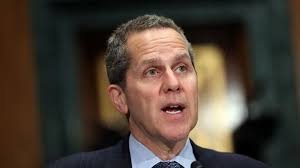
At an address to students and faculty at American University on June 9, 2026 Federal Reserve Governor Michael S. Barr delivered a stark admonition: recent moves to ease banking regulations may offer brief economic uplift while sowing conditions for future instability. Barr framed the debate as one between immediate market sugar highs and the structural safeguards that protect households, small businesses and the broader economy. His remarks put regulatory rollbacks under fresh scrutiny and prompted markets, lawmakers and community groups to reassess the costs and benefits of lighter oversight.
The core argument and why it matters
Barr argued that rules matter because they shape incentives. Prudential requirements for capital liquidity and resolution planning create buffers that absorb shocks and limit contagion when stress occurs. Rolling back those protections may reduce compliance costs and free up credit in the short term, but Barr warned that it also narrows the margin for error when unforeseen losses occur. For ordinary people the consequences can be sharp: bank failures that force deposit disruptions, tighter credit for homeowners and small firms and fiscal strains if crises lead to taxpayer funded backstops.
He described the current environment as one where some policymakers and industry groups promote deregulation as a means to boost lending and market efficiency. Barr replied with data and historical examples showing how systemic risks accumulate quietly until a trigger exposes them. The speech drew explicit references to episodes where initial relief from regulation preceded larger correction events requiring costly interventions.
Immediate market and political reactions
Markets reacted with measured volatility as investors parsed the implications for bank profitability and credit growth. Regional bank stocks, which have benefited from lighter regulatory burdens in recent months, showed some intraday weakness on the news. Lawmakers and industry lobbyists countered that flexibility in rules can support economic recovery and entrepreneurship, arguing for targeted rather than blanket requirements.
On Capitol Hill responses split largely along partisan and sectoral lines. Some members of Congress applauded the reminder that stability underpins sustained growth. Others emphasized the need to balance prudential safety with credit availability for community banks that serve small enterprises and homeowners in underserved areas.
Technical concerns highlighted by Barr
Barr singled out several technical areas of concern. He cited reductions in capital buffers and looser leverage controls as features that lower banks ability to absorb losses. He questioned proposals that would weaken stress testing or narrow the scope of resolution planning for mid sized institutions. Liquidity coverage standards and the treatment of short term wholesale funding were also under his microscope because they have historically amplified runs in moments of uncertainty.
Importantly he emphasized the interaction effects across rules. A single change can be manageable; multiple small changes can aggregate into significant vulnerability. That systems view underpinned his call for careful impact assessment that looks beyond immediate compliance cost savings to second and third order consequences for systemic resilience.
Human stories behind regulatory choices
Barr did not speak only in abstract terms. He invoked the human toll of past financial disruptions: homeowners facing foreclosure, small business owners denied working capital at critical moments and bank employees whose livelihoods were upended by sudden closures. Those anecdotes grounded a policy debate in everyday realities and underscored why prudential rules are not merely technical obstacles but social insurance for communities that depend on reliable banking services.
Community advocates who work with low income households echoed those concerns. They argued that weaker oversight can produce uneven outcomes where vulnerable populations face the brunt of credit tightening and service interruptions. For many nonprofit counselors the memory of previous crises remains vivid and fuels caution about rolling back protections that took years to build.
Arguments for deregulation and the trade offs
Proponents of easing regulatory burdens argue that unnecessary complexity and rigid rules can deter lending innovation, raise costs for smaller banks and constrain credit to businesses and consumers. Lower compliance costs can improve bank returns, potentially widening credit access and economic dynamism. Those benefits tend to appeal to community banks and parts of the financial sector that see tighter standards as onerous and ill suited for institutions with different risk profiles than global systemically important banks.
But Barr countered that the distribution of benefits and risks matters. He urged a framework where exemptions or calibrated relief come with compensating safeguards such as enhanced supervisory intensity, tailored resolution playbooks and robust contingency planning so that short term efficiency gains do not morph into systemic fragility.
Policy options and potential middle ground
One path Barr and other commentators suggested is smarter tailoring rather than wholesale rollbacks. Tailoring means designing rules that scale with size complexity and interconnectedness of institutions so that truly systemic firms face stringent requirements while smaller community banks encounter proportional rules that reflect their lower systemic footprint. That approach requires stronger supervisory resources to monitor nuances and prevent regulatory arbitrage where activities migrate to less supervised pockets of the system.
Other policy tools include stress testing that incorporates near term market conditions and scenario analyses targeting specific vulnerabilities, mandatory resolution plans with realistic recovery assumptions and clearer guardrails for capital distributions such as dividends and share buybacks. These measures aim to preserve resilience while allowing legitimate innovation and growth.
What supervisors and markets will watch next
-
– Implementation of any legislative changes that alter capital, liquidity or stress testing requirements.
– Adjustments to supervisory guidance and the scope of examinations for regional and mid sized banks.
– Market indicators such as bank funding costs, deposit flows and credit spreads that reveal shifts in perceived risk.
International context and systemic risk considerations
Barr framed the debate within a global context where cross border capital flows and interconnected markets mean that vulnerabilities in one jurisdiction can propagate quickly. International coordination through forums such as the Financial Stability Board and the Basel Committee remains essential to avoid fragmented rules that encourage regulatory shopping and global instability. Barr called for continued dialogue among central banks and prudential regulators to harmonise standards where systemic risk is concerned.
He also highlighted lessons from countries that experienced banking stress after loosening rules too quickly. Those case studies showed how political and market pressures to prioritise growth can inadvertently build systemic fragility, requiring costly corrective measures later.
Voices from banking and consumer groups
Industry associations urged proportionate treatment for smaller institutions and stressed the need for regulatory certainty that allows long term planning. Consumer and community groups reiterated calls for protections that preserve depositor safety and access to fair credit. The debate reflects deeper tensions about who benefits from deregulation and how to ensure that protections serve broad public interests rather than concentrate risk among taxpayers.
Several think tanks proposed a balanced package combining targeted relief for low risk activities with strengthened supervisory tools for monitoring the migration of risky activities into less regulated channels.
Where to follow updates and further reading
Readers seeking detailed analyses can consult Federal Reserve publications, testimony transcripts and research from financial stability organisations that publish scenario studies and impact assessments. The Federal Reserve Board website archives speeches and technical papers that provide the empirical basis for supervisory perspectives and policy recommendations.
For regulatory updates and commentary the Financial Stability Board and the Basel Committee publish international guidance and reports that are useful for comparing approaches across jurisdictions.
A cautious closing note
Governor Barr s speech served as a timely reminder that prudential rules are insurance for a complex financial system. While regulators and industry should seek efficiency and credit access, the challenge is to avoid trading durable safety for ephemeral gains. If policymakers adopt tailored, well supervised adjustments that preserve core buffers, the system can support both growth and resilience. If not, the short term sugar highs Barr warned about could leave lasting economic scars for households and communities who rely most on a steady and secure banking system.