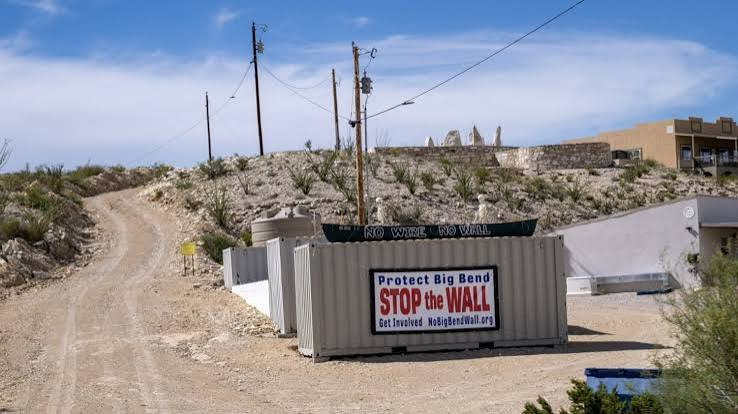
A federal judge in Texas has temporarily halted the Trump administration’s plans to build border barriers and related infrastructure across the Big Bend region, delivering a significant legal setback to a multibillion dollar border security program. The preliminary injunction follows a lawsuit brought by environmental advocates, a historic preservation organization, and a local landowner who argued that the federal government improperly bypassed environmental and other legal protections to accelerate construction.
Judge Orders Construction to Stop Across the Big Bend Sector
U.S. District Judge Kathleen Cardone issued the preliminary injunction on October 2, ordering the federal government to stop border barrier construction and other ground disturbing activities in the Big Bend sector while the lawsuit proceeds. The order covers Big Bend National Park and surrounding areas along the Rio Grande.
Cardone concluded that the plaintiffs were likely to succeed on at least one of their claims and that they could suffer serious and irreparable harm if construction continued while the legal dispute was being decided. She also found that the balance of interests and the public interest supported temporarily stopping the work.
The ruling does not permanently cancel the border project. Instead, it preserves the existing conditions while the court considers the underlying legal questions. The government could continue its effort to defend the project in court, seek changes to the injunction, or pursue an appeal.
Reuters reported that the ruling prevents the administration from proceeding with planned border infrastructure through Big Bend National Park while the environmental lawsuit is considered. The Reuters coverage of the ruling provides additional reporting on the legal dispute and the government’s plans for the region.
A Border Project Unlike the Typical 30 Foot Wall
The Big Bend plans have attracted attention partly because the proposed infrastructure differs from the tall steel barriers constructed in many other portions of the southern border. Customs and Border Protection has described plans involving vehicle barriers, roads, surveillance equipment, and other security infrastructure rather than simply extending a 30 foot wall through the national park.
The broader border security effort is part of a much larger federal spending program. Reporting from the Texas Tribune and other outlets has placed the value of contracts connected to planned Big Bend infrastructure at more than 7 billion dollars, while the wider administration border program has been estimated at tens of billions of dollars.
The size of the investment has intensified the debate over whether the proposed infrastructure is appropriate for a region where the geography is unusually rugged. Big Bend contains steep mountains, desert terrain, canyons, and the winding Rio Grande. Some sections are difficult to reach even with specialized vehicles, and the landscape has historically limited movement through large parts of the region.
Why Environmental Groups Went to Court
The lawsuit was brought by the Center for Biological Diversity, Friends of the Ruidosa Church, and a local landowner and river guide. The plaintiffs challenged the federal government’s decision to waive several laws and regulations in order to accelerate construction.
Among the laws and protections at issue are environmental and public land requirements that normally govern construction projects in sensitive areas. The plaintiffs argued that bypassing those protections could cause permanent damage to wildlife habitat, cultural resources, recreational areas, and the landscape surrounding the Rio Grande.
The Center for Biological Diversity said the court’s decision prevents additional construction while the legal challenge continues. The organization has argued that federal officials should follow applicable environmental and historic preservation requirements before undertaking major construction in the region.
Environmental concerns are especially significant in Big Bend because the area contains protected desert ecosystems and habitats for numerous plant and animal species. The national park also has cultural and archaeological resources that can be difficult or impossible to restore once disturbed.
Local Landowners Say the Dispute Is About More Than a Wall
For property owners along the Rio Grande, the proposed infrastructure raises questions about access, land use, property rights, and the relationship between private land and federal border policy.
One of the plaintiffs, Danny William Miller, is a river guide and landowner in the Redford area. During testimony, Miller described concerns that construction could interfere with his access to the river and fundamentally change the landscape in which he operates his business.
Other local residents have expressed concern about what a physical barrier could mean for ranches, tourism, recreation, and communities that have developed around the river. The Rio Grande is not simply a line on a map in this part of Texas. It is part of the landscape, economy, recreation industry, and daily life of communities on both sides of the border.
For a river guide, the difference between a natural canyon and a landscape filled with roads, barriers, surveillance equipment, and construction infrastructure could directly affect the experience offered to visitors. For ranchers, access routes and property boundaries can determine whether ordinary work remains practical.
Supporters of the Project Cite Border Security
The federal government has argued that physical infrastructure is necessary to strengthen operational control of the southern border. Officials have pointed to the possibility that migration routes could shift into remote regions if barriers are concentrated elsewhere.
Customs and Border Protection has also argued that border infrastructure can provide agents with better access, surveillance capabilities, and the ability to respond to activity in areas that are difficult to patrol.
The government position reflects a broader border security strategy in which physical barriers are combined with roads, sensors, cameras, lighting, personnel, and other technology. Officials contend that remote geography should not automatically exclude an area from infrastructure designed to control unauthorized crossings.
That argument is now being tested against the legal and environmental claims raised by the plaintiffs. The court’s preliminary ruling does not determine whether the government’s broader border security objectives are lawful or necessary. Instead, it addresses whether construction can proceed while the legal challenges are unresolved.
Big Bend Has Become a Major Point of Disagreement
The controversy has produced an unusual coalition of opponents. Environmental organizations have objected to the potential impact on protected land and wildlife, while some local property owners and businesses have raised concerns about private land and tourism.
Political opposition has also crossed traditional party lines. Some Texas officials and residents have questioned whether extensive physical infrastructure is appropriate for Big Bend because of the region’s distinctive terrain and relatively low level of border activity compared with other parts of the southern border.
The Texas Tribune reported that the Big Bend sector represents roughly one quarter of the United States Mexico border but has historically accounted for only a small share of migrant apprehensions. Supporters of construction have responded that current activity levels do not necessarily predict future conditions and that border enforcement planning must account for possible changes in migration routes.
Construction Had Already Been Paused Before the Court Ruling
The court’s decision follows a period of uncertainty over whether construction would resume. Customs and Border Protection Commissioner Rodney Scott announced a pause in construction in August amid growing criticism of the project and concerns about its impact on Big Bend National Park.
The pause was scheduled to expire at the end of September. That created additional urgency for opponents seeking court protection because construction could otherwise have resumed while the broader lawsuit remained unresolved.
A separate federal judge had also issued a ruling that affected the legal situation around construction in the region. The conflicting developments demonstrate how complicated the litigation has become, with multiple lawsuits filed by different groups challenging different aspects of the government’s plans.
Several Lawsuits Are Challenging Different Parts of the Plan
The October 2 injunction is one part of a wider legal battle. Multiple lawsuits have been filed concerning proposed border infrastructure in Big Bend, with plaintiffs raising different constitutional, environmental, property, cultural, and administrative law arguments.
One case involves local landowners and a conservation organization. Another involves a business and members of the Lipan Apache community. A separate lawsuit was brought on behalf of a local economic development organization concerned about construction and flooding risks around Presidio.
The existence of multiple cases means the October 2 ruling may not be the final word on the government’s plans. Different courts could reach different conclusions about different sections of the proposed infrastructure, while appeals could further complicate the timeline.
What the Injunction Means for Big Bend National Park
For the moment, the most immediate consequence is a halt to construction and ground disturbing activity covered by the injunction. That gives the landscape a temporary reprieve while the court examines the legal claims.
Big Bend National Park is known for its desert mountains, river canyons, wildlife, and exceptionally dark night skies. Construction in such a remote environment can have effects that extend beyond the immediate footprint of a road or barrier because access routes, heavy machinery, vegetation removal, drainage changes, and increased human activity can alter surrounding areas.
The National Park Service information for Big Bend National Park describes the park’s distinctive desert and river environments and provides visitors with official information about its natural and cultural resources.
The Legal Fight Could Shape Future Border Construction
The significance of the ruling extends beyond Big Bend itself. If courts ultimately determine that the administration improperly used legal waivers to accelerate construction, the decision could affect how federal agencies approach similar projects on protected public lands.
If the government prevails in the underlying litigation, officials could regain greater freedom to use expedited procedures for border infrastructure. If the plaintiffs prevail, federal agencies could face additional requirements before construction begins in environmentally sensitive areas.
The legal questions are therefore broader than whether one section of border infrastructure should be built. They involve the limits of executive authority, the role of Congress, environmental protections, federal land management, property rights, and the government’s authority to respond to border security concerns.
What Happens Next
The preliminary injunction remains in effect while the lawsuit moves forward unless a higher court changes the order or Judge Cardone modifies it. The government is expected to continue defending its authority to construct border infrastructure, while the plaintiffs will continue challenging the waivers and the underlying plans.
The court will eventually have to consider the merits of the claims in greater detail. That process could involve additional filings, evidence, legal arguments, and potentially an appeal. The outcome could determine whether construction resumes, changes in scope, or remains blocked.
For residents of Big Bend, the immediate issue is more tangible than the legal terminology. It concerns what the landscape will look like several years from now, how businesses can operate, whether landowners retain access to their property, and how federal border policy should coexist with one of Texas’s most distinctive natural regions.
The October 2 ruling does not settle that debate. It does, however, ensure that the debate will continue before major construction resumes. For now, bulldozers are stopped, the disputed waivers are under judicial scrutiny, and the future of a major border infrastructure plan remains in the hands of the federal courts.