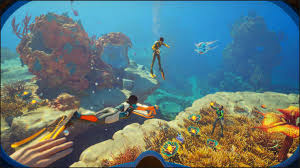
May 18 marked the opening salvo of one of the busiest launch weeks in recent memory as two genre defining franchises returned with sprawling new worlds. Forza Horizon 6 opened early access on PC and console, placing players in a sunlit, hyper detailed Japan designed for high speed exploration and community play. At the same time Subnautica 2 dropped with an ambitious underwater campaign that expands its survival narrative with new biomes and deeper ecological storytelling. Together these releases dominated download charts and streams while prompting lively discussion about technical polish, world building, and how big franchises balance spectacle with player agency.
First impressions from the road and the deep
Forza Horizon 6 greets players with a sensory rush. The start screen gives way to an island nation rendered with obsessive detail traffic hums faintly in coastal towns, rice paddies shimmer in late afternoon light, and volcanic peaks pierce cloud layers. Driving feels both familiar and refreshed; cars have weight and nuance, and the physics model rewards precision in corners while permitting cinematic drifts for players who prefer breadth over technical mastery. The event roster blends classic festival staples with new Japan specific modes that ask players to master narrow canyon runs and neon city circuits.
Subnautica 2 returns players to an oceanic world where pressure, temperature, and ecosystem relationships matter. Early hours place you is a fragile submersible above a forest of alien kelp that waves like a living ceiling. The game expands survival mechanics with richer base building, more intricate crafting trees, and emergent predator prey behavior that makes travel both beautiful and precarious. Narrative beats push beyond simple exploration to probe environmental ethics and the consequences of scientific hubris.
Technical performance and platform notes
Both titles showed strong ambition but revealed the familiar trade offs of modern triple A launches. Forza Horizon 6 ran smoothly for many players on high end rigs and current generation consoles, delivering crisp draw distances and stable frame rates in outdoor environments. Some streamers reported occasional server congestion during peak hours in early access and rare texture pop as the engine streams assets at high velocity. Developers have pledged regular backend updates to scale matchmaking and festival servers.
Subnautica 2 presented a different set of technical challenges. The game s procedural ecosystems demand heavy simulation overhead so players on older hardware reported longer load times and occasional physics glitches in crowded fauna zones. The studio published day one patches addressing several memory leaks and added options for fidelity scaling. Both development teams communicated actively with player communities via patch notes and developer diaries that explained performance trade offs and roadmap priorities.
Community reaction and streaming culture impact
Streams and social channels lit up within hours. Forza s open world lent itself to car culture spectacle with creators staging timed races through mountain passes, drift exhibitions under neon, and photo mode contests that emphasized Japan s varied scenery. The game s social tools encouraged spontaneous convoys and cross platform meet ups that made festival servers feel like living spaces rather than isolated lobbies.
Subnautica 2 drove a different kind of virality. Streamers found emotional peaks in unplanned encounters with gigantic leviathans and in tense base defense sequences after storms breached hulls. The game s mystery elements and carefully paced reveals produced serialized viewing moments that kept audiences returning daily.
Design choices that matter
Forza Horizon 6 leaned into accessibility without flattening complexity. The assist system and tuning presets allow newcomers to experience high speed thrills while deeper driving sims can tweak suspension and differential settings to chase lap time gains. The festival structure mixes curated story events with player driven content so both solo explorers and organized crews find reasons to stay engaged.
Subnautica 2 prioritized atmosphere and ecosystem coherence. Resource scarcity and environmental feedback loops force players to think beyond immediate survival to long term stewardship. Blueprints encourage experimentation rather than rote grinding, and the game s narrative delivery favors found documents, holos, and environmental storytelling that reward careful observation.
Monetization, DLC plans and community economy
Both publishers opened the week with transparent post launch roadmaps. Forza Horizon 6 announced a season pass model centered on cosmetic additions, themed car packs, and community challenges, while promising that core gameplay and essential vehicles remain accessible without additional purchase. Subnautica 2 focused on expansions that deepen story and add new biomes, with developer promises that microtransactions will be limited to optional cosmetics if introduced at all.
Players and critics will judge whether DLC strategies respect player time and community cohesion. Early signs suggest both studios are attuned to community sensitivities after previous controversies elsewhere in the industry, but vigilance will matter as monetization systems roll out across seasons.
Economic and industry implications
The dual launches provide a useful barometer for gaming demand this year. Strong sales and engagement figures for both titles will buoy publisher confidence in investing in large scale single player and open world projects. Streaming numbers and concurrent player peaks also influence hardware accessory sales, racing wheel demand, and peripheral markets for underwater themed merchandise and art books. Analysts will watch how well these franchises convert early access buzz into sustained revenue across DLC, merchandise, and cross platform subscriptions.
Smaller studios will also observe the technical strategies used here. Forza s streaming architecture for large open worlds and Subnautica s approach to procedural ecosystems may become references for teams balancing ambition with performance budgets.
Voices from players and creators
On launch day I spoke with a hobbyist tuner who described the tactile joy of dialing steering response and feeling a car settle through a corner at dusk while a friend texted a screenshot of a coral cathedral lit by bioluminescent fish. A streamer who built a community around exploratory gaming said Subnautica 2 created genuine narrative hooks that keep viewers invested. These personal reactions matter because they show how games function as shared experiences where technical choices translate into emotional moments.
What to watch in the coming weeks
Key metrics will be player retention rates daily active users and how effectively each studio addresses performance and matchmaking issues. Watchlists include community created events in Forza, modding and base sharing activity in Subnautica 2, and the pacing of post launch content releases. Technical patches will likely address early bugs quickly, but player sentiment will hinge on perceived developer responsiveness and the quality of content updates.
For further reading on the technical underpinnings of open world streaming and procedural ecosystem design see deep dives and postmortems published by development studios and analysis from gaming industry outlets such as Game Developer that regularly cover best practices and engine scale strategies.
Would you like a technical explainer on Forza Horizon 6 s streaming architecture or a guide to early game survival tips for Subnautica 2?