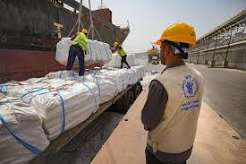
International efforts to protect food supplies are gaining urgency as governments confront a combination of climate shocks, disrupted shipping routes, higher transport costs and volatile commodity markets. A reported milestone agreement involving agricultural ministers and international trade bodies is aimed at establishing emergency food supply routes and reducing the impact of sudden price shocks. The reported initiative comes at a moment when global food markets are already showing signs of strain, although detailed public documentation of a new global accord remains limited. Recent evidence from international food agencies shows why governments are increasingly focused on keeping essential agricultural trade moving when normal routes are disrupted.
Food Supply Chains Face Pressure From Several Directions
For consumers, a disruption in global food trade can appear deceptively simple. A shipment arrives late, a fertilizer delivery becomes more expensive, or a major port handles fewer containers. But the effects can travel through the entire food system. Farmers may pay more for fuel and fertilizer. Importers may face higher insurance and freight costs. Wholesalers may reduce purchases because of uncertainty. Eventually, families can encounter higher prices at local markets and grocery stores.
The Food and Agriculture Organization of the United Nations reported in September that its Food Price Index increased in August 2026, with adverse weather, geopolitical conflict and trade logistics contributing to higher prices for major food commodities. The agency said its index averaged 133.3 points in August, an increase of 1.9 percent from the revised July level and 2.5 percent from a year earlier.
That combination of pressures helps explain the growing interest in emergency trade arrangements. Food security is not only about how much food farmers produce. It also depends on whether grain, fertilizer, fuel and other agricultural inputs can move from one country to another at a reasonable cost.
Why Emergency Food Routes Matter
The reported accord is centered on a practical problem. When a conventional trade route is blocked or severely disrupted, countries need alternatives before shortages become severe. Emergency routes could involve alternative ports, different shipping corridors, additional regional suppliers or coordinated arrangements that allow essential food and agricultural goods to continue moving during periods of disruption.
The need for such planning has become increasingly visible across major trade corridors. The World Food Programme recently warned that disruptions affecting the Strait of Hormuz, Red Sea and Black Sea are interfering with the movement of food, fuel and fertilizer. The agency noted that delays and rising transportation costs can spread consequences far beyond the original location of a disruption.
For a family already spending much of its income on food, even a modest increase can change what appears on the dinner table. A farmer facing higher fertilizer costs faces a different but connected problem. If input costs rise sharply, production decisions can change months before consumers see the full effect.
Climate Risks Are Becoming Part of Trade Planning
Climate related disruptions add another layer of uncertainty. Drought, excessive heat, flooding and other extreme weather events can damage harvests while also affecting roads, railways, ports and storage facilities. A country may have adequate production in one season but still face shortages if transportation infrastructure cannot move food from producing regions to consumers.
FAO’s 2026 analysis of agricultural commodity markets describes global food trade as increasingly exposed to extreme weather, conflicts, economic uncertainty and supply chain disruptions. Its research also examines how shocks can spread through interconnected trade networks and affect countries differently depending on their level of import dependence and the concentration of their suppliers.
This matters because diversification can provide a buffer. If a country relies heavily on a single supplier or a small number of shipping routes, one disruption can create a much larger problem. More varied sources of grain, edible oils, fertilizer and other essential inputs can give governments and businesses additional options when one route becomes unavailable.
Price Stability Is a Central Concern
Keeping food physically available is only part of the challenge. Food must also remain affordable. A supply route can technically remain open while rising fuel, freight, insurance and handling costs push the final price beyond the reach of vulnerable households.
International food markets can transmit these costs quickly. Higher energy prices can raise transportation and fertilizer expenses. Higher fertilizer costs can affect planting decisions. Reduced production can tighten supplies later, potentially adding another layer of price pressure.
FAO has repeatedly highlighted the relationship between trade resilience and food security. Its 2026 agricultural commodity markets work examines policy measures including trade agreements, import promotion, food reserves and mechanisms intended to limit the effects of shocks on food markets.
Trade Cooperation Could Reduce the Impact of Future Shocks
A coordinated emergency system could give governments a clearer process for responding when a major supply route fails. Instead of negotiating every emergency from the beginning, participating countries could have procedures for identifying alternative suppliers, prioritizing essential shipments and maintaining communication between agriculture, trade and transport authorities.
Such cooperation would not remove the underlying risks. A drought would still reduce harvests. A damaged port would still create logistical challenges. A conflict could still affect shipping and insurance costs. The purpose would be to reduce the time between recognizing a disruption and responding to it.
International cooperation is particularly relevant for countries that import a large share of their staple foods or agricultural inputs. For those economies, disruptions thousands of miles away can become domestic inflation problems with surprising speed.
Developing Economies Face Greater Exposure
The consequences are often most severe where households have limited financial room to absorb higher food prices. FAO’s 2026 emergency and resilience assessment says conflict, economic shocks and weather extremes are major drivers of acute food insecurity, while climate shocks are increasingly damaging agricultural production and livelihoods.
For low income households, food inflation can force difficult choices between nutrition, housing, healthcare and other basic needs. For small farmers, the same global shock can arrive through the price of seed, fertilizer, fuel or credit. That makes supply chain resilience a household issue as much as a trade policy issue.
We should therefore view emergency food routes not simply as commercial infrastructure. They can become part of a broader safety system designed to protect farmers, consumers and humanitarian operations when normal markets are under pressure.
What the Reported Accord Could Mean for Food Trade
If the reported agreement develops into a functioning international mechanism, several areas are likely to receive attention.
- Alternative trade routes for essential food commodities during major disruptions.
- Faster coordination between agriculture, trade, transport and humanitarian authorities.
- Better monitoring of food prices and supply risks before shortages become severe.
- Greater diversification of suppliers and transportation corridors.
- Measures to protect the movement of fertilizer and other agricultural inputs.
- Cooperation aimed at limiting unnecessary restrictions on essential food trade during emergencies.
The effectiveness of any such system would depend on implementation. Agreements can establish principles, but real resilience requires functioning ports, roads, rail networks, warehouses, financing systems and reliable information. Governments would also need to coordinate with farmers, traders, shipping companies, humanitarian organizations and food processors.
Food Security Requires More Than Emergency Measures
Emergency corridors can provide valuable breathing room, but they cannot replace long term investment in agricultural resilience. Countries also need stronger storage capacity, reliable irrigation, climate adapted farming practices, diversified imports and better market information.
FAO’s food market analysis shows that international agricultural trade has become far more interconnected over the past two decades. That connectivity creates economic opportunities, but it also means disruptions can travel between countries through trade relationships.
For policymakers, the lesson is straightforward. Resilience does not necessarily mean producing everything domestically. It can also mean having enough reliable alternatives when domestic production or international supply routes are interrupted.
The Next Test Will Be Implementation
The reported September 15 agreement arrives against a backdrop of rising concern about climate disruption, geopolitical instability and vulnerable trade corridors. Yet the value of any global food security arrangement will ultimately be measured by what happens during the next serious supply shock.
If an emergency route can move grain before a shortage becomes critical, if fertilizer can reach farmers before planting decisions are affected, or if early price monitoring allows governments to respond before vulnerable households are pushed into deeper hardship, international coordination can have a direct human impact.
The broader policy challenge is to make those responses routine rather than improvised. Current analysis from FAO’s Markets and Trade program shows why food security increasingly depends on resilient agricultural trade networks as well as domestic production.
The global food system will continue to face disruptions from weather, conflict, logistics failures and economic shocks. The central question is not whether every disruption can be prevented. It is whether countries can cooperate quickly enough to keep essential food and agricultural inputs moving when the usual routes fail. The reported accord points toward that objective, but its lasting significance will depend on the specific commitments, participating countries and mechanisms that ultimately emerge.