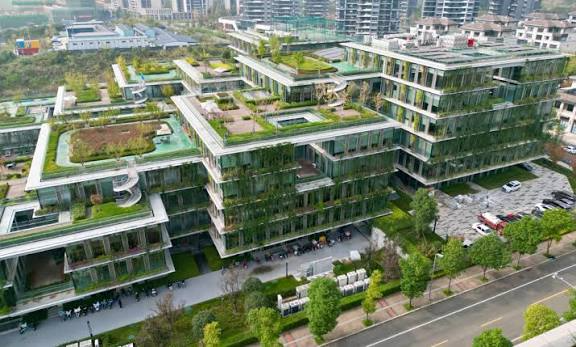
Urban developers and commercial real estate companies across Asia and the Middle East are accelerating green building retrofits, energy efficiency programs and smart infrastructure projects as governments strengthen national commitments to reduce emissions. The shift is changing how offices, shopping centers, hotels, industrial properties and residential districts are designed and operated, with building owners increasingly treating energy performance as both an environmental responsibility and a long term financial concern.
Why Existing Buildings Are Becoming the Main Focus
Much of the attention surrounding sustainable construction has traditionally centered on new buildings. Yet millions of offices, apartments, hotels, warehouses and commercial properties already exist, and replacing them is neither practical nor financially realistic in most cities.
That is why retrofitting has become such an important part of the global green building movement. Owners can improve older properties by upgrading insulation, replacing inefficient cooling equipment, installing smart lighting systems, adding renewable energy generation and using digital controls to manage electricity consumption.
For a property manager, the benefits can be visible almost immediately. A building that once required heavy air conditioning throughout the day can consume substantially less electricity when cooling systems, ventilation and lighting respond automatically to occupancy and outdoor conditions.
These changes are particularly relevant in Asia and the Middle East, where hot climates and rapidly expanding urban populations create significant demand for cooling and electricity.
National Zero Emissions Policies Are Changing Real Estate Decisions
Government policy is becoming a major force behind the transition. National climate targets and emissions reduction programs are encouraging companies to examine the environmental performance of their buildings rather than treating energy consumption as a secondary operational issue.
For developers, this can affect decisions from the earliest design stage. A new commercial property may need efficient cooling systems, renewable power integration, water conservation technology and digital monitoring systems to satisfy increasingly demanding sustainability standards.
Existing properties face a different challenge. Owners must decide how much money to invest in upgrades while keeping buildings operational and maintaining acceptable returns.
The result is a growing market for building retrofits that combine energy efficiency with modernization. A project that begins with replacing air conditioning equipment may also include smart meters, automated lighting, solar generation and improved building management software.
Asia Is Becoming a Major Center for Smart Building Investment
Asia’s rapidly growing cities are creating enormous demand for commercial real estate and infrastructure. From dense business districts to new residential communities, developers are being asked to accommodate more people while controlling energy consumption and environmental impact.
Large cities face a particular challenge because buildings often account for a significant portion of urban electricity demand. Cooling, lighting, elevators, ventilation and electronic equipment operate for long periods, creating substantial energy requirements.
Smart building technology can help reduce that demand by allowing buildings to respond to real time conditions.
For example, sensors can detect whether conference rooms are occupied and adjust lighting and air conditioning accordingly. Building management systems can monitor electricity consumption across individual floors. Automated controls can reduce cooling in unused areas while maintaining comfortable conditions in occupied spaces.
These technologies are becoming more sophisticated as artificial intelligence and data analytics are increasingly incorporated into commercial property management.
The Middle East Faces a Distinct Energy Challenge
The Middle East presents a particularly important case for green building investment. Extreme temperatures in many parts of the region mean that cooling systems are essential rather than optional.
Modern buildings can consume enormous quantities of electricity during periods of intense heat. Reducing that demand therefore has implications for both emissions and energy infrastructure.
Developers are increasingly examining high performance building envelopes, efficient chillers, district cooling systems, solar power and automated energy controls. These measures can reduce pressure on electricity networks while helping commercial properties manage operating expenses.
Large urban development programs across the region are also providing opportunities to design sustainability into entire districts rather than individual buildings.
Smart Infrastructure Is Connecting Buildings to the Wider City
The green building transition is no longer limited to what happens inside a single property. Developers are increasingly considering how buildings interact with transportation systems, electricity networks, water infrastructure and surrounding neighborhoods.
A smart district can coordinate energy production and consumption across multiple properties. Solar generation can supply electricity during periods of strong sunlight, while batteries can help manage demand at other times.
Digital systems can also monitor water usage, traffic patterns, waste collection and air quality.
This approach changes the role of a building. Instead of functioning as an isolated structure connected only to basic utilities, it becomes part of a larger urban network.
Energy Efficiency Can Improve Commercial Property Economics
Environmental targets are an important reason for retrofitting, but financial considerations are also driving investment.
Energy is a major operating expense for many commercial properties. Lower electricity consumption can therefore improve the economics of a building over time.
Efficient buildings can also become more attractive to tenants. Companies with their own environmental targets may prefer offices that provide measurable information about energy consumption and emissions.
This creates a potential competitive advantage for landlords that invest in modern building systems.
However, the financial case is not identical for every property. Older buildings may require expensive structural work before modern equipment can be installed. Owners must consider financing costs, expected energy savings, tenant demand and the remaining useful life of the property.
Retrofitting Is Often More Complicated Than Building New
Green construction can be designed around energy efficiency from the beginning. Retrofitting requires working with existing structures, electrical systems, plumbing networks and tenant operations.
A commercial building cannot simply be shut down for months without affecting businesses that depend on it.
Successful retrofit programs therefore require careful scheduling. Work may need to be completed floor by floor, during evenings or during periods of lower occupancy.
Property owners also need reliable measurements before and after the project. Without accurate energy data, it can be difficult to determine whether an expensive upgrade delivered the expected savings.
Technology Is Making Buildings More Responsive
Smart building systems are becoming central to modern energy management. Sensors, connected meters and automated controls can collect information continuously and use it to adjust building operations.
Artificial intelligence can potentially help identify unusual consumption patterns and predict when equipment requires maintenance. This can reduce energy waste and prevent small mechanical problems from becoming expensive failures.
For building occupants, much of this technology may be invisible. A tenant may simply notice that a workspace feels more comfortable or that lighting adjusts automatically.
Behind that experience, however, a large amount of data can be used to improve building performance.
Green Buildings Are Also Becoming a Climate Resilience Strategy
Energy efficiency is only one part of sustainable urban development. Cities are increasingly preparing for heat waves, flooding, water shortages and other climate related risks.
Buildings can be designed or renovated to cope with these conditions through better insulation, reflective surfaces, improved drainage, efficient water systems and backup power.
Urban greenery can also play a role. Trees, shaded public spaces and green roofs can reduce local temperatures while improving the experience of residents and workers.
These measures demonstrate that sustainable infrastructure is not solely about reducing emissions. It is also about creating places that remain functional and comfortable as environmental conditions change.
International Standards Are Helping Investors Compare Buildings
Investors increasingly need reliable ways to evaluate environmental performance. Green building certifications and standardized reporting systems can provide information about energy use, water consumption, materials and operational efficiency.
International organizations such as the United Nations Environment Programme continue to promote policies and research related to sustainable buildings and cities.
Clearer environmental reporting can also help financial institutions evaluate the risks associated with older and less efficient properties.
Financing Remains a Major Barrier
The biggest challenge may not be technology. It may be capital.
Many building owners understand that energy efficiency can reduce operating costs, but the initial investment can still be substantial. New cooling equipment, solar installations, insulation, smart controls and electrical upgrades require financing before the savings begin to accumulate.
Green financing programs can help bridge that gap. Banks, institutional investors and governments can support projects through loans, incentives and other financial mechanisms linked to environmental performance.
For smaller property owners, access to affordable financing may determine whether a retrofit happens at all.
What Developers and Property Owners Should Watch
Companies planning green building projects should look beyond the installation of individual technologies. The strongest projects generally begin with a clear assessment of how a property consumes energy and how occupants use the space.
- Measure current electricity and water consumption before investing in upgrades.
- Prioritize equipment that creates measurable operating savings.
- Consider renewable energy alongside efficiency improvements.
- Use smart controls to monitor performance after installation.
- Plan upgrades around tenant schedules to reduce disruption.
- Review available green financing and government incentives.
These steps can help property owners avoid spending heavily on technologies that provide limited practical value.
The Human Side of the Green Building Shift
Buildings are ultimately designed for people. Energy efficiency targets matter, but the success of a project should also be measured by whether workers, residents and visitors experience safer, healthier and more comfortable spaces.
A well designed building can provide better indoor air quality, more consistent temperatures and improved natural lighting while using less energy.
That human dimension is especially important in rapidly growing cities. Millions of people spend most of their day inside offices, schools, homes, hospitals and shopping centers. Decisions made by developers today can therefore influence daily life for decades.
A Broader Shift in the Global Property Market
The acceleration of green building projects across Asia and the Middle East signals a broader change in the commercial real estate industry. Environmental performance is increasingly being considered alongside location, rental income and construction quality.
Buildings that consume excessive energy may face higher operating costs and increasing regulatory pressure. More efficient properties may become better positioned as governments tighten emissions requirements and tenants demand stronger sustainability credentials.
The transition will not happen at the same pace everywhere. Cities have different building codes, energy systems, climates and financing conditions. Yet the direction is becoming increasingly clear.
Green construction is moving beyond a niche category of premium developments. Retrofitting existing buildings, modernizing energy systems and connecting properties to smart urban infrastructure are becoming central components of city planning.
The Next Phase of Urban Development
The green building movement is entering a period in which technology, climate policy and commercial interests are increasingly connected. Developers are being asked to construct efficient buildings, while owners of older properties face growing pressure to improve their performance.
For cities across Asia and the Middle East, the stakes are particularly high. Rapid population growth and rising temperatures are increasing demand for energy at the same time that governments are pursuing lower emissions.
Smart infrastructure offers one possible path through that challenge. Better buildings can consume less power, respond more intelligently to demand and provide healthier environments for the people who use them.
We should expect the most successful projects to be those that combine environmental goals with practical economics. A building that reduces emissions but creates unsustainable costs will struggle to gain widespread adoption. A building that saves energy, protects occupants, attracts tenants and remains financially viable has a much stronger chance of becoming a model for future development.
The latest acceleration in retrofitting and energy transition programs shows that the global property sector is beginning to treat that balance as a central business concern. As national zero emissions policies become more demanding, the buildings that shape tomorrow’s cities are increasingly being judged not only by how they look, but by how intelligently they use energy, resources and space.