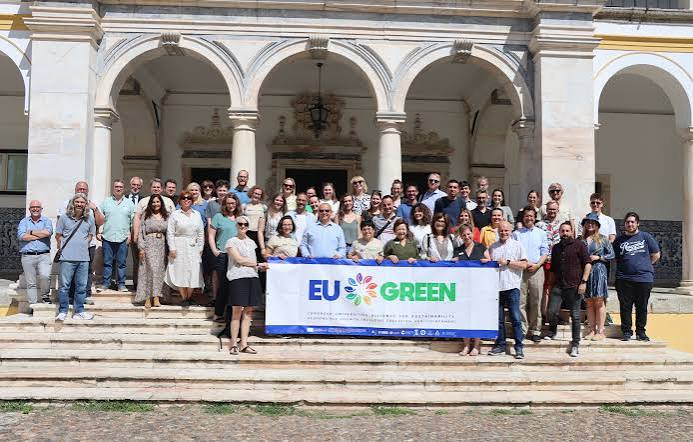
Universities across Europe, Asia, and the Americas are expanding international education partnerships around two defining challenges of the coming decades: responsible artificial intelligence and the transition to cleaner energy. New cross border degree and credential programs are bringing students from different countries into shared online classrooms, combining technical training with questions of ethics, climate policy, renewable energy, and social responsibility. For students, the shift could mean that a university education increasingly reaches beyond one campus, one country, or even one academic discipline.
Universities Are Building Degrees Around Global Problems
The latest wave of higher education collaboration reflects a practical reality. Artificial intelligence and climate change do not stop at national borders, yet much of higher education has traditionally been organized around national systems, individual campuses, and separate professional disciplines.
International university alliances are now experimenting with structures that allow students and faculty members to work across those boundaries. Online teaching, shared courses, joint credentials, academic exchanges, and collaborative research are making it easier for institutions in different regions to participate in the same educational programs.
Recent developments show how quickly this model is expanding. The International Consortium for Higher Education Transformation and Innovation with AI, launched by The Hong Kong Polytechnic University in July 2026, brought together 16 founding universities from several regions to cooperate on artificial intelligence and the future of teaching and learning. Its members include institutions from Asia, Europe, Australia, and other parts of the global higher education community. The Hong Kong Polytechnic University describes the consortium as a platform for sharing practices and developing technology around student centered education.
Other alliances are approaching the same challenge from the climate and sustainability side. The European higher education sector already has joint programs connecting students across universities and countries, including programs in renewable energy, sustainable construction, digital manufacturing, and environmental management.
AI Ethics Is Becoming a Core Part of Technical Education
Artificial intelligence education is changing as universities recognize that technical ability alone is not enough. Students who develop algorithms, automated systems, predictive models, or generative AI tools may eventually influence decisions involving employment, healthcare, finance, education, public services, security, and access to information.
That creates a demand for graduates who understand both how AI systems work and how those systems affect people. New international programs are therefore placing greater attention on subjects such as algorithmic accountability, data governance, privacy, bias, transparency, safety, responsible innovation, and the social consequences of automated decision making.
This direction is also visible in existing university programs. The University of Birmingham’s AI and Sustainable Development master’s program for the 2026 academic year combines artificial intelligence with sustainable development and includes attention to ethics, practical constraints, and complex systems. UCL is also offering an Artificial Intelligence for Sustainable Development master’s program that connects AI skills with environmental and humanitarian challenges.
These programs reflect a broader change in the definition of an AI professional. A graduate may need to understand not only programming and machine learning but also the policy, environmental, legal, and social context in which those systems operate.
Why Cross Border Learning Matters for AI Ethics
Ethical questions around artificial intelligence can look different from one country to another. Rules governing privacy, automated decision making, data protection, employment, and online platforms vary across jurisdictions. A system designed for one population may also behave differently when applied to another.
Students who learn alongside classmates from several countries can encounter these differences directly. A discussion about facial recognition, automated hiring, educational software, or generative AI can produce very different concerns depending on local laws and social expectations.
That international perspective can make AI ethics less theoretical. Instead of treating responsible AI as a chapter in a textbook, students can examine how the same technology affects people living under different regulatory and cultural conditions.
Renewable Energy Education Is Following a Similar Path
The climate side of the new academic model is equally important. Renewable energy projects increasingly require professionals who understand engineering, economics, public policy, environmental science, finance, and community needs at the same time.
Solar farms, wind projects, battery storage systems, modern power grids, electric transport, and energy efficiency programs all involve decisions that extend beyond engineering calculations. Questions about land use, biodiversity, electricity markets, infrastructure investment, energy access, and public acceptance can determine whether a project succeeds.
International programs are responding by combining technical energy education with broader sustainability training. One example is the REMENA renewable energy and energy efficiency master’s program, which connects the University of Kassel in Germany with partner universities in India and Tunisia. Students can study across multiple countries and receive degrees through an international academic structure.
The European Commission’s education resources also highlight joint programs in renewable energy and sustainability that combine engineering with systems analysis, economics, policy, and management. The European Education Area provides information about international study pathways and joint programs in these fields.
Online Credentials Could Make International Education More Accessible
Cross border education does not necessarily require every student to move permanently from one country to another. Online courses and hybrid programs are allowing universities to create international classrooms without placing the entire cost of physical relocation on students.
That distinction matters for talented students who cannot afford to spend several years abroad. Tuition, housing, visas, transportation, healthcare, and family responsibilities can make international study impossible even when a student has the academic ability to participate.
Online credentials can reduce some of those barriers, although they do not remove every challenge. Reliable internet access, compatible academic calendars, time zone differences, digital learning skills, assessment standards, and recognition of qualifications still need careful coordination.
The European higher education sector is already testing more flexible joint degree structures. In 2026, the T LED initiative involving European university alliances began work on joint programs designed around online, dual learning, and hybrid delivery. The project includes degrees connected with digital development, sustainable manufacturing, risk management, and green economy studies.
Students Could Gain Skills That Cross Traditional Career Boundaries
A student completing an international program that combines AI ethics with climate and energy studies could enter a career that does not fit neatly into one traditional category. Employers increasingly need people who can communicate between technical teams, government agencies, researchers, businesses, and communities.
Possible professional areas include responsible AI governance, sustainability analytics, renewable energy management, climate technology policy, environmental data science, energy systems planning, technology regulation, and corporate sustainability strategy.
The combination also reflects how businesses themselves are changing. Energy companies are using AI to forecast demand and maintain infrastructure. Cities are applying data systems to transportation and energy management. Climate researchers are using machine learning to process complex environmental information. Financial institutions are assessing climate risks with large data sets.
These connections create a need for professionals who can understand both sides of the equation.
The Most Valuable Programs May Be Interdisciplinary
Traditional academic boundaries can sometimes make it difficult for students to see how different technologies interact. A computer science student may understand machine learning but have limited knowledge of energy markets. An energy engineering student may understand power systems but have little training in algorithmic accountability.
International degree tracks can bring those perspectives together. Students may work on projects that require them to analyze an energy system, build an AI model, consider its environmental cost, and evaluate the ethical consequences of deploying it.
That kind of education can also encourage students to communicate with people outside their specialization. A successful climate technology project may require an engineer to explain technical findings to policymakers. An AI researcher may need to communicate risks to lawyers or community leaders. A sustainability manager may need to understand data science well enough to question automated recommendations.
Universities Face Difficult Questions About Quality and Recognition
The growth of international online education also creates challenges. A joint degree is only as valuable as the academic standards behind it. Universities must agree on learning outcomes, assessment methods, credit systems, faculty responsibilities, student support, and procedures for recognizing qualifications.
Accreditation can become especially complicated when several institutions operate under different national regulations. Students need to know exactly which institution awards the qualification and how that credential will be recognized in the countries where they hope to work.
Universities must also protect academic quality in online environments. A video lecture alone does not create meaningful international education. Students need interaction with faculty, collaborative projects, practical assignments, reliable assessment, and opportunities to work with classmates from different backgrounds.
These issues are particularly important when programs are promoted as pathways into fast changing fields. Students are investing time and money based on the expectation that their qualification will remain useful after graduation.
Climate and AI Education Could Become More Connected
The most interesting development may be the growing overlap between artificial intelligence and climate education. These subjects were once often taught separately, but their practical applications increasingly intersect.
AI can help analyze weather patterns, optimize renewable power generation, forecast electricity demand, manage energy storage, monitor forests, identify agricultural risks, and improve industrial efficiency. At the same time, AI systems require computing infrastructure and energy, creating their own environmental questions.
That relationship gives universities an opportunity to teach students to examine technology from both sides. They can ask how AI can support the energy transition while also examining the electricity, materials, infrastructure, and environmental resources required to operate increasingly powerful computing systems.
A New Model of Higher Education Takes Shape
The September 2026 expansion of international degree and credential initiatives points toward a higher education model in which academic borders become less restrictive. Students can learn from professors in different countries, collaborate with classmates across time zones, and study problems that require knowledge from several disciplines.
For students, the value of these programs will ultimately depend on more than an international label. Strong programs will need credible accreditation, experienced faculty, meaningful practical work, transparent costs, accessible technology, and qualifications that employers and academic institutions recognize.
For universities, the challenge is equally significant. Building a genuine transnational degree requires more than signing agreements. It requires sustained cooperation between faculty members, administrators, researchers, technology teams, and students.
Yet the reason for pursuing that cooperation is clear. Artificial intelligence and the clean energy transition are reshaping workplaces, governments, industries, and communities at the same time. Preparing people for those changes requires an education system capable of connecting technical knowledge with ethics, environmental responsibility, policy, and human needs.
For students watching these developments, the emerging opportunities are broader than simply earning another online credential. The deeper shift is toward an education in which a classroom can span continents and a single degree can connect computing, climate science, renewable energy, ethics, and public responsibility. If universities can maintain academic quality while expanding that international model, the graduates emerging from these programs may be better prepared to work on problems that no single country can solve alone.