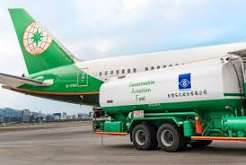
Air travel is entering a period in which strong international demand and tougher environmental expectations are meeting at the same runway. On September 23, 2026, airlines and aviation partners are putting greater attention on sustainable aviation fuel, with higher SAF blends becoming part of efforts to support long haul international travel while reducing the carbon intensity of flying. For passengers, the change may be almost invisible from the cabin window, but behind every departure is a growing effort to rethink the fuel that keeps global tourism moving.
Growing International Travel Is Increasing Pressure on Aviation
The return of strong global travel demand has created a difficult balance for airlines. Travelers want more nonstop connections, convenient schedules, and access to distant destinations, while governments and aviation organizations are demanding measurable progress on emissions. Recent passenger data from the International Air Transport Association shows that global air travel remains at historically high levels, although growth varies between regions and months. In July 2026, worldwide passenger demand increased slightly compared with the same month a year earlier, while international demand was broadly stable. :contentReference[oaicite:0]{index=0}
That demand matters because long distance aviation remains difficult to decarbonize. Battery powered aircraft are not currently capable of replacing large long haul passenger aircraft at commercial scale, and hydrogen powered aviation remains under development. This leaves airlines looking for technologies that can work with today’s aircraft while longer term propulsion systems continue to develop.
SAF is attracting attention precisely because it can be used in existing commercial aircraft when blended within approved limits with conventional aviation fuel. This means airlines can begin reducing lifecycle emissions without waiting for an entirely new generation of aircraft to enter service.
Why Sustainable Aviation Fuel Is Becoming Central to Airline Strategy
Sustainable aviation fuel can be produced from several types of feedstock, including used cooking oil, agricultural residues, waste materials, and other renewable sources. Newer pathways can also combine renewable energy with captured carbon to produce synthetic aviation fuels.
The potential emissions reduction depends heavily on the feedstock, production process, energy used, transportation, and complete lifecycle assessment. IATA estimates that SAF can provide substantial lifecycle carbon reductions compared with conventional aviation fuel and could account for a major share of the emissions reductions required for aviation to reach its net zero carbon goal by 2050. IATA’s sustainable aviation fuel resources provide detailed information about production pathways, certification, supply challenges, and the industry’s long term targets.
The attraction is straightforward. An aircraft does not necessarily need to be redesigned simply because part of its fuel comes from a sustainable source. That makes SAF one of the few options capable of being deployed across existing fleets while airlines continue investing in newer aircraft, operational efficiency, electric aviation research, and other technologies.
Higher Blends Could Become More Visible on International Routes
The aviation industry has historically used SAF in relatively small proportions because global production remains limited and the fuel is substantially more expensive than conventional jet fuel. As production expands, airlines are seeking greater access to SAF and exploring higher blend levels on selected services where supply and certification requirements allow.
For travelers, the practical effect is unlikely to feel dramatic. The aircraft will still take off with the same familiar roar, the cabin will still climb above the clouds, and the passenger experience may remain unchanged. The difference lies in the fuel supply chain behind the flight.
IATA estimates that global SAF production could reach about 2.4 million tonnes in 2026, representing approximately 0.8 percent of worldwide aviation fuel consumption. That figure illustrates both the progress already made and the scale of the challenge ahead. The industry estimates that around 500 million tonnes of SAF annually would be required by 2050 to support its net zero pathway. :contentReference[oaicite:1]{index=1}
Long Haul Routes Create a Particular Sustainability Challenge
Long haul aviation connects continents, supports tourism economies, enables international business, and allows families separated by oceans to see one another. At the same time, these flights consume significant quantities of fuel, making them an important part of the industry’s emissions discussion.
A long distance journey can involve thousands of miles of flight and many hours of continuous fuel consumption. For airlines operating such services, improving fuel efficiency and increasing access to lower emissions fuel can therefore have a meaningful effect across large numbers of passengers.
We should also recognize the human side of this equation. International aviation is not simply a corporate activity. It carries students to universities, workers to new opportunities, families to reunions, tourists to cultural destinations, and emergency teams to places where help is needed. The challenge is finding ways to preserve those connections while reducing the environmental cost of providing them.
Global Aviation Rules Are Shaping Fuel Decisions
Airlines are not making SAF decisions in isolation. Governments, airport authorities, fuel producers, aircraft manufacturers, and international aviation bodies are developing rules and market systems that influence how sustainable fuel is produced, purchased, transported, and credited.
The International Civil Aviation Organization has developed international sustainability frameworks for aviation fuel, including requirements connected with lifecycle emissions and environmental integrity. Different markets are also adopting their own approaches to SAF mandates, incentives, and emissions policies.
Europe has already introduced requirements affecting aviation fuel suppliers and operators, while other countries are developing national blending strategies. ICAO guidance documents show how several countries are establishing future SAF requirements for international aviation, demonstrating that policy is becoming an increasingly important part of the fuel market.
These rules can create demand for SAF, but they also create pressure to ensure that enough certified fuel is available at commercially workable prices. An ambitious mandate without sufficient production or airport infrastructure can create difficulties for airlines and passengers.
The Biggest Problem Is Still Supply
The expansion of SAF routes faces a basic economic reality. There is not yet enough sustainable aviation fuel to replace a large portion of conventional jet fuel worldwide.
IATA estimates that SAF currently represents less than one percent of global aviation fuel use. The organization has also warned that production must increase dramatically if aviation is to reach its 2050 emissions objectives. Scaling the industry will require new production facilities, reliable feedstock supplies, renewable energy, fuel transportation infrastructure, airport storage capacity, and investment that can support projects over many years. :contentReference[oaicite:2]{index=2}
Price remains another major obstacle. SAF can cost several times more than conventional aviation fuel depending on the production pathway and market conditions. Airlines already operate with substantial fuel expenses, so absorbing the entire difference without affecting ticket prices or financial performance is difficult.
Why Infrastructure Matters as Much as Production
Producing SAF is only one part of the journey. The fuel must reach airports, pass quality and sustainability checks, enter appropriate storage and distribution systems, and be available where aircraft actually refuel.
This becomes particularly important when airlines expand international routes. A carrier may have access to SAF at one major hub but face limited supply at another destination. International aviation therefore needs a fuel market capable of moving sustainable fuel and its associated environmental attributes across borders.
IATA has been developing systems designed to improve SAF market connectivity, including a global registry and book and claim mechanisms intended to help airlines access SAF benefits even when the physical fuel is consumed at another location. These systems are becoming increasingly relevant as SAF moves from isolated airport projects toward a more interconnected international market.
What SAF Means for Travelers
For passengers, sustainable aviation fuel may not immediately change the appearance or operation of a flight. The aircraft will use certified aviation fuel that meets strict technical requirements, and passengers will generally experience the same aircraft performance and onboard service.
The more visible effect may come through airline communications, ticket options, corporate travel programs, and environmental reporting. Travelers may increasingly see information about the estimated emissions associated with a journey or whether an airline has invested in SAF.
IATA has developed a passenger carbon calculation methodology intended to provide a consistent way of estimating flight related carbon emissions. The methodology can also account for certain upstream emissions when required or selected. :contentReference[oaicite:3]{index=3}
That type of information can help travelers make more informed choices, although passengers should be cautious about treating any single sustainability claim as a complete measure of a flight’s environmental impact. Fuel production, aircraft efficiency, flight distance, passenger load, routing, and other factors can all influence total emissions.
Tourism Destinations Could Feel the Effects
Air connectivity is deeply tied to tourism. Hotels, restaurants, tour operators, airports, local transport companies, cultural attractions, and small businesses in destination communities all depend on travelers arriving from other regions and countries.
More SAF enabled routes could allow airlines to continue expanding connectivity while responding to environmental requirements. For destinations that depend heavily on international visitors, that could become increasingly relevant as sustainability expectations influence airline networks and traveler choices.
At the same time, tourism businesses will need to recognize that cleaner aviation fuel is only one part of responsible travel. Hotels, cruise operators, airports, local transportation systems, and attractions all contribute to the environmental footprint of a journey.
The Aviation Industry Still Needs Multiple Solutions
SAF should not be treated as a single answer to aviation’s climate challenge. More efficient aircraft, improved air traffic management, better flight operations, renewable electricity, future hydrogen systems, electric aircraft for suitable routes, and other technologies will all have roles to play.
Even within SAF itself, there is no single production pathway that will necessarily dominate every market. Bio based SAF can depend on sustainable waste and residue supplies, while synthetic fuels require large amounts of renewable electricity and suitable carbon sources.
The most realistic transition will therefore involve several technologies developing at the same time. Airlines need fuel that works today, aircraft manufacturers need to prepare for tomorrow, and governments need to build policy frameworks that encourage investment without creating severe supply disruptions.
What Comes Next for SAF Powered International Travel
The expansion of SAF use on international routes marks an important stage in the aviation industry’s effort to reconcile rising mobility with emissions reduction. The underlying challenge remains enormous, but the direction of investment is becoming clearer.
For airlines, the next test will be whether SAF can move from limited demonstration projects and selected routes into a dependable global fuel market. For governments, the challenge will be creating policies that encourage production while protecting consumers and maintaining international competitiveness. For fuel producers, the priority will be building enough capacity to meet a market that could eventually require hundreds of millions of tonnes each year.
For passengers, the change may begin quietly. A ticket is purchased, a suitcase is checked, the aircraft leaves the gate, and the journey begins. Yet behind that ordinary experience is a complex transition involving renewable energy, agricultural waste, advanced fuel production, international regulation, airport infrastructure, and billions of future passenger journeys.
As international tourism continues to connect more people with more destinations, the aviation industry’s ability to increase SAF availability will become an increasingly important part of the sustainability conversation. The September 2026 expansion of SAF focused routes reflects that pressure clearly. The success of the transition, however, will ultimately depend not only on airline announcements but on whether the world can produce sustainable aviation fuel at the scale, price, and environmental quality required for global air travel.