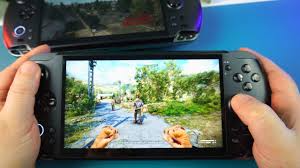
On a crowded subway platform in Seoul the man opposite me clutched a slab of matte metal no larger than a paperback novel and the game running on it looked indistinguishable from console fare. Frames stayed silky smooth as the train lurched. Fans whispered rather than roared. That device is one of many powered by a new generation of memory chip architectures that has rewritten expectations for mobile performance and sent demand for handheld gaming personal computers soaring around the world.
What changed inside the chip
The recent wave of devices traces back to memory innovations that compress latency while cutting energy draw. These architectures move beyond simple capacity gains. They apply tiled memory layouts, predictive prefetching, and tighter coupling between graphics processors and memory pools so that complex shaders and large texture sets stream without the traditional thermal penalties. The result is sustained peak performance for long play sessions rather than brief bursts that throttle quickly.
How that shift feels to players
Imagine a boss fight where particle effects, dynamic lighting, and physics run at native resolution without sudden frame drops or heat induced slowdown. The tactile response of joysticks feels consistent. Load screens shrink. Battery life stretches into long evening play sessions because the hardware spends less energy fighting memory stalls. For players moving between commute, café, and couch the experience is closer to a portable console than the patched together feel of running high end games on a smartphone.
Market momentum and consumer response
Retailers report week over week increases in handheld PC sales with peaks following product launches from established brands and new entrants. Enthusiast forums brim with benchmark comparisons and practical advice about thermal pads and case grips. Casual buyers are arriving too. Many say they prefer a purpose built gaming handheld to transforming a phone with clip on controllers and on screen controls because the ergonomics and software integration simply work better for extended sessions.
Why mobile phone gaming faces a reckoning
Smartphone gaming remains massive in reach but the new handhelds threaten the sector for players who demand performance. Mobile games optimized for touch controls and short sessions will persist, particularly in emerging markets. Yet developers aiming for console grade titles now have a growing installed base of users on true portable PCs where native controller support and full fidelity assets make sense. Expect publishers to adapt by offering cross platform versions with scalable assets and controller friendly interfaces.
Publisher strategies and developer experiences
Studios are balancing support for smartphones and handheld PCs. Some are rolling out separate builds tuned to each hardware class. Others use adaptive rendering engines that detect memory bandwidth and automatically adjust texture streaming and draw distance to preserve visual quality while maintaining target frame rates. That approach eases porting and keeps development costs manageable while reaching a wider audience.
Design trends across the new handhelds
Manufacturers are converging on several design principles. First, efficient cooling with vapor chambers or layered graphite stacks that move heat away from hotspots. Second, modular controls that can be reconfigured for left handed players or replaced after heavy use. Third, displays with wide color gamuts and refresh rates above typical smartphone levels while remaining power efficient. Taken together these features create a distinct product category defined by sustained performance, comfort, and software compatibility.
Battery life and real world use
Reported battery life spans a wide range depending on workload. Under heavy GPU bound titles some units provide three to six hours of play while less demanding indies can run far longer. The memory efficiency gains are the hidden multiplier. Devices that read and write less frequently to external storage maintain battery health better over time. Fast charging standards are common which means short breaks can restore enough power for additional sessions.
Price segmentation and access
High end handhelds with desktop class parts command premium prices but entry level models are emerging that offer much of the feel at lower cost. That tiering mirrors consoles and PCs with an ecosystem for enthusiasts who upgrade components or tweak software and a mainstream channel for users who want plug and play simplicity. Financing and trade in programs are reducing the barrier to entry in many markets which accelerates adoption.
Supply chain and manufacturing implications
Chip designers and memory foundries are scaling production to meet demand yet manufacturing challenges remain. Memory dies with specialized interconnects require new packaging and testing procedures. Component sourcing for displays and controllers has tightened at times, causing some delays. Companies that vertically integrate assembly and quality control tend to ship faster, while those relying on complex global supply chains face variability in lead times.
Competitive dynamics with cloud gaming
Cloud streaming is part of the equation but it complements rather than replaces the handheld PC surge. Players value local performance for its predictability and offline capability. Streaming services are integrating with handheld storefronts and many providers now offer downloadable client modes so players can switch between streamed and local play depending on connectivity. That dual approach keeps options open while leveraging the strengths of both approaches.
Regulatory and infrastructure considerations
Network providers and regulators will watch bandwidth impacts as users stream high fidelity content from handhelds. Local storage and downloadable modes mitigate peak loads. Meanwhile policy makers in some regions are contemplating tariffs and import rules that affect pricing for gaming hardware. Those decisions could shape market penetration rates across countries and income brackets.
What developers and consumers should watch next
Several trends will bear watching. Developers should monitor memory API improvements and new middleware that eases asset streaming. Consumers should evaluate ergonomics and heat profiles in hands on trials and check for developer commitment to long term software updates. Reviewers and industry analysts will continue to test sustained performance not just peak benchmarks since that metric now better predicts real world experience.
Resources for deeper technical context
For readers seeking technical background on memory architecture and performance trade offs the IEEE Xplore digital library hosts peer reviewed research on predictive prefetching strategies and memory tiling. For consumer oriented benchmarks and device reviews established testing labs such as UL conduct standardized stress tests and thermal assessments that help compare sustained performance across models.
Would you like a comparison table that lists leading handheld models by memory architecture, sustained frame rates, battery life, and recommended use cases?