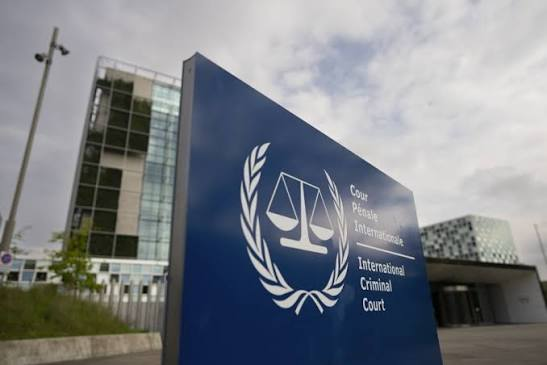
The International Criminal Court has entered a significant chapter in its efforts to reinforce judicial accountability, with a revised version of its Code of Judicial Ethics reportedly taking effect on October 16, 2026. The updated framework is intended to strengthen transparency and clarify the ethical standards expected of judges serving at the international court. For an institution responsible for addressing some of the gravest crimes under international law, the credibility of judicial decisions depends not only on legal reasoning but also on the independence, impartiality and integrity of the people delivering them.
Judicial ethics can appear abstract when compared with the human suffering at the center of international criminal proceedings. Yet these standards influence how cases are heard, how potential conflicts of interest are managed and how the public evaluates the fairness of a court’s decisions. In proceedings involving alleged war crimes, crimes against humanity and genocide, the stakes extend far beyond the courtroom. Victims seek recognition and justice, defendants are entitled to a fair trial, and affected communities look for evidence that legal institutions can operate without political pressure or personal bias.
The reported revision therefore raises an important question: how can an international court maintain public confidence while handling politically sensitive cases under intense scrutiny? A clear and credible ethics framework is one part of the answer. The precise amendments, adoption record and implementation arrangements should be confirmed against official court documentation before individual provisions are attributed to the revised code.
Why Judicial Ethics Matter at the International Criminal Court
The International Criminal Court, commonly known as the ICC, is a permanent international tribunal established by the Rome Statute. It investigates and prosecutes individuals accused of certain serious international crimes when the legal conditions for the court to exercise jurisdiction are satisfied. Its work can involve complex investigations, disputed evidence, competing legal arguments and intense international attention.
Judges occupy a central position in this process. They must evaluate evidence impartially, interpret applicable law and ensure that proceedings respect the rights of all parties. Their decisions can influence whether a case proceeds to trial, whether evidence is admissible and whether the legal requirements for conviction have been met. Even when a judgment is legally sound, concerns about a judge’s independence or conduct can undermine public confidence in the process.
A judicial ethics code provides standards for professional behavior that complement formal legal rules. It can help judges identify situations that threaten impartiality, understand their responsibilities outside the courtroom and recognize the importance of avoiding conduct that creates a reasonable appearance of bias. These obligations matter because public confidence depends not only on whether a judge acts improperly, but also on whether the circumstances surrounding a decision reasonably raise doubts about independence.
Readers can explore the court’s institutional mandate and legal foundations through the official International Criminal Court website, which provides information about its judges, cases, governing documents and activities.
What a Revised Code of Judicial Ethics Is Designed to Achieve
Updating a judicial ethics framework can help an institution respond to changing expectations about accountability, professional conduct and transparency. Courts operate in an environment where public communication, international travel, professional relationships and digital platforms can create ethical questions that were less prominent when earlier standards were developed.
A revised code may seek to clarify existing obligations, improve guidance for difficult situations or establish more consistent expectations across the judiciary. However, the existence of a revision does not establish that every one of these changes appears in the ICC’s updated document. Without the verified text of the amendments, the most responsible approach is to distinguish the reported objective of strengthening transparency from specific provisions that have not been confirmed.
In practical terms, an effective judicial ethics framework should help judges understand what impartiality requires, how to identify potential conflicts and when a situation may call for disclosure or recusal. It should also make clear that judicial independence is not a personal privilege. Independence protects the ability to decide cases according to law and evidence rather than political demands, financial interests or personal relationships.
Transparency and Independence Must Work Together
Transparency is essential to accountability, but it must be applied carefully in a judicial setting. The public has a legitimate interest in understanding the standards governing judges and the procedures available when ethical concerns arise. At the same time, judges must be able to deliberate privately where required, protect confidential information and preserve the integrity of ongoing proceedings.
For that reason, judicial transparency does not mean publishing every internal discussion or exposing sensitive information without restriction. It means making relevant rules accessible, explaining institutional procedures and ensuring that appropriate mechanisms exist to address credible concerns. A well designed ethics framework can help establish where disclosure is necessary and where confidentiality remains essential to a fair judicial process.
Judicial independence also requires protection from improper external influence. International criminal cases can attract intense criticism from governments, political movements and advocacy groups. Judges may face public pressure to reach a particular outcome even before the evidence has been fully considered. Ethical standards help reinforce the principle that decisions must be based on the applicable law and the material properly before the court.
Transparency and independence are therefore complementary rather than competing values. Transparency helps the public assess whether appropriate safeguards exist, while independence protects judges from pressure that could distort their decisions. Neither principle can fully support confidence in the court without the other.
Conflicts of Interest and the Appearance of Bias
One of the most important areas of judicial ethics is the management of conflicts of interest. A conflict may arise when a judge’s personal, professional or financial circumstances intersect with a matter before the court in a way that could affect impartiality or reasonably call it into question.
Not every prior professional relationship creates a conflict, and the appropriate response depends on the circumstances and the applicable rules. A judge may need to consider whether a relationship is sufficiently connected to a case to require disclosure, whether a reasonable observer might question impartiality and whether recusal is necessary under the governing legal framework.
These questions are especially sensitive in international criminal proceedings. Cases may involve people, organizations and events connected to multiple countries. Judges and other legal professionals can have extensive international careers before taking office, making clear procedures for identifying and addressing potential conflicts particularly important.
A strong ethics framework can support consistent decision making by giving judges clear guidance and reducing uncertainty about their responsibilities. It can also help ensure that ethical questions are addressed through established procedures rather than improvised responses to public controversy.
Accountability Without Undermining Fair Trials
Ethical accountability must operate alongside the rights of defendants and the interests of victims. International criminal proceedings require careful treatment of evidence, respect for procedural safeguards and decisions made by an independent tribunal. An ethics system that protects judicial integrity should strengthen those guarantees rather than become a means of influencing the outcome of individual cases.
It is equally important to distinguish an allegation of misconduct from a finding that misconduct occurred. Complaints may raise legitimate questions, but they must be assessed through fair and appropriate procedures. Judges should not be treated as having violated ethical standards simply because a party disagrees with a ruling or because a decision attracts criticism.
Effective accountability requires clarity about applicable standards, appropriate ways to raise concerns and procedures capable of evaluating those concerns fairly. Depending on the governing framework, relevant measures may include disclosure requirements, review procedures or other institutional responses. The specific mechanisms applicable to the revised ICC code must be established from the official text rather than assumed.
This balance is vital to the court’s legitimacy. If judges are insulated from all meaningful scrutiny, public confidence can suffer. If they are exposed to arbitrary complaints or political retaliation, their independence can be weakened. A credible system must protect both judicial integrity and the fair administration of justice.
The ICC’s Broader Role in International Justice
The ICC operates within a complex international legal system. Its authority derives from the Rome Statute, and its jurisdiction is subject to defined legal conditions. The court is not a universal criminal tribunal with automatic authority over every alleged international crime. Its jurisdiction depends on factors including the relevant territory or nationality, the applicable legal provisions and the circumstances under which a situation reaches the court.
These limits make judicial independence particularly important. International criminal cases can involve allegations against senior political leaders, military commanders and other influential individuals. Proceedings may intersect with diplomatic disputes and disagreements over national sovereignty. Judges must navigate these pressures while applying the law consistently and protecting the rights of everyone involved in the proceedings.
The court’s credibility also depends on the public’s ability to distinguish judicial decisions from political preferences. Ethical standards cannot eliminate disagreement over the court’s jurisdiction or the merits of individual cases. They can, however, help demonstrate that judges are expected to meet consistent professional standards regardless of the identity of the accused or the international consequences of a ruling.
The United Nations Charter provides broader context for the international principles governing relations among states, including sovereign equality and the peaceful settlement of disputes. Although the Charter and the ICC’s judicial ethics framework serve different purposes, both belong to a wider international system in which legal rules and institutional credibility are essential.
How the Updated Standards Could Affect the Court’s Daily Work
The practical value of an ethics code depends on how consistently its requirements are understood and applied. Judges need more than general statements about integrity. They need clear guidance that helps them identify ethical risks before those risks develop into disputes that could affect proceedings or damage public confidence.
Implementation may involve communicating revised requirements, providing guidance on difficult ethical questions and ensuring that judges understand any changes to their responsibilities. Institutional clarity is especially valuable when a court handles several complex cases simultaneously and judges must make decisions under significant time pressure.
For observers, lawyers and affected communities, accessible information about judicial standards can make the institution easier to understand. It can clarify which concerns fall within the ethics framework and which belong to other legal or administrative procedures. Such clarity helps prevent misunderstandings and encourages concerns to be addressed through the appropriate channels.
The impact of the revision should ultimately be assessed through its implementation, not simply the announcement that a new version has entered into force. Relevant questions include whether the text provides clearer guidance, whether procedures are applied consistently and whether the court can explain its ethical safeguards without compromising confidential information or judicial independence.
What Comes Next for Judicial Transparency
The reported entry into force of the revised code on October 16, 2026, provides a timely opportunity to examine the standards expected of international judges. The next step for readers and legal observers is to consult the official version, confirm the precise provisions that changed and establish whether the court has published accompanying guidance or implementation information.
Until those details are verified, claims about new disclosure obligations, disciplinary procedures or specific restrictions should be treated cautiously. A responsible account of judicial reform must explain what the institution has actually changed rather than assume that every desirable ethical safeguard has been introduced by the revision.
For legal professionals, the document may provide a basis for reviewing how judicial conduct is assessed and how potential concerns are handled. For the wider public, it offers an opportunity to consider the relationship between ethical rules, institutional accountability and the legitimacy of international justice.
A Stronger Ethical Foundation for International Justice
The significance of judicial ethics extends beyond the judges who are directly bound by the rules. Victims and their families need confidence that proceedings will be conducted fairly. Defendants need assurance that allegations will be assessed by impartial decision makers. Governments, civil society organizations and the international public need reasons to trust that the court’s procedures are governed by law rather than personal interests or political pressure.
A revised Code of Judicial Ethics can contribute to that confidence when its standards are clear, its procedures are credible and its requirements are applied consistently. Transparency must allow meaningful scrutiny, while independence must protect judges from interference. Accountability must address genuine ethical concerns without turning disagreement with judicial decisions into evidence of misconduct.
The reported ICC revision is therefore an important development to follow, particularly as international criminal justice continues to operate under close public and political scrutiny. Its lasting value will depend on the content of the updated rules, the way they are implemented and the institution’s ability to uphold the principles they are intended to protect.
Ultimately, public trust in international justice is built through sustained institutional conduct rather than declarations alone. Clear ethical standards provide a foundation, but judges must demonstrate integrity through their decisions, their professional behavior and their respect for the law. If the revised code strengthens those commitments in practice, it can help support the credibility of a court whose work carries profound consequences for individuals, communities and the international legal order.