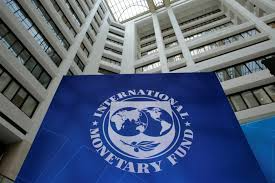
The International Monetary Fund raised its forecast for global economic growth in 2026 to 3.3 percent, signaling a cautiously optimistic turn for markets and policymakers. The revision reflects stronger-than-expected corporate capital spending on artificial intelligence, nimble adjustments by private firms, and continued fiscal support in several major economies despite persistent trade frictions and uneven recovery across regions.
Why the upgrade matters for households and businesses
This adjustment matters because headline growth figures shape interest rate expectations, labor markets, and investment decisions. When the IMF raises its projection, investors and central banks read it as evidence that underlying demand and productivity gains may be higher than previously thought. For households that have faced tight budgets and for businesses still recovering from pandemic disruptions, a modestly stronger global expansion can translate into more job openings, firmer wages in certain sectors, and improved corporate revenues.
Concrete drivers behind the higher estimate
The IMF attributed the upward revision to three main forces. First, concentrated but powerful corporate spending on next generation computing and machine learning systems has pushed productivity gains in technology intensive sectors. Second, private sector firms across manufacturing and services have adopted cost and supply chain adjustments that preserved output and limited layoffs. Third, several governments maintained expansionary fiscal stances or targeted public investment that supported demand even as central banks kept monetary policy comparatively tight.
AI spending and the productivity story
Investment in AI hardware and software has been concentrated among a relatively small group of large firms, yet its effects are rippling through supplier networks. Firms purchasing cloud computing capacity, specialized chips, and data infrastructure are also prompting demand for construction, professional services, and logistics. That cascade shows up as stronger capital formation and higher measured output in advanced economies. While the direct benefits to consumer prices and broad wages remain uneven, the IMF judges that the net effect on measured global output is positive enough to nudge the 2026 forecast upward.
Risks and distributional concerns
The IMF was careful to underline persistent risks. Trade tensions and tariff uncertainty continue to shave off potential gains from cross border commerce. Geopolitical tensions and fragmented supply chains could still trigger shocks that reverse momentum. Most importantly, gains from AI and targeted fiscal support are not evenly distributed. Low income countries and informal workers may see weaker spillovers, deepening divergence between fast growing tech hubs and regions reliant on commodity exports or tourism.
Regional outlook and who benefits most
Advanced economies are expected to account for a significant portion of the revised growth, driven by private sector investment and sustained consumption in economies with strong labor markets. Emerging markets and developing economies show heterogeneous outcomes. Some countries with large technology sectors or resilient domestic demand capture outsized benefits, while commodity exporters face mixed prospects because of volatile prices and weaker external demand in some markets.
Policy choices that will shape the path ahead
Policymakers face trade offs. Central banks must balance inflation containment against supporting fragile recoveries, and fiscal authorities must weigh short term stimulus against medium term debt sustainability. The IMF highlighted the value of well targeted public investments in infrastructure, education, and digital connectivity that can widen AI dividends and support inclusion. Where public resources are constrained, the Fund recommended prioritizing measures that support human capital and productive capacity rather than broad untargeted transfers.
Market and investor reactions
Financial markets interpreted the upgrade as a signal that corporate earnings could hold up better than forecast, prompting modest gains in equity markets and a recalibration of rate hike expectations. Fixed income markets remain sensitive to inflation signals, so any sign that wage growth becomes entrenched could sharpen central bank responses. For long term investors, the IMF note reinforces the idea that technology adoption and efficient supply chain adjustments are central to future returns.
What businesses should consider now
Businesses can draw three practical lessons from the IMF revision. First, investing selectively in productivity enhancing technologies can pay off even if benefits materialize unevenly. Second, continued agility in supply chain planning and workforce reskilling remains essential. Third, firms should engage with policymakers to shape targeted public investments that improve digital access and technical education, expanding the pool of skilled workers that technology intensive industries need.
Voices from the field
Senior economists and business leaders welcomed the IMF update while sounding cautious. An economist at a global research institute noted that the upgrade validates private sector efforts to adapt operations and invest in digital platforms. A chief executive at a medium sized manufacturer described how data driven process improvements reduced downtime and raised output without large headcount cuts. Those accounts humanize the statistics and show how incremental changes in factories and corporate balance sheets can aggregate into measurable growth.
Where to watch next
Key indicators to monitor in the coming months include global trade volumes, corporate capital expenditure data, labor market slack measures, and headline inflation across major economies. Changes in these data points will inform whether the IMF upgrade represents a durable trend or a temporary reprieve. Observers should also track policy windows at the IMF and World Bank where lending frameworks and development support can alter the trajectory for vulnerable countries.
Further reading and sources
For the IMF assessment and technical details, readers can consult the IMF World Economic Outlook page at https://www.imf.org. For analysis of technology investment trends and firm level capital spending, reporting from major economic research centers and central bank publications provide timely context, including work published by the Federal Reserve and the Organisation for Economic Co operation and Development at https://www.oecd.org.
We will follow developments as new data arrive and policymakers react. Would you like a short briefing summarizing the specific country level forecasts and policy recommendations next?