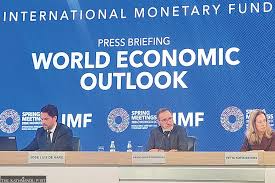
We stare at screens flickering with stock tickers and news alerts, feeling the weight of distant explosions ripple through our daily lives. On May 2, 2026, the International Monetary Fund dropped a report that captures this unease perfectly. Titled a somber assessment of global prospects, it paints a picture of subdued growth and resurgent inflation, all fueled by the escalating conflict in the Middle East and the dramatic shutdown of the Strait of Hormuz. Families in Karachi haggle over rising grocery prices, factory workers in Detroit eye layoffs, and traders in London recalibrate bets. This is not abstract data; it is the human cost of geopolitics clashing with economics.
The Spark Igniting Economic Turbulence
The report arrives amid a flare-up in the Middle East, where longstanding tensions between regional powers have boiled over into open conflict. Iranian forces, responding to provocations, mined and blockaded the Strait of Hormuz, a narrow waterway that funnels about 20 percent of the worlds oil supply. Tankers idle offshore, their crews anxious under the tropical sun, while satellite images show convoys of warships patrolling the Persian Gulf. This chokepoint, vital for shipments from Saudi Arabia, Iraq, and the UAE, now stands as a barrier, slashing daily oil flows from 21 million barrels to a trickle.
Energy prices have surged accordingly. Brent crude, the global benchmark, spiked 35 percent in weeks, hitting $120 per barrel. Gasoline pumps in the US Midwest display $5 per gallon, forcing commuters to rethink road trips. In Europe, where natural gas prices already strain households, the ripple effects compound winter heating woes. The IMFs chief economist, in a virtual press briefing, described the scene with quiet gravity: nations once insulated by diversification now confront the raw vulnerability of supply chains. We feel this in the checkout line, where a loaf of bread costs more than last month, a reminder that wars wage battles on kitchen tables too.
Global Growth Projections Dimmed
At the heart of the IMFs analysis lies a downward revision of growth forecasts. Global GDP, projected at 3.2 percent for 2026 just months ago, now limps to 2.1 percent. Advanced economies face the sharpest cuts, with the US dipping to 1.8 percent and the Eurozone to 0.9 percent. Emerging markets, often engines of expansion, slow to 3.8 percent, dragged by commodity dependence.
Consider the mechanics. The Strait closure disrupts not just oil but liquefied natural gas and refined products, inflating shipping costs exponentially. Freight rates for Very Large Crude Carriers have quadrupled as vessels reroute around Africa, adding weeks and fuel to journeys. Businesses, from airlines to manufacturers, pass these costs downstream, curbing investment and hiring. Unemployment ticks upward, subtly at first, in sectors like automotive and chemicals, where input prices soar.
| Region | Previous Forecast (%) | Revised Forecast (%) | Key Impact |
|---|---|---|---|
| United States | 2.7 | 1.8 | Higher energy costs curb consumer spending |
| Eurozone | 1.5 | 0.9 | Industrial slowdown from import disruptions |
| China | 4.6 | 4.0 | Export demand weakens amid global caution |
| Emerging Markets (ex-China) | 4.2 | 3.5 | Commodity price volatility hits revenues |
These figures, drawn from the IMFs meticulous modeling, underscore a fragile recovery from prior shocks. We see echoes of 2022s energy crisis, yet this time with added layers of uncertainty. Will the strait reopen through diplomacy or force? The funds baseline assumes a partial restoration by year-end, but risks skew downward.
Inflation Roars Back to Life
Inflation, that persistent foe, reemerges with vengeance. Headline rates, expected to ease to 3.5 percent globally, now climb to 5.2 percent. Core inflation, stripping volatiles, still accelerates to 4.1 percent, signaling broad-based pressures. Oil, at 40 percent of the uptick, headlines the surge, but food and freight follow suit. Wheat futures jump as Black Sea routes face secondary strains from allied conflicts.
Central banks confront a dilemma. The US Federal Reserve, eyeing sticky prices, holds rates at 4.75 percent, delaying cuts. Europes ECB signals hikes if pass-through intensifies. Developing nations, with currencies under siege, impose capital controls. A mother in Mumbai skips protein for her children; a retiree in Florida rations driving. These stories humanize the indices, reminding us economics serves people.
For deeper context on central bank responses, the Federal Reserves latest projections reveal the cautious path ahead.
Ripple Effects Across Sectors and Societies
Supply chains fracture under the strain. Semiconductor firms in Taiwan, reliant on Middle Eastern petrochemicals, idle lines. Airlines ground fleets as jet fuel premiums bite; Boeing delays deliveries. Renewables offer glimmers, yet panels and batteries incorporate oil-derived components, tempering gains.
Social fabrics stretch. Protests erupt in oil-importing nations like Pakistan and India, where subsidies crumble under fiscal pressure. Governments borrow at punitive rates, swelling debts. The IMF urges fiscal prudence, yet empathy tempers our counsel: leaders must shield the vulnerable.
- Aviation: Fuel costs up 50 percent, prompting route cuts and fare hikes.
- Manufacturing: Plastics and fertilizers scarcer, hitting agriculture worldwide.
- Consumer Goods: Everyday items like packaged foods rise 15 to 20 percent.
- Financial Markets: Volatility index spikes, equities shed 10 percent since closure.
Geopolitical wildcards loom. Escalation could draw in great powers, amplifying shocks. OPEC+ pledges spare capacity, but infrastructure lags. Meanwhile, strategic reserves dwindle; the US strategic petroleum reserve sits at 60 day levels.
Paths Forward: Resilience Amid Adversity
Yet hope flickers. Nations accelerate energy transitions; electric vehicle sales surge 25 percent year-over-year, blunting oil demand. LNG terminals in the US Gulf ramp up exports to Asia. Diplomatic channels, though strained, buzz with envoys from Qatar and Oman mediating ceasefires.
We advocate diversified supplies and strategic stockpiles. Households can trim energy use: carpool, insulate homes, shift to public transit. Policymakers eye targeted subsidies for essentials. The IMFs report, while grave, charts scenarios where swift de-escalation restores 0.8 percentage points to growth.
For insights into global energy security efforts, the IEAs May oil market analysis outlines contingency plans.
Human Stories from the Frontlines
Meet Ahmed, a tanker captain anchored off Oman. His vessel, laden with Iraqi crude, bobs endlessly, crew rations supplies amid sweltering heat. In Houston, refinery worker Maria watches overtime vanish as cheap imports halt. These voices ground the data, urging collective resolve.
The IMF calls for multilateral action: sanctions relief tied to safe passage, investment in alternative routes like pipelines across Saudi dunes. Recovery demands unity, innovation, compassion.
A Call to Steadfastness
As shadows lengthen, we draw strength from historys recoveries. The global economy, battered yet resilient, bends but rarely breaks. By fostering dialogue, bolstering supplies, and supporting one another, we navigate toward brighter prospects. This report warns, but it also equips us to act.