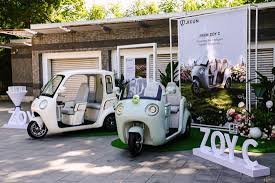
Jixun Technology made its first major public statement in the micro-mobility space on May 9, 2026, unveiling a new line of smart e-trikes at the “Europe Day” event in Beijing. The company’s first-generation vehicles, described as “Totoro inspired” in appearance, aim to reshape how people imagine short distance urban travel by blending playful design with serious technology. The launch suggests that the future of city commuting may not lie in larger electric cars, but in compact, intelligent, eco friendly alternatives that can navigate crowded streets with ease.
A new chapter in urban mobility
We are used to thinking of cities as built around four wheel vehicles, but sidewalks, bike lanes, and congested streets tell a different story. Jixun’s debut turns the focus toward what urban planners increasingly call micro mobility: small, electric, shared or personally owned vehicles that move people over short distances without the bulk or emissions of traditional cars. Smart e-trikes fit snugly into that category, offering a way to cover the last mile from a subway stop to an office, from a market to a home, or from a school to a neighborhood park.
What makes the Totoro inspired design noteworthy is not just its whimsy, but its intent. The soft, rounded shapes, gentle curves, and friendly front fascia feel less like a machine and more like a companion for the street. In a city environment often dominated by gray asphalt and flashing screens, that small emotional shift can change how people feel about getting around.
How “Totoro inspiration” shows up in the design
The Totoro comparison comes from the vehicles’ visual language, not from any licensed character cameo. Rounded roofs, softly contoured body panels, and wide, friendly “eyes” made from dual headlights give the e-trikes an approachable presence. The designers have clearly borrowed from the film’s emphasis on warmth, nature, and gentle movement rather than speed and aggression.
Inside the trike, that mood continues. Seats are spaced to encourage conversation, storage compartments are thoughtfully placed for bags and groceries, and the overall layout prioritizes comfort and visibility. The artwork around the prototypes on display features soft greens and blues, evoking the forests and skies that appear in the original film. Taken together, the styling choices communicate a single message: this is not a vehicle that fights the city, it moves gently through it.
Smart features that go beyond the curb appeal
Under the friendly exterior, Jixun’s smart e-trikes carry a suite of technology designed to make them safer, more efficient, and easier to integrate into daily life. The company has outfitted the first generation with on board sensors and connectivity that allow for real time diagnostics, navigation assistance, and communication with surrounding infrastructure. Riders can receive route suggestions, low battery alerts, and safety warnings directly through the onboard interface or a linked smartphone app.
Autonomous features, while not full self driving, include lane discipline assistance, speed regulation in crowded zones, and collision avoidance alerts. These systems are tuned to urban environments where cyclists, delivery riders, pedestrians, and cars share narrow lanes. The trike’s three wheel layout offers greater stability than a two wheel e scooter, and the smart systems add a layer of confidence that can make first time users feel more at ease.
Key functionalities of the smart platform
- Real time navigation and route optimization tailored to local traffic patterns.
- Integrated battery monitoring with range estimation and charging recommendations.
- Collision warning and adaptive speed control in high density pedestrian areas.
- Remote diagnostics and software updates to keep the vehicle current without a visit to a service center.
- Geofenced parking and low speed zones that align with local regulations and safety requirements.
Eco friendly performance for city life
As the world’s cities grapple with air quality, noise, and congestion, Jixun’s e-trikes are positioned as part of the solution rather than the problem. The vehicles run fully on electric power, with compact batteries that can be recharged at home, on street chargers, or in shared hubs. The company claims that the energy consumption per kilometer is significantly lower than that of a standard electric car, even when factoring in the power needed for charging and grid losses.
Noise levels are also markedly lower. The trike’s electric motors produce a soft hum rather than the low frequency rumble of internal combustion engines or larger EVs. This quiet operation can make neighborhoods feel calmer, especially in residential streets where delivery vehicles and motorcycles often disturb early mornings or late evenings.
Human scale vision in a crowded metropolis
One of the most compelling aspects of the launch is how it reframes the idea of what a city vehicle should look like. Instead of mimicking the size and power of cars, Jixun’s trikes accept and lean into their compact scale. The three wheeled layout allows for stable, maneuverable movement, yet the overall footprint remains small enough to slip between parked cars, glide past construction barriers, and fit into narrow lanes that would be impassable for a sedan.
For families, the trike’s design includes room for children and cargo in a way that still feels safe and contained. There are no exposed seats hanging off the sides; instead, passengers sit within a protective shell that includes seat belts and side impact structure. The designers have clearly asked themselves how parents would feel placing a child in the back, and the result is a vehicle that looks as if it could be trusted for school runs, grocery trips, and casual weekend outings.
Why Europe Day in Beijing matters for this launch
The choice of venue adds another layer of meaning. Europe Day, typically associated with cultural and diplomatic outreach, was celebrated in Beijing with a mix of European delegations, urban planners, and sustainability oriented organizations. By unveiling its micro mobility prototype there, Jixun is not only targeting the Chinese market; it is signaling that it sees its smart e-trikes as part of an international conversation about how cities should move.
Attendees at the event commented on the way the trike’s design straddles East Asian and European urban sensibilities. The compact, efficient layout echoes the space conscious scooters and mopeds common in European cities, while the rounded, friendly styling resonates with the softer, more whimsical design traditions seen in parts of East Asia. That cross cultural appeal may be a deliberate design decision, one that prepares the concept for broader export.
Challenges ahead for adoption and regulation
Even with an attractive design and a clear environmental case, smart e-trikes face hurdles. Regulatory frameworks for three wheeled electric vehicles remain fragmented, with cities and countries applying different rules for speed limits, driver licensing, and where these vehicles are allowed to operate. Jixun will need to work closely with local authorities to ensure that its trikes fit within existing categories or help shape new classifications that balance safety, innovation, and accessibility.
Public perception is another challenge. Many people still associate micro mobility with unstable two wheel scooters, accidents, and last minute regulatory changes. The friendly Totor odomotic design can help soften that image, but long term trust will depend on reliability, safety records, and responsible usage. Jixun’s success will hinge in part on how well it can communicate that its trikes are not toys, but thoughtful transportation tools.
What this means for everyday commuters
For an ordinary city dweller, Jixun’s e-trike might represent a way to reclaim a sense of autonomy and pleasure in the daily commute. Instead of navigating crowded subways, or spending time in grid locked traffic, a rider could move through the city at a pace that feels neither too fast nor too slow. The gentle acceleration, the quiet ride, and the ability to park in a fraction of the space required by a car all contribute to a more relaxed experience.
Older adults and people with limited mobility may also find value in the trike’s stability and ease of entry. The three wheel platform, low step in height, and supportive seating could make short trips more accessible without the need for a full sized car. For gig workers and delivery drivers, the vessels could serve as an efficient way to carry small loads across urban corridors.
A bet on the future of small electric vehicles
Jixun’s launch is more than a product announcement; it is a statement of belief in a particular urban future. The company is betting that people will want smaller, more agile, and more expressive ways to move, especially as cities tighten restrictions on larger vehicles and focus on reducing emissions. The Totoro inspired design, far from being a gimmick, is a way of signaling that technology does not have to feel cold or intimidating. It can be gentle, approachable, and quietly optimistic.
If the first generation of smart e-trikes proves reliable and popular, it may encourage other manufacturers to experiment with three wheeled micro vehicles, electric cargo trikes, and mixed passenger cargo models. The broader transportation ecosystem could begin to diversify, with dedicated lanes, charging networks, and insurance structures tailored to this emerging class of vehicle.
An invitation to rethink how cities move
At its core, Jixun’s debut invites us to ask a simple question: what do we really need from a city vehicle? The answer may not be speed or status, but comfort, reliability, and the ability to fit into a complex, crowded environment without adding to its strain. The Totoro inspired trike, with its rounded lines and quiet operation, represents a vision of urban mobility that feels less like a mechanical obligation and more like a quiet conversation with the city itself.
For commuters, policymakers, and urban planners, the Europe Day unveiling in Beijing is a reminder that the future of transportation may arrive not in the form of another sleek sedan, but in a small, smiling e trike gliding past on a sunlit morning.
Those interested in sustainable transport and smart mobility solutions can learn more about evolving micro mobility standards and policy frameworks through the International Transport Forum’s micro mobility research and the World Health Organization’s work on air quality and transport.