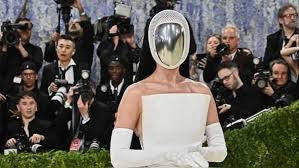
The 2026 Met Gala came and went in a blur of sequins, social media posts, and late night commentary, but the conversation it has ignited is only beginning. Held on May 5, 2026, at the Metropolitan Museum of Art in New York and centered around the theme “Fashion is Art,” the event quickly expanded beyond a red carpet gala into a full scale cultural moment. The museum’s accompanying exhibition “The Dressed Body” is now at the heart of a global debate about aesthetics, technology, wealth, and who gets to decide what counts as art.
“Fashion is Art” as concept and provocation
At first glance, the theme “Fashion is Art” sounds like a safe affirmation, one that fashion houses and luxury brands would gladly endorse. But the way the gala and the exhibition framed it transformed it into something more complex. The dress code invited guests to consider how clothing interacts with the body, identity, and power, and how garments can function as both personal expression and social commentary.
For many viewers, the Met’s framing felt like a deliberate challenge. It pushed audiences to ask harder questions: If fashion is art, what does that mean for workers behind the scenes, for environmental impact, and for the way technology increasingly shapes how we design and see clothing? The phrase moved from a slogan to a test, one that designers, wearers, critics, and consumers are still trying to pass.
“The Dressed Body” and its emotional pull
The core of the conversation is the exhibition “The Dressed Body,” which opened in the museum’s Costume Institute earlier in May 2026. The show traces the human body as a canvas, pairing historical garments with contemporary pieces that explore gender, mobility, disability, and digital identity. Mannequins appear in poses that feel almost alive, with lighting that shifts from soft to clinical, mimicking the way bodies are scrutinized in everyday life.
What stands out is the emotional weight the exhibition carries. Visitors describe moments of recognition and discomfort: seeing a corset next to a compression suit, an haute couture gown beside a customized adaptive garment, or a military uniform next to a protest dress. These contrasts force a confrontation with how dress participates in control, resistance, and transformation. The show does not present fashion as just ornament; it frames the body in clothes as a site of politics, memory, and possibility.
Beyoncé’s entrance and the boundaries of spectacle
When Beyoncé appeared on the Met’s hushed steps, the internet did not merely react; it detonated. Her look, conceived as part of “The Dressed Body” narrative, blended sculptural tailoring with kinetic elements that responded to movement and sound. As she walked, the garment seemed to ripple and shift, catching the light differently with each step. The visual effect was striking, but it also raised questions about control, authorship, and the line between wearer and artwork.
For her millions of fans, the moment felt like a culmination of her long standing interest in fashion as a storytelling medium. Past performances and red carpet appearances have already positioned her as someone who uses clothing to communicate themes of power, legacy, and Black cultural expression. At this Met Gala, that impulse met the museum’s more academic framing, creating a collision that felt both celebratory and unsettling.
Reactions to Beyoncé’s look
Some critics praised the design as a sophisticated example of fashion as performative art, arguing that the garment’s responsiveness and sculptural form elevated the evening beyond celebrity pageantry. Others questioned whether the piece relied too heavily on technology at the expense of craft, or whether the spectacle obscured the deeper messages the exhibition seemed to invite.
Among younger audiences, the response was more visceral. Many fans described the outfit as “godlike,” a phrase that speaks to the emotional investment lay audiences feel in celebrity fashion. For them, the garment did not have to fit neatly into a museum’s definition of art; it simply had to create a feeling of awe.
The Kardashians and the tech oligarchy question
While Beyoncé’s look drew admiration, the designs worn by members of the Kardashian family sparked a different kind of conversation. Their ensembles, created in collaboration with a tech focused fashion lab, integrated transparent materials, embedded sensors, and subtle displays that picked up on biometric data. Reporters described seeing heart rate patterns and light patterns synced to ambient music, turning the bodies of the wearers into walking data visualizations.
The imagery quickly became a flashpoint. Commentators on social media and in traditional outlets began to ask whether these pieces represented a new frontier in fashion or a worrying blurring of high culture and corporate influence. Some saw the integration of wearable tech as a natural evolution of fashion’s relationship with innovation, while others framed it as an intrusion of Silicon Valley sensibilities into an artistic space that should remain relatively insulated from market logic.
Tech oligarchs, fashion, and the access question
Underlying much of the debate is the presence of tech oligarchs among the gala’s guest list and sponsors. The night’s most talked about ensembles were often associated with designers or houses that have received significant funding from venture capital firms or tech conglomerates. For some, this convergence feels like a natural partnership between industries that both depend on hype, branding, and rapid iteration.
For others, it raises concerns about access and bias. Critics argue that when fashion becomes a platform for tech experimentation, the real beneficiaries are not the garment workers, small designers, or museum visitors, but the investors who can afford to underwrite these projects. The conversation has broadened to include labor practices in garment production, the carbon footprint of experimental textiles, and the way sponsorship can shape curatorial choices.
Fashion as art versus fashion as commodity
“Fashion is Art” is, in practice, a fragile and contested label. As the Met Gala unfolded, the tension between that ideal and the hard realities of fashion as a commercial enterprise became harder to ignore. On one side, the gown worn by a major pop star, hand stitched over months, can easily be read as a work of art. On the other, the same brand is also selling ready made items at mass retailers, blending artistic imagery with mass production.
The challenge for the exhibition is to hold both truths at once. “The Dressed Body” does not shy away from this duality. It includes runway pieces that cost tens of thousands of dollars alongside garments produced for everyday wear, documenting how the same aesthetic ideas move between haute couture and box store shelves. In that way, the show becomes a mirror for the entire fashion ecosystem, including its inequalities.
Why the public is arguing so passionately
What is striking about the post Met Gala discourse is its intensity. The debates are not confined to fashion magazines or academic journals; they are unfolding in comment sections, TikTok videos, and neighborhood conversations. That reaction speaks to how personally people feel about clothing. A dress or suit is not just metal, fabric, and thread; it is tied to memory, identity, and social status.
When people argue about whether a Beyoncé gown or a tech infused Kardashian look “counts as art,” they are also arguing about who gets to be seen, who gets to be taken seriously, and whose labor is honored. The Met Gala’s heightened visibility amplifies these questions, pulling them into the open instead of letting them remain in the background.
The global ripple effects of one night
While the gala itself is anchored in New York, its impact is already visible in cities around the world. Fashion editors in Paris, Seoul, and Lagos are rethinking their upcoming shoots and editorials, incorporating references to “The Dressed Body” and the idea of the body as a site of experimentation. At the same time, designers outside the Western fashion capital are reasserting the importance of local traditions, asking how their work can be understood as art without being absorbed into a Euro American narrative.
For students and emerging artists, the event has become a case study. They are dissecting the looks, the gallery texts, and the social media reactions, trying to understand how to position their own work in this ecosystem. The conversation is far from settled, but it is energizing a new generation of designers who want their clothes to do more than just look good.
What this moment could mean for the future of fashion
If the Met Gala 2026 leaves a lasting trace, it may be the way it forces a broader public to confront fashion’s contradictions. It is possible to believe that fashion is art while also questioning the conditions under which that art is produced. It is possible to admire a garment that integrates cutting edge technology while also demanding that the people who make and wear it are treated fairly.
For museums, brands, and media outlets, the challenge will be to keep those conversations alive beyond the immediate news cycle. The Costume Institute could host public forums, panel discussions, and community events that invite non specialist audiences into the conversation. Designers could incorporate more transparency into their supply chains and publicize the labor behind their “artistic” pieces.
A message to audiences inside and outside the fashion world
For those who care about fashion, the Met Gala 2026 offers an invitation to look deeper. It is not enough to admire a gown and move on; it is worth asking who made it, who can afford it, and how it fits into larger cultural patterns. For those who feel skeptical about fashion’s claim to art status, the gala provides a chance to understand why the argument matters to so many people.
Whether “Fashion is Art” ultimately sticks as a lasting credo or fades into the archive of themed evenings, its impact is already visible. It has prompted a moment of reflection that feels rare and urgent, one in which the way we dress becomes a way of asking what kind of world we want to live in.
Readers interested in the Met’s Costume Institute and the broader conversation around fashion and culture can explore the Costume Institute’s current exhibitions and programming and the V&A Museum’s essays on clothing, fashion, and identity.