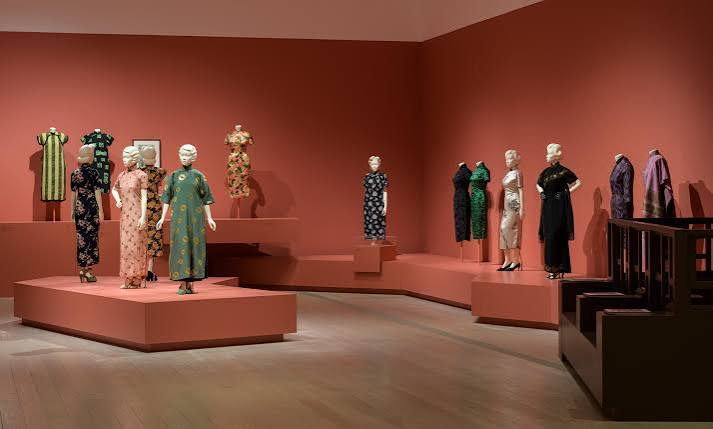
The Los Angeles County Museum of Art opened its globally anticipated exhibition on July 14, 2026, tracing how Chinese and Chinese American women’s fashion has acted as a mirror for centuries of socio political change. I walked through the galleries before the public opening and spoke with curators, designers, and community members to understand how garments, photographs, and personal objects come together to tell stories of identity, power, and resilience across time and place.
What the exhibition sets out to show
Fashioning Chinese Women is structured as a chronological and thematic journey that moves from imperial court dress to contemporary street style and diasporic expression. The show argues that clothing is not merely decorative but a form of communication that reflects and shapes social norms, political movements, and economic shifts. Each section pairs garments with archival materials such as letters, advertisements, and oral histories to ground the visual splendor in lived experience.
Visitors encounter silk robes that signaled rank and lineage, Republican era qipao that marked new public roles for women, and mid twentieth century workwear that spoke to industrialization and state policy. The narrative extends to the United States where Chinese American women negotiated identity through fashion that blended tradition with local trends, creating styles that asserted belonging while honoring heritage. The result is a layered portrait of how women used dress to navigate constraint and claim agency.
How the galleries are organized
The exhibition unfolds in distinct sections that follow major historical turning points. Early rooms focus on imperial and regional dress, highlighting embroidery techniques, textile trade routes, and sumptuary laws that regulated who could wear what. The curatorial team selected pieces that demonstrate technical mastery and social signaling, from courtly ensembles to everyday garments that reveal class and occupation.
Later sections address the Republican era and the rise of the qipao as a symbol of modernity and female visibility in public life. Photographs and film clips show women in urban centers adopting new silhouettes while negotiating family expectations and political upheaval. The diaspora portion examines how Chinese American women adapted fashion to local contexts, using clothing to assert citizenship, professionalism, and cultural pride in the face of discrimination.
Key themes that run through the show
- Clothing as a language of status, region, and gender within imperial and republican China
- The qipao as a contested symbol of modernity, nationalism, and female autonomy
- Workwear and uniformity during periods of state restructuring and industrial policy
- Diasporic style as a strategy for belonging and resistance in the United States
- Contemporary designers who reinterpret historical forms for global audiences
Why this exhibition matters now
Fashioning Chinese Women arrives at a moment when questions of identity, representation, and cultural memory are especially urgent. The show challenges simplistic narratives that reduce Chinese women to passive subjects or exotic figures. It centers their choices, labor, and creativity, showing how they used dress to participate in public life, support families, and express political views. The emphasis on agency resonates with contemporary debates about who gets to tell history and how material culture is used as evidence.
For Chinese American communities the exhibition offers a rare opportunity to see their stories told within a major museum setting. Many families hold garments and photographs that parallel items on display, and the show invites visitors to connect personal archives with broader historical patterns. The curatorial team worked with community advisors to ensure that interpretations reflect lived experience and avoid stereotypes that have long shaped Western perceptions of Asian dress.
What visitors will see and feel
The visual impact is immediate. Silk shimmers under controlled lighting, embroidery reveals intricate patterns up close, and tailored qipao demonstrate precise construction that flatters the body. Audio guides and wall texts provide context without overwhelming the eye, allowing garments to speak through cut, color, and texture. Interactive stations let visitors explore textile patterns, compare regional styles, and listen to oral histories that add voice to the objects.
I watched visitors pause before a display of mid century workwear and read letters from women who described long factory shifts and the pride of earning wages. In another room a group of teenagers examined a contemporary designer’s reinterpretation of a traditional motif and discussed how they might wear similar pieces to a family celebration. The mix of awe and recognition creates an emotional connection that makes the history feel present and personal.
Curatorial choices and community collaboration
The curators prioritized objects that demonstrate both technical skill and social meaning. They selected garments that show alterations, repairs, and reuse to highlight how clothing traveled through generations and adapted to changing circumstances. Archival photographs are paired with oral histories to humanize the images and to provide first person accounts of how fashion intersected with daily life and political events.
Community advisors played a central role in shaping interpretation. They reviewed labels, suggested contextual materials, and helped identify sensitive topics that required careful framing. The goal was to avoid presenting Chinese women as a monolith and to show diversity of experience across region, class, and time. This collaborative approach strengthens the exhibition’s credibility and ensures that it resonates with the communities it represents.
Practical information for visitors
The exhibition runs for several months with timed entry to manage crowd flow and preserve delicate textiles. Visitors should book tickets in advance and plan for at least an hour to move through the galleries at a comfortable pace. Photography policies vary by section to protect light sensitive materials, so check signage and staff guidance before taking photos. The museum offers guided tours and educational programs that deepen understanding of specific themes and historical periods.
Families with children can use activity guides that focus on patterns, colors, and materials to engage younger visitors without requiring prior knowledge. Accessibility services include wheelchair access, seating areas, and large print materials for those who need them. The museum store features books and select items inspired by the exhibition for those who want to continue learning at home.
Where to learn more
For exhibition details, ticketing, and educational resources visit the LACMA official website which hosts curator interviews and object highlights. Additional context on Chinese and Chinese American history is available through the Smithsonian Asian Pacific American Center which provides articles and primary sources that complement the themes explored in the show.
Final thoughts
Fashioning Chinese Women uses clothing as a lens to reveal how women negotiated identity, power, and change across centuries and continents. It invites visitors to see garments not as static artifacts but as active participants in history that carry stories of labor, aspiration, and resistance. I will continue to follow public response and educational programs around the exhibition to understand how it shapes conversations about representation, heritage, and the role of museums in telling complex histories.