Major game publishers are moving toward a common set of cloud gaming benchmarks designed to make cross platform multiplayer more consistent across regions, devices and streaming services. The effort focuses on one of the biggest frustrations in cloud gaming: the moment when a player’s button press, movement or shot reaches a distant server too slowly and the action on screen arrives a fraction too late. By aligning technical expectations around latency, streaming quality, server placement and network stability, the industry is seeking a more predictable experience for players who connect from different parts of the world.
Why a Common Cloud Gaming Standard Matters
Cloud gaming changes where a game is processed. Instead of rendering the game entirely on a local console or computer, a remote server performs much of the work and sends the resulting video to the player’s device. The player’s commands then travel back to the server. Every part of that journey consumes time.
For a single player game, a small delay may be tolerable. Competitive multiplayer is different. When two people are playing together from different countries, their actions must reach game servers, be processed and synchronized, and then be reflected in each player’s stream. If one participant has a much slower connection or is routed to a distant server, the experience can become uneven.
International technical organizations have already documented the importance of latency, bandwidth, jitter and packet loss in cloud gaming. The International Telecommunication Union has published requirements describing how end to end delay and network quality affect interactive cloud gaming. The work provides a useful foundation for publishers seeking to establish consistent performance targets rather than treating streaming quality as a service specific feature.
The Real Challenge Is More Than Internet Speed
Consumers often associate cloud gaming with download speed, but bandwidth is only one part of the experience. A connection can deliver a large amount of data while still producing an unpleasant gaming session if the network introduces substantial delay or sudden variations in that delay.
Latency measures how long information takes to travel between the player and the relevant server. Jitter measures changes in that delay. Packet loss occurs when pieces of information fail to reach their destination. Each problem can affect gameplay, but their combined effect can be particularly noticeable in fast multiplayer titles.
NVIDIA, for example, currently recommends less than 80 milliseconds of network latency to a GeForce NOW data center for its cloud gaming service, alongside different bandwidth requirements depending on resolution and frame rate. Its published requirements range from 15 Mbps for HD streaming at up to 60 frames per second to substantially higher requirements for 4K and high refresh rate sessions. These figures illustrate why the industry needs performance measurements that consider the entire user experience rather than internet speed alone.
Why Latency Becomes More Important in Competitive Games
A competitive shooter can expose network problems within seconds. A player presses a button, expects an opponent to appear, moves the aiming control and fires. If the interaction is delayed, the player may feel that the game ignored the command even though the server eventually received it.
Racing games, fighting games and other timing sensitive genres face similar challenges. Slower strategy and role playing games may tolerate greater delays, although sudden changes in network conditions can still interrupt the experience.
That is why a useful industry standard cannot simply state one universal latency number. Different game types have different tolerance levels, and a meaningful benchmark must account for frame rate, input delay, server processing, network conditions and the quality of the video stream reaching the player.
Cross Platform Play Adds Another Layer of Complexity
Cross platform multiplayer already requires publishers to coordinate players using different consoles, computers and mobile devices. Cloud gaming adds another layer because the game may be rendered in a remote data center before reaching the player.
That creates several separate paths that need to work together. A player on a console may be running a local version of the game, while another player is receiving a cloud rendered stream on a tablet. A third player may be using a personal computer connected to a different regional server. The underlying multiplayer service must still maintain a shared game state.
Google Cloud has previously described how global game services use regional infrastructure and automated server placement to bring players closer to game servers. Microsoft has similarly highlighted latency monitoring and regional matchmaking through Azure PlayFab Multiplayer Services. These existing systems demonstrate that publishers have already been solving pieces of the problem. A broader industry standard could make those measurements easier to compare across platforms and services.
What the New Benchmarks Could Cover
The emerging standardization effort is expected to focus on measurable technical conditions rather than prescribing how publishers should design their games. That distinction is important because different studios use different engines, cloud providers and network architectures.
A practical benchmark framework could consider several areas:
- End to end interaction latency between player input and visible response
- Network jitter and packet loss during multiplayer sessions
- Minimum and sustained bandwidth for different resolutions and frame rates
- Server location and regional routing for international players
- Frame delivery consistency during periods of heavy network traffic
- Matchmaking rules that account for network quality rather than geography alone
The purpose would not necessarily be to force every game into identical technical settings. Instead, publishers could use common measurements when testing performance, reporting problems and deciding where additional server capacity is needed.
Edge Computing Could Help Global Players
One of the most important technologies behind the push is edge computing. The basic idea is straightforward: place computing resources closer to the people using them. A player in Southeast Asia should ideally not need to send every interaction to a server located on another continent when a suitable regional facility is available.
Reducing physical distance cannot eliminate every source of delay, but it can shorten the network journey. Regional data centers can also help publishers distribute demand when a new game launches or a major event sends large numbers of players online at the same time.
Google Cloud has described the use of regional game servers and scalable infrastructure for global multiplayer titles. NVIDIA has also developed cloud infrastructure designed to stream interactive graphics to users in different locations. These approaches show why cloud gaming is increasingly tied to the geographic distribution of computing resources.
Publishers Could Gain From More Consistent Measurements
A unified benchmark could help game studios compare performance before releasing a title in new markets. Instead of relying on broad statements such as good connection or low latency, engineering teams could test specific thresholds under controlled conditions.
This could be particularly useful for games with large international communities. A title that performs smoothly in North America may encounter different network conditions in South Asia, Africa, Latin America or remote parts of Europe. Publishing infrastructure designed around one region does not automatically provide the same experience elsewhere.
Common measurements could also make troubleshooting easier. If several publishers use comparable definitions for latency, jitter and streaming stability, infrastructure providers can more easily identify whether a problem comes from the game server, the cloud streaming layer, an internet service provider or a player’s local network.
What Players Could Notice First
For gamers, technical standards matter only if they produce visible improvements. The most meaningful changes would be felt during actual play rather than through new settings menus or technical labels.
Players could see fewer sudden input delays, more stable frame delivery and more predictable matchmaking between regions. Someone joining a multiplayer session with friends abroad could have a better chance of receiving a server that balances geographical distance with network performance.
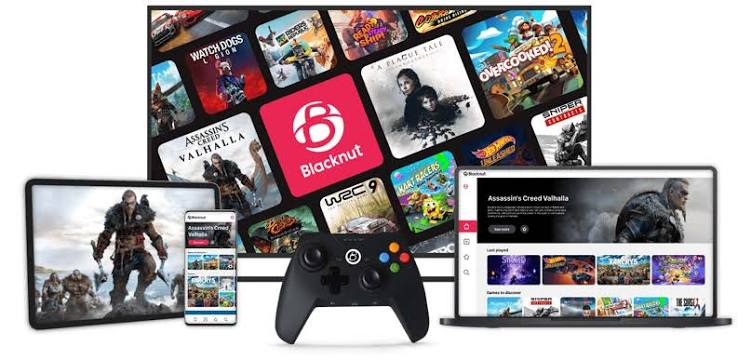
Cloud gaming could also become more practical for players who do not own powerful gaming hardware. A smartphone, tablet or modest computer can serve as a display and input device when the demanding graphics processing occurs remotely. Better network standards could therefore expand access to high quality games without requiring every household to purchase expensive hardware.
The Consumer Still Depends on the Local Network
Even the strongest industry standard cannot completely overcome poor home connectivity. WiFi interference, overloaded household networks, outdated routers and congested local infrastructure can still create problems between the player and the cloud gaming provider.
Players who want the most stable experience can benefit from a wired Ethernet connection where practical. A modern 5 GHz or newer wireless network can also reduce some local connectivity problems. NVIDIA currently recommends Ethernet or a 5 GHz WiFi connection for GeForce NOW users and provides network requirements for different streaming resolutions.
That means a successful cloud gaming ecosystem will require cooperation across several layers. Publishers need reliable game servers. Cloud providers need sufficient regional capacity. Internet networks need stable routes. Players need adequate home connectivity. A benchmark becomes useful when these separate pieces can be measured against a common technical language.
Why Standardization Could Shape the Next Stage of Cloud Gaming
The move toward common benchmarks reflects a broader maturation of cloud gaming. Early services often competed around availability, game libraries and image quality. As the technology becomes more established, the conversation is increasingly about consistency.
A player does not experience a cloud gaming platform as a collection of servers, codecs and network routes. The player experiences a game that either responds when expected or does not. That simple human perception is what technical standards ultimately need to address.
The IEEE Standards Association has already maintained work focused on systematic evaluation of cloud gaming user experience, including audio and video quality, interaction quality and latency. The existence of such work shows that the industry has been moving toward measurable cloud gaming performance for several years.
What Comes Next for Cross Platform Multiplayer
The next phase will depend on how widely publishers and infrastructure providers implement the common benchmarks and how they measure performance across real world networks. Laboratory testing can establish useful targets, but millions of players connect through different internet providers, devices and regional routes.
We should therefore expect the strongest standards to combine controlled testing with real world performance monitoring. A game that meets a target inside a data center but struggles during peak evening traffic has not solved the entire problem. Consistency under pressure will matter just as much as peak performance.
For players, the larger promise is simple. Cloud gaming should feel less like watching a game being streamed from somewhere else and more like playing the game directly. Achieving that goal requires more than powerful servers. It requires publishers, cloud providers and network operators to agree on what a reliable interactive experience actually means.
The adoption of common cloud gaming benchmarks marks a significant step in that direction. If the standards are applied consistently across regions and platforms, they could help make cross platform multiplayer more predictable, reduce the technical barriers between players and support a future in which the device used to play a game matters far less than the quality of the connection behind it.