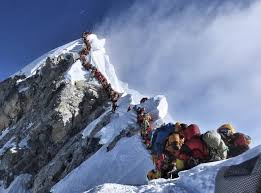
Two climbers died on Mount Everest this week, a grim development that has crystallized long simmering concerns about lethal congestion on the worlds highest summit. Their deaths prompted international alpine organizations to demand immediate reforms including tighter seasonal tracking, stricter permit controls, and coordinated rescue protocols as Nepal and international partners confront a mounting crisis that mixes human ambition with fragile mountain ecosystems.
What happened on the mountain
Rescue teams recovered two bodies near the summit ridge after distress calls and reports from other climbers. Both victims were part of different commercial expedition groups attempting summit bids during the peak spring climbing season. Conditions included thin air, variable wind, and long delays at high camp bottlenecks as many teams waited for narrow windows of acceptable weather. Witnesses described climbers queuing in single file along exposed sections and lingering above the death zone for extended periods while oxygen supplies dwindled.
Immediate reactions from the climbing community
Leading alpine associations issued unusually forceful statements calling for coordinated action. The International Climbing and Mountaineering Federation and prominent national alpine clubs urged Nepalese authorities and expedition operators to implement real time tracking of summit traffic, to limit the number of simultaneous permits on given ascent routes, and to mandate stronger medical and evacuation preparedness from operators.
Why overcrowding has become lethal
Mount Everest poses specific physiological and logistical hazards that amplify the risks of crowding. Above roughly 8,000 meters climbers enter the death zone where oxygen partial pressure cannot sustain human life for long. Even minor delays increase exposure to hypoxia, frostbite, and exhaustion. When dozens of climbers line up on narrow ridgelines, margin for error vanishes. Delayed descents mean depleted bottled oxygen, reduced daylight, and impaired decision making from extreme fatigue. That combination has produced fatal outcomes in multiple recent seasons.
Factors driving the surge in summit attempts
Several converging forces have pushed more people onto Everest than the mountain can safely absorb. Commercialized guiding operations grew rapidly over the past decade, lowering barriers for well financed clients with limited high altitude experience. Advances in weather forecasting and supplemental oxygen systems created a perception that the climb is manageable with the right support. Finally, rising global wealth and social media coverage amplified demand for the definitive achievement of standing on the highest point on Earth.
What experts recommend now
Veteran climbers, expedition leaders, and mountain medicine specialists are coalescing around a set of pragmatic reforms to reduce risk without banning access. Their recommendations focus on permitting, real time monitoring, operator accountability, and conservative decision making by clients and guides.
- Permit limits by time slot to avoid overlapping summit waves and to reduce peak density on narrow sections of the upper route.
- Mandatory GPS tracking of all climbers with a central operations hub to monitor traffic and initiate rescues faster.
- Strict operator accreditation linked to demonstrable rescue capacity, trained high altitude medics on expedition teams, and transparent reporting of client fitness and prior experience.
- A fiscal mechanism to fund helicopter rescue infrastructure and enhanced base camp medical capabilities.
Examples from other high altitude regions
Authorities managing popular high altitude treks and peaks have adopted useful models. For example, permit quotas and timed access windows reduced congestion on heavily visited trails in parts of the European Alps and in national parks in North America. Nepal could adapt similar systems while tailoring them to the unique technical demands of Himalayan climbing. The Nepalese government has already experimented with measures to regulate expedition operators and increase fees for commercial teams in previous seasons, but critics say enforcement remains inconsistent.
Policy pressure and political complications
Nepal faces complex tradeoffs. Everest is both a cultural symbol and a significant source of foreign income. Restricting permits affects local economies that depend on guiding, porter work, accommodation, and transportation. At the same time continuing deaths create reputational, legal, and moral costs. Any effective reform requires coordination between the government, local Sherpa communities, accredited expedition companies, and international stakeholders who often bring clients and financing.
Practical next steps for policymakers
Policymakers could pursue a phased approach that balances safety and livelihoods. Short term actions include implementing peak season permit caps, requiring expedition insurance and proof of previous high altitude experience for clients seeking summit bids, and demanding standardized rescue plans from operators. Medium term reforms include investing revenue from permits into permanent mountain search and rescue assets and improving oversight at base camp. Long term strategies call for collaborative regional planning with neighboring countries that host high altitude tourism, shared data systems for weather and crowd management, and capacity building for local emergency medical response.
Human stories behind the statistics
It matters who the victims and survivors are. Sherpa guides carry much of the logistical burden and frequently accept disproportionate risk to support clients. Families and communities that rely on guiding incomes also bear the emotional cost after a death. Conversely clients driven by a desire for achievement may underestimate the mountain and over-rely on commercial support. Those human complexities make purely technical fixes insufficient. Any policy must respect local voices, provide transparent accountability, and support families affected by tragedies.
A survivor perspective
One climber who turned back near the summit this season described the scene in tones both vivid and solemn. They recalled the glare of crampon points on wind sampled snow, the metallic clink of oxygen regulators, and the unnatural hush that descends when a group realizes rescue options are fading. They said the hardest decision was leaving teammates who insisted on continuing, a reminder that good outcomes often depend on collective restraint rather than individual will.
What climbers and the public can do today
Individuals who plan to climb Everest or high altitude peaks should adopt conservative standards. That means rigorous prior acclimatization, documented high altitude experience, transparent medical clearance, and choosing operators with proven rescue capability and ethical reputations. The broader public can pressure stakeholders by supporting calls for greater transparency around permits and expedition operator performance, and by amplifying Sherpa voices who advocate for safer working conditions.
Where to find credible information and ongoing updates
For authoritative guidance on mountain safety and high altitude medicine consult respected organizations such as the American Alpine Club and peer reviewed resources on high altitude care. The Himalayan Database provides a long running, detailed record of Everest ascents and incidents which helps researchers and policymakers analyze trends. The Nepalese government also publishes permit data and regulatory notices during the climbing season.
For broader context on mountain rescue standards and operator accreditation refer to industry resources like the International Climbing and Mountaineering Federation at the UIAA website and research on high altitude physiology hosted by medical institutions such as the Wilderness Medical Society at wms.org.
Conclusion
The latest fatalities on Everest sharpen the urgency of reforms that many in the climbing world have long advocated. This moment requires pragmatic, enforceable changes backed by investment in rescue capacity and honest dialogue between governments, Sherpa communities, and expedition operators. The goal is not to gatekeep a mountain achievement but to ensure that when people attempt humanitys highest climb they do so with responsibility for themselves and for others sharing the route.