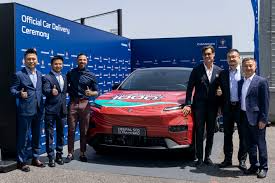
Changan Automobile announced on May 23, 2026 a sweeping strategic agreement with the Portuguese Football Federation that names the Chinese automaker the federations official global partner. The pact aims to accelerate Changans entry into European sports markets through a mix of sponsorship, joint marketing, and pilot fleet programs centered on electric and alternative fuel vehicles. The deal links one of the worlds largest vehicle manufacturers with a high profile European sporting institution at a moment when automotive electrification and sports sponsorship are reshaping consumer expectations and corporate strategies.
Why this partnership matters for Changan and European mobility
This partnership gives Changan an immediate, high visibility platform across Portugal and the wider European soccer ecosystem. Stadium activations, team transport, fan engagement programs, and corporate hospitality will put Changan electric vehicles and hybrid technology in front of millions of supporters both live and through broadcast partners. For Changan the move accelerates brand familiarity in key markets while allowing the company to pilot user experiences with clean energy vehicles in real world sports settings.
Strategic timing and market context
Europe is arguably the most competitive market for electric vehicles in the world with a dense charging infrastructure and stringent emissions standards. The European Union is phasing in stricter fleet emissions targets and many national incentives still favor plug in vehicles. For Changan, which has increased research and development spending on battery electric architectures and solid state battery research over recent years, the federation partnership converts technical progress into consumer facing narratives. For Portuguese football the alliance offers fresh sponsorship revenue and a partner keen to support sustainability initiatives across clubs and youth programs.
What the agreement includes
The memorandum of understanding covers several core elements that suggest a long term orientation rather than a single season sponsorship. It includes branded stadium presence, official vehicle supply for team logistics and official events, collaborative sustainability programs focused on reducing event carbon footprints, and joint fan engagement campaigns that use stadiums as live testbeds for new mobility services. Details released by the parties note pilot fleets of battery electric vehicles and hybrids will be provided for team transport and match day operations.
Operational and marketing mechanics
Operationally Changan will provide a range of vehicles tailored to the needs of professional sports teams including medium sized vans for kit transport and passenger EVs for staff and delegation use. Marketing will integrate Changan vehicle showcases into match day rituals, digital ticketing apps, pre match fan zones, and broadcast segments that highlight vehicle technology and sustainability commitments. The federation will also work with Changan on experiential activations at youth academies to promote road safety and clean mobility among younger fans.
Reactions from stakeholders
Industry analysts welcomed the agreement as a logical step for a global automaker seeking deeper European reach. Some mobility experts praised the public facing pilots as an opportunity to measure real world charging behavior and fleet management needs in the sports sector. Football administrators framed the deal as consistent with a broader push by national associations to partner with firms that have credible sustainability credentials.
Concerns and scrutiny
Not all responses were unreservedly positive. Critics raised questions about whether a major Chinese automaker can build long term consumer trust in a crowded European market where brand loyalty runs deep and regulatory scrutiny is high. Environmental campaigners asked for clearer metrics on how the partnership will materially reduce carbon emissions for football events rather than merely showpiece displays. Analysts also pointed to logistical challenges such as ensuring sufficient venue charging infrastructure and integrating vehicle telematics with existing match operations.
What this could mean for fans and clubs
For supporters the partnership promises tangible benefits. Match day experiences are likely to include ride and drive demonstrations, dedicated electric shuttle services for fans with mobility needs, and interactive displays where fans can learn about battery range and charging. Clubs can expect operating cost benefits from electrified transport for routine tasks and potentially lower total cost of ownership if national charging networks and incentives continue to develop. Youth outreach programs bundled into the deal may also increase awareness of sustainable travel choices among younger generations of fans.
Local economic and infrastructure implications
If Changan follows through with fleet deployment and infrastructure investment there is potential for localized job creation around vehicle servicing and charging installations. Stadiums and municipal partners may be incentivized to upgrade charging availability which benefits residents and event operators. The scale of those effects will depend on how much of the pilots become permanent and how quickly Changan can partner with European energy and charging providers.
How this fits into Changans broader international strategy
Changan has pursued aggressive international expansion for several years, establishing research centers in Europe and investing in design studios and joint ventures. This partnership fits into a playbook that pairs product launches with cultural and sporting partnerships to build emotional resonance and to normalize new technologies through everyday experiences. In practical terms the federation tie provides a route to test vehicle acceptance among European consumers and to refine service models before larger commercial rollouts.
Comparison with other automaker sports partnerships
Automakers have long used sports sponsorships to reach mass audiences. What sets this agreement apart is the explicit operational component that aims to make stadiums not just venues for branding but living laboratories for fleet electrification. If successful it could prompt other manufacturers to move beyond pure sponsorship toward partnerships that combine supply agreements, infrastructure investment, and community facing sustainability programs.
Next steps and indicators to watch
Observers will watch for several concrete signals that indicate whether this pact will deliver beyond publicity. Key indicators include rollout timelines for the pilot vehicle fleets, commitments to charging infrastructure at federation venues, measurable targets for emissions reduction at matches, and transparency around financing for local partners. Equally important will be consumer response in Portugal and adjacent European markets, and whether Changan adjusts pricing, warranty, and service offerings to meet local expectations.
Where to find more information
Further details on federation partnerships and sports governance can be found through established sport bodies and trade publications. For background on electric vehicle policies and market data consult sources such as the European Automobile Manufacturers Association and energy regulators who publish electrification roadmaps and charging statistics. The Portuguese Football Federation will publish partnership materials and match day activation plans on its official channels as the program moves from announcement to implementation.
Industry readers can learn about vehicle safety standards and fleet deployment implications through resources like the European Automobile Manufacturers Association at acea.auto and research on sports sponsorship economics available from outlets that track commercial partnerships.
Closing perspective
This partnership between Changan Automobile and the Portuguese Football Federation represents more than a sponsorship agreement. It is a test case for how automakers can use the public energy of sport to introduce complex technologies into everyday life. The outcome will depend on execution, local infrastructure, and whether the pilot programs deliver measurable benefits for clubs, fans, and the environment. If managed with transparency and real investment the effort could become a meaningful template for how global manufacturers work with cultural institutions to accelerate cleaner mobility in Europe.