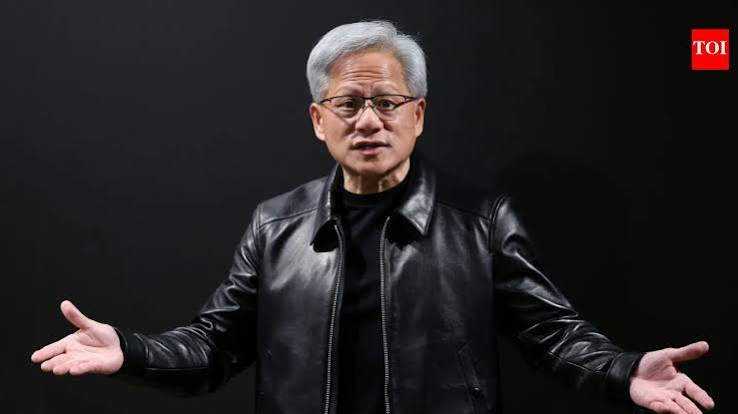
Nvidia has delivered another extraordinary financial performance, reporting quarterly revenue of $115.8 billion while making a decisive statement about its leadership future. On November 17, 2026, the company’s board confirmed that it does not intend to reinstate cofounder Jensen Huang as chief executive, despite growing calls from employees, investors and prominent technology figures for his return. The announcement comes as Nvidia faces increasing scrutiny over alleged artificial intelligence chip diversion to China, tighter American export restrictions and questions about corporate governance. With interim CEO Colette Kress overseeing the company and a permanent leadership search underway, Nvidia now faces an unusual challenge: maintaining its extraordinary commercial momentum while rebuilding confidence in its leadership.
Nvidia Board Closes the Door on Jensen Huang’s Comeback
The question of whether Jensen Huang could return to Nvidia dominated discussions surrounding the company’s latest earnings announcement. Huang, who stepped down as chief executive the previous week, had publicly indicated that he would be honored to return if the board believed his reinstatement would benefit shareholders and employees.
However, the board delivered a clear response. Chairman Harvey Jones said Nvidia did not intend to reinstate Huang as CEO, effectively ending speculation about an immediate leadership comeback. The decision followed the board’s acceptance of Huang’s resignation and came despite a campaign supporting his return that attracted considerable attention across the technology industry.
Jones also indicated that the company would move quickly but carefully in selecting a permanent replacement. Nvidia has engaged executive search firm Heidrick and Struggles to assist with the process, while the board considers both internal and external candidates.
The leadership situation represents a significant departure from Nvidia’s traditional corporate identity. Huang spent decades building the company into one of the most influential semiconductor businesses in the world. His departure therefore raises questions about whether Nvidia can preserve its established strategy and engineering culture under different executive leadership.
Why the Board Is Prioritizing a Leadership Transition
Huang’s resignation followed reports concerning personal relationships and possible national security implications involving his reported connection to Alice Huang, an executive associated with Singapore based technology company Megaspeed. American intelligence concerns about possible connections to Chinese intelligence operations have added another layer of scrutiny to the situation. These allegations remain subject to investigation and should not be treated as established findings of wrongdoing.
The board’s decision to maintain the leadership transition reflects the importance of corporate governance during a sensitive period. Reinstating a former executive while independent investigations and regulatory questions remain unresolved could introduce additional uncertainty for investors, employees and business partners.
For Nvidia, the immediate priority is establishing a credible succession process without allowing the leadership controversy to distract from product development, customer relationships and long term business commitments.
Record Third Quarter Results Demonstrate Nvidia’s Financial Strength
Despite the leadership disruption, Nvidia’s latest financial results demonstrate that demand for its artificial intelligence infrastructure remains exceptionally strong. The company reported fiscal third quarter revenue of $115.8 billion for the period ended October 25, 2026, representing a 103 percent increase compared with the same quarter a year earlier.
The results also exceeded the previous quarter’s revenue of $96.2 billion, marking a 20 percent sequential increase. Nvidia reported GAAP net income of $65.3 billion and diluted earnings per share of $2.70, compared with $31.9 billion in net income and earnings per share of $1.30 during the corresponding period last year.
These figures demonstrate the scale of Nvidia’s position in the expanding AI infrastructure market. Technology companies, cloud computing providers and organizations developing advanced AI models continue investing heavily in the computing resources required to train and operate increasingly sophisticated systems.
Data Center Business Remains the Primary Growth Engine
Nvidia’s Data Center division generated $107.6 billion in third quarter revenue, an increase of 110 percent from the previous year. The segment accounted for the overwhelming majority of the company’s quarterly sales, demonstrating how central AI computing has become to its business model.
Demand for high performance processors, networking equipment and complete computing systems has encouraged major cloud providers to expand their infrastructure. Companies including Microsoft, Google, Oracle and other technology businesses are investing in systems capable of handling increasingly demanding AI workloads.
Nvidia is also progressing with its Vera Rubin computing platform. The company confirmed that production had ramped up and shipments of Vera Rubin NVL72 systems had begun. Its expanding ecosystem includes cloud infrastructure partners preparing to deploy the new technology.
For customers, these developments matter because access to advanced computing hardware directly influences how quickly they can develop AI applications, operate large language models and provide commercial services. For Nvidia, maintaining its technological advantage will remain essential as competitors work to develop alternative processors and computing platforms.
Nvidia Raises Its Revenue Outlook to $130 Billion
Perhaps the most significant message for investors was Nvidia’s forward looking financial guidance. The company expects fourth quarter fiscal 2027 revenue to reach approximately $130 billion, with a possible variation of 3 percent in either direction.
The projection indicates that Nvidia expects demand to remain strong even as the company navigates leadership uncertainty and growing regulatory pressure. The forecast is particularly notable because it does not assume any Data Center compute revenue from China.
That exclusion highlights the extent to which American export restrictions have become part of Nvidia’s financial planning. Rather than relying on a return to unrestricted Chinese sales, the company is projecting substantial growth through demand from other markets.
Nvidia also reported non GAAP gross margins of 74.9 percent for the third quarter. Its fourth quarter outlook anticipates gross margins between 71 percent and 72 percent, reflecting the financial expectations associated with its expanding operations and product development.
For investors, the central question is whether Nvidia can sustain its exceptional growth rate while managing rising competition, export limitations and a significant executive transition.
Washington Tightens Scrutiny of AI Chip Exports to China
Nvidia’s financial performance is unfolding alongside a broader debate in Washington about access to advanced American semiconductor technology. US policymakers have become increasingly concerned that restricted AI processors could reach Chinese companies through intermediary businesses, overseas data centers or unauthorized distribution networks.
One important focus is the investigation involving Megaspeed International, a Singapore based technology company suspected of diverting advanced Nvidia chips to China. The allegations have attracted congressional attention and intensified questions about how effectively existing export control measures are being enforced.
The US Department of Justice and Department of Commerce have confirmed that authorities investigated Megaspeed for potential export control violations. Government investigators conducted an end use inspection in cooperation with Singaporean law enforcement in June 2025. Nvidia subsequently placed the company on its no sell list, and the Justice Department assumed the leading role in the criminal investigation.
The investigation does not establish that Nvidia itself knowingly participated in illegal chip transfers. However, lawmakers and national security experts are seeking greater clarity about what the company knew, when it became aware of potential diversion risks and whether its internal compliance procedures were sufficient.
Why the Alleged Chip Diversion Matters
Advanced AI processors are strategically important because they provide the computing capacity needed to develop sophisticated artificial intelligence models. Access to large quantities of these processors can influence commercial competitiveness, scientific research and military technology development.
American export controls are designed to restrict the transfer of certain advanced computing technologies to China because of concerns about their potential military and strategic applications.
However, enforcing these restrictions is complicated by international supply chains. A company may purchase computing hardware in one country, operate data centers in another and provide remote computing access to customers located elsewhere. Such arrangements create difficult questions about where a chip is ultimately being used and whether existing regulations adequately address indirect access.
Washington is therefore considering tighter controls on overseas access and distribution channels. New restrictions could require companies to conduct more detailed customer verification, monitor end users and strengthen procedures designed to identify suspicious transactions.
For Nvidia, the consequences could extend beyond direct restrictions on Chinese sales. Additional compliance requirements could affect international partnerships, distribution agreements and the economics of its global data center business.
China Sales and the Growing Export Control Challenge
China remains an important consideration in the global semiconductor industry, even as American restrictions limit access to some of the most advanced processors. Nvidia’s latest earnings discussion provided an important indication of how quickly the company’s position is changing.
Interim CEO Colette Kress disclosed that Nvidia generated approximately $2.4 billion from licensed Hopper data center chip sales to China during the third quarter. She also said the company was no longer shipping licensed Hopper data center products to the country.
The company’s next quarter forecast excludes Chinese Data Center compute revenue entirely. This decision suggests Nvidia is preparing investors for a business environment in which substantial growth must come from customers outside China.
At the same time, restricting access to American processors could encourage Chinese technology companies to accelerate investment in domestic semiconductor development. That possibility creates a complicated policy challenge for Washington. Export restrictions may slow access to advanced American technology, but they could also encourage competitors to develop alternative hardware and software ecosystems.
For Nvidia, maintaining relationships with international customers while complying with American regulations will require careful management. The company must balance commercial opportunities with the legal and national security responsibilities associated with selling strategically important technology.
Investors Face Three Major Questions About Nvidia’s Future
Nvidia’s latest results provide considerable evidence of financial strength, but investors have several reasons to examine the company’s next chapter carefully.
1. Who Will Become the Permanent CEO?
The first question concerns executive succession. Colette Kress is currently leading the company as interim CEO while the board searches for a permanent replacement. The incoming executive will inherit a powerful business with substantial financial resources, but will also face the challenge of maintaining Nvidia’s engineering culture and strategic direction without Huang’s direct leadership.
2. Can AI Infrastructure Spending Continue Growing?
The second question concerns demand. Nvidia’s recent results demonstrate that major technology companies continue spending heavily on AI computing infrastructure. However, investors will want to know whether these investments generate sufficient commercial returns to justify continued expansion.
Competition, electricity requirements, data center construction costs and the availability of computing resources could influence future spending decisions. Nvidia will need to demonstrate that its products remain valuable as customers become increasingly selective about infrastructure investments.
3. How Will Regulatory Investigations Affect the Business?
The third question concerns export compliance and corporate oversight. Investigations involving suspected chip diversion, congressional inquiries and tighter government restrictions could create additional operational costs and uncertainty.
Nvidia has established a board committee focused on national security and export control oversight. This development signals that the company recognizes the importance of addressing regulatory concerns at the highest levels of corporate governance.
The effectiveness of these measures will become clearer as investigations progress and the company provides further information through regulatory disclosures and public statements.
What Nvidia’s Leadership Transition Means for the AI Industry
Nvidia’s position extends well beyond the semiconductor market. Its processors, networking technologies and software platforms have become important components of the infrastructure supporting modern artificial intelligence.
Cloud providers rely on Nvidia hardware to operate large scale computing environments. AI developers depend on its technology to train models and deliver services. Startups and established companies alike are building products around the availability of increasingly powerful computing systems.
This widespread dependence means that leadership changes at Nvidia deserve attention across the technology industry. A permanent CEO must maintain relationships with major customers, suppliers and research partners while continuing to invest in future processor generations.
The company also needs to manage its relationship with Taiwan Semiconductor Manufacturing Company, a critical manufacturing partner in its global supply chain. Consistent production, reliable deliveries and continued technological development will remain essential regardless of who eventually takes the CEO position.
For the broader AI industry, Nvidia’s situation illustrates how quickly a technology company can become central to economic and national security discussions. Its future will be shaped not only by product performance and financial results but also by international trade policy, corporate accountability and geopolitical competition.
The Road Ahead: Strong Earnings, Greater Accountability
Nvidia enters the remainder of fiscal 2027 with remarkable financial momentum. Third quarter revenue more than doubled year over year, Data Center sales reached $107.6 billion and management projected fourth quarter revenue of approximately $130 billion.
Yet the company’s next phase will require more than continued sales growth. The board must identify a permanent leader, restore confidence in its governance arrangements and demonstrate that its international business practices meet increasingly demanding regulatory expectations.
The departure of Jensen Huang represents a major moment for a company whose identity has been closely associated with its cofounder. Nevertheless, the latest financial results suggest that Nvidia’s business operations and customer demand remain powerful even during this period of uncertainty.
Investors will now be watching for progress on the CEO search, developments in the Megaspeed investigation, further American export restrictions and the commercial performance of the Vera Rubin platform.
Ultimately, Nvidia’s next chapter will test whether a company built around one influential leader can maintain its technological and financial momentum through a difficult transition. Its record breaking results provide a strong starting point, but long term confidence will depend on responsible leadership, transparent governance and the ability to navigate an increasingly complicated global semiconductor market.
For further financial information, readers can consult Nvidia’s official third quarter fiscal 2027 earnings announcement and the latest reporting from Reuters on Nvidia’s board and export control oversight.