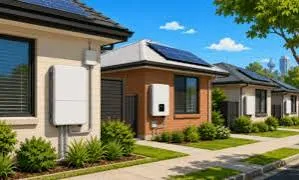
We have noticed a shift happening quietly on rooftops and in basements across entire neighborhoods, one that rarely announces itself with fanfare but is reshaping how homeowners think about electricity, resilience, and the very bones of their houses. A new market analysis released this week points to a significant international surge in smart and sustainable home retrofits, with homeowners across North America and Europe increasingly choosing energy efficient upgrades and off grid capable systems over traditional renovations. Rising grid electricity costs, combined with a patchwork of new tax incentives for residential solar and battery installations, are driving what analysts describe as one of the fastest growing segments in the home improvement industry.
Why Homeowners Are Suddenly Rethinking Their Electricity Bills
We think anyone who has opened a summer utility bill in the past two years understands the emotional weight behind this trend. There is a specific kind of dread that comes with watching electricity rates climb month after month, especially for families already managing tight budgets. Utility costs across much of the United States and Europe have risen sharply as grid operators contend with aging infrastructure, extreme weather events, and surging demand tied to electrification and data center growth. For many households, that steady upward pressure has turned what used to be a background expense into a genuine source of financial anxiety.
Homeowners retrofitting existing solar systems with battery storage often describe a very specific moment that pushed them toward the decision, the instant the power goes out during a storm and their rooftop panels, ironically, shut down along with everything else because they were never designed to operate independently from the grid. That frustration, paired with the arrival of time of use electricity rates that charge a premium during evening hours, has made battery retrofits feel less like a luxury upgrade and more like a practical necessity for energy independence and peace of mind.
The Economics Behind the Surge
The financial picture has grown more complicated but not necessarily less favorable. The federal Residential Clean Energy Credit that once offered homeowners a straightforward 30 percent deduction on solar and battery costs expired at the end of 2025, a change that has forced many families to look elsewhere for savings. Yet state and utility level programs have stepped in to fill much of that gap. California’s Self Generation Incentive Program continues to offer substantial rebates for battery storage, particularly for income qualified households, while states including Maryland, Oregon, and New York maintain their own storage tax credits and rebate structures. In Massachusetts, performance based programs pay homeowners directly for allowing utilities to draw on their stored battery power during peak demand periods, creating an ongoing revenue stream rather than a single upfront discount.
We find it worth noting that roughly forty percent of new residential solar installations now include battery storage, a figure that climbs past sixty percent in some regional markets, according to industry data tracked by outlets covering the solar sector. That attachment rate reflects a meaningful shift in how homeowners view solar power itself. It is no longer simply about generating clean electricity during daylight hours. It is about capturing that energy, storing it, and using it strategically to avoid the most expensive hours on the grid, a shift that transforms a rooftop system from a passive environmental statement into an active financial tool.
Europe’s Parallel Push Toward Energy Independence
Across the Atlantic, the motivations look somewhat different but the destination is remarkably similar. European homeowners, particularly in Germany, the Netherlands, and parts of Scandinavia, have spent recent years grappling with energy security concerns tied to geopolitical instability and volatile natural gas markets. That anxiety has translated into aggressive adoption of home battery systems, heat pumps, and improved insulation, often bundled together as comprehensive retrofit packages rather than piecemeal upgrades. National and regional governments across the European Union have layered in grants and low interest financing specifically targeting building efficiency improvements, recognizing that older housing stock across the continent represents one of the largest opportunities for reducing both energy costs and carbon emissions simultaneously.
We think this cross continental alignment says something important about where the broader housing market is heading. When homeowners in Munich and homeowners in Sacramento are independently arriving at the same conclusion, that energy resilience is worth investing in, it suggests the trend has moved well past a passing fad driven by clever marketing. It reflects a genuine recalibration of how people think about their homes, shifting from viewing electricity as a utility they simply pay for to viewing it as a resource they can generate, store, and manage on their own terms.
What a Modern Retrofit Actually Looks Like
For homeowners considering this path, the process has become considerably more approachable than it was even a few years ago. A typical retrofit today often begins with an energy audit to identify where a home is losing efficiency, followed by targeted upgrades that might include:
- Rooftop solar panels sized to the household’s actual consumption patterns rather than a generic standard system
- A battery storage unit, such as a Tesla Powerwall or Enphase system, capable of powering essential circuits during an outage
- Smart home energy management software that automatically shifts usage away from peak pricing windows
- Improved insulation and air sealing to reduce the overall load the system needs to cover
Retrofitting a battery onto an existing solar system typically runs between 10,000 and 18,000 dollars before incentives, a substantial investment that nonetheless often pays for itself within seven to twelve years depending on local electricity rates and available rebates, according to industry estimates from firms tracking residential solar economics. Declining battery prices, expected to fall an additional ten to twenty percent as manufacturing scales and trade tariffs ease, are likely to shorten that payback window even further in the coming years.
A Renovation Trend Rooted in Something Deeper Than Savings
We would be doing this story a disservice if we framed it purely in terms of spreadsheets and payback periods. What we are hearing from homeowners, again and again, is something closer to relief. The knowledge that a refrigerator full of groceries will not spoil during a blackout, that a medical device dependent on electricity will keep running, that a family will not sit in the dark during a heat wave while waiting for the grid to recover, carries an emotional value that resists easy quantification. For many, that sense of security has become just as motivating as any tax credit or utility rebate.
Organizations tracking clean energy adoption, including the ENERGY STAR program run through the Environmental Protection Agency, have continued to highlight how efficiency upgrades and storage technologies work together to reduce both household costs and strain on the broader grid. As more homeowners across North America and Europe make this same calculation, weighing rising utility costs against the falling price of independence, we expect this retrofit wave to keep building momentum well beyond 2026, reshaping not just individual homes but the expectations an entire generation of homeowners holds about what a house is supposed to provide.