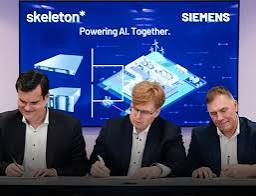
As artificial intelligence expands, the infrastructure behind every model, search, and automated service is facing a growing test: how to deliver enormous amounts of electricity reliably, even when demand changes in seconds. On October 14, 2026, Skeleton Technologies announced a major strategic investment led by Siemens to expand high power energy storage systems designed to support the growing global AI data infrastructure market. The reported investment highlights a critical shift in the AI race. Computing capacity may attract the headlines, but the power systems supporting data centers are becoming just as important to future growth.
Why AI Data Centers Need Better Power Infrastructure
AI data centers are designed to process large volumes of information using specialized chips, servers, cooling equipment, and high speed networking systems. These facilities can consume substantial amounts of electricity, and their power requirements can change as computing workloads shift. Training large AI models and operating services used by millions of people place different demands on computing resources, but both depend on stable electricity and reliable infrastructure.
A sudden change in power demand can create challenges for equipment designed to operate within narrow electrical limits. Even a brief interruption or fluctuation can affect sensitive systems, interrupt computing work, or require backup equipment to respond. Data center operators therefore need more than a large supply of electricity. They also need systems that can manage short term changes, maintain power quality, and help protect operations when the grid or facility experiences a disturbance.
Energy storage can contribute to that resilience. Depending on the technology and system design, storage equipment can respond when demand changes, help stabilize electrical conditions, and provide temporary support during transitions between power sources. For AI infrastructure developers, these capabilities may help reduce operational disruptions and make it easier to manage facilities with intensive computing loads.
What Siemens and Skeleton Technologies Bring to the Partnership
Siemens has a broad industrial technology business spanning automation, electrification, and infrastructure systems. Its experience in industrial engineering and electrical equipment could be relevant to integrating energy storage into complex facilities, where hardware must work with control systems, monitoring software, and existing power infrastructure.
Skeleton Technologies is known for developing energy storage products based on ultracapacitor technology and related systems. Ultracapacitors store energy differently from conventional batteries and are particularly suited to applications that require rapid charging and discharging, high power delivery, and frequent cycling. Their characteristics can make them useful where short bursts of power and fast responses matter more than storing large amounts of energy for many hours.
The strategic investment could help Skeleton expand its capacity and develop solutions for a market increasingly concerned with electricity demand and power reliability. Siemens may also bring industrial expertise and potential routes into infrastructure markets. However, the precise investment amount, commercial terms, deployment schedule, and scope of any joint projects should not be assumed unless confirmed in formal company announcements.
The wider significance lies in the combination of industrial engineering and specialized energy storage. AI infrastructure is not simply a computing problem. It requires coordinated decisions about electrical connections, cooling, backup power, equipment placement, grid capacity, and long term operating costs. Companies that can address several of these needs together may be well positioned as data center projects become larger and more technically demanding.
How High Power Storage Differs From Conventional Batteries
Energy storage technologies are not interchangeable. Conventional batteries are often selected for their ability to store energy and deliver it over a sustained period. Ultracapacitors, by contrast, are designed to release or absorb power very quickly and tolerate repeated charge and discharge cycles. Their value depends on the application, the system architecture, and the operating conditions.
For a data center, a high power storage system could help manage brief demand spikes or support electrical stability during a transition. It may work alongside batteries, backup generators, grid connections, and power conversion equipment rather than replacing those systems outright. A hybrid design can combine technologies with different strengths, provided engineers account for efficiency, reliability, maintenance, and cost.
Fast response is especially relevant when computing workloads fluctuate. If a facility suddenly draws more electricity, a properly designed storage system may help manage the transition while other equipment adjusts. That does not mean every power fluctuation can be eliminated or that storage alone can keep an entire data center operating during a prolonged outage. The actual benefit depends on system capacity, controls, installation quality, and how the storage equipment is integrated with the rest of the facility.
The Growing Energy Challenge Behind Artificial Intelligence
Demand for AI computing has encouraged technology companies and data center developers to invest in larger facilities, advanced processors, and increasingly sophisticated cooling systems. These improvements can support more computing work, but they also raise questions about where electricity will come from and how quickly new power capacity can be connected.
In some areas, data center projects compete with other users for grid capacity. New electrical infrastructure can take years to plan, permit, and build. Local communities may also ask how large facilities will affect electricity prices, water use, land development, and the reliability of public services. The issue is therefore not only how much energy AI requires, but whether the systems supplying it can expand responsibly.
Storage technologies could form part of the response by helping operators manage demand and use electricity more flexibly. They may support the integration of variable renewable power or help reduce the effect of brief fluctuations, depending on the system design. Yet storage is not a substitute for adequate generation, transmission, distribution, or careful energy planning. Large facilities still need sufficient electricity over the full duration of their operations.
The International Energy Agency tracks global electricity demand, energy investment, and the relationship between data centers and power systems. Its analysis provides useful context for understanding why the growth of AI infrastructure is drawing attention from energy planners as well as technology companies.
Potential Benefits for Data Center Operators
For operators building AI facilities, the appeal of high power energy storage is practical. Computing equipment is expensive, and interruptions can waste processing time, disrupt customer services, and complicate the operation of systems that support business critical applications. Better management of electrical demand can help reduce certain operational risks, although the scale of any benefit must be established through engineering analysis and real world testing.
Potential advantages include:
- Faster power response: Storage designed for rapid discharge may help manage sudden changes in electrical demand.
- Improved power quality: Properly integrated equipment can help address certain electrical fluctuations that affect sensitive computing hardware.
- Support for resilient operations: Storage may complement backup systems and help manage transitions between sources of electricity.
- More flexible energy management: Operators may be able to coordinate storage with facility controls, grid conditions, and available power supplies.
- Reduced stress on some equipment: Managing short duration power events may help limit certain demands on electrical infrastructure, depending on the installation.
These benefits are not automatic. Data center developers must compare storage systems according to their power output, energy capacity, response time, conversion losses, service life, safety requirements, and overall cost. The best solution for a facility experiencing brief demand spikes may differ considerably from the system required to provide backup electricity during a lengthy outage.
Manufacturing Scale and Commercial Adoption Will Matter
A strategic investment can help a technology company move from promising products toward broader commercial deployment, but scaling energy infrastructure involves substantial practical challenges. Manufacturers must secure components, maintain consistent product quality, expand production capacity, and provide installation and maintenance support. Customers also need confidence that systems will perform reliably throughout years of operation.
For Skeleton Technologies, expanding production could be important if demand for rapid response energy storage grows alongside AI infrastructure. However, increased capacity must be matched by customer orders, competitive pricing, and evidence that the technology performs well in the environments where it is installed. Data center operators are unlikely to adopt new power equipment on enthusiasm alone because reliability failures can carry significant financial consequences.
Siemens could contribute through its industrial experience and understanding of complex electrical systems. A strategic relationship may also help connect specialized storage technology with customers that need integrated infrastructure solutions. The extent of that contribution will depend on the investment terms and any commercial agreements announced by the companies.
Competition Across the Energy Storage Market
The market for data center power solutions includes batteries, ultracapacitors, uninterruptible power supply systems, generators, and other electrical technologies. Each addresses different operational needs. Batteries can store substantial amounts of energy, while ultracapacitors are particularly suited to rapid power delivery and repeated cycling. Uninterruptible power supplies help maintain electrical continuity when incoming power is disrupted, while generators can provide energy for longer periods when appropriately configured and supplied.
Rather than treating these options as direct substitutes, infrastructure planners increasingly need to consider how different technologies can work together. A facility might use one system to respond to short electrical events and another to support longer outages. Software and control equipment can coordinate their operation, but the design must be tested against the facility’s actual demand profile and reliability requirements.
Competition will depend on more than technical performance. Purchase price, installation complexity, maintenance needs, energy efficiency, safety, and expected service life all affect the total cost of ownership. Companies seeking to establish a stronger position in AI infrastructure will need to demonstrate measurable advantages over existing solutions.
Environmental Considerations and Responsible Expansion
The electricity demands of AI infrastructure have also raised questions about emissions and the environmental cost of digital services. Energy storage may help facilities use available electricity more efficiently or coordinate with renewable energy sources, but the environmental outcome depends on how the system is manufactured, charged, operated, and eventually recycled or disposed of.
High power storage should therefore be evaluated as part of a broader energy strategy. Operators need to consider the source of electricity, equipment efficiency, cooling requirements, and the environmental impact of materials used in manufacturing. A storage system does not automatically make a data center cleaner, particularly if it relies on electricity generated from high emission sources without improving overall energy use.
Responsible development also requires attention to local communities. Data centers can bring investment and employment, but they may increase pressure on power networks and other infrastructure. Better power management can contribute to a more flexible facility, yet governments and developers must still plan for adequate electricity supply, transparent environmental assessments, and responsible resource use.
What to Watch Following the Investment
The reported investment led by Siemens marks a development worth monitoring, but its commercial significance will become clearer through implementation. Investors, data center operators, and energy industry observers should look for specific evidence that the partnership can turn technical capabilities into reliable products at competitive prices.
Several developments will help determine whether the investment delivers meaningful results:
- Investment details: Confirmed funding amounts, ownership arrangements, and planned uses of capital would clarify the scale of the commitment.
- Production expansion: Announcements about manufacturing capacity and delivery schedules would indicate whether Skeleton can meet potential demand.
- Customer deployments: Named projects and independently verifiable performance data would help establish how the systems operate in real data center environments.
- Technical integration: Details about how storage works with batteries, backup power, and facility controls would show where the technology provides the greatest value.
- Commercial performance: Pricing, service requirements, and customer adoption will help determine whether the technology can compete with established alternatives.
These indicators matter because investment announcements often describe a company’s intentions before the full commercial outcome is known. Actual deployments, reliable operating data, and repeat customer demand will provide a stronger basis for judging long term success.
Conclusion: AI Growth Depends on Reliable Energy
Siemens’ reported strategic investment in Skeleton Technologies highlights an essential part of the artificial intelligence expansion: the need for electrical infrastructure that can respond to demanding workloads without compromising reliability. As AI data centers grow, technologies capable of managing rapid power changes may become increasingly relevant alongside conventional batteries, backup systems, and grid improvements.
Skeleton Technologies brings specialized energy storage expertise, while Siemens offers experience in industrial and electrical infrastructure. Their reported partnership could help advance high power storage solutions for data centers, although its eventual impact will depend on investment details, technical performance, production capacity, and customer adoption.
The broader lesson is that the future of AI will depend on more than faster processors and larger computing models. It will also depend on reliable electricity, sound engineering, responsible energy planning, and infrastructure capable of supporting growth. If high power storage systems can prove their value under real operating conditions, they may become an important part of the effort to build dependable AI facilities while managing the increasing demands placed on global power networks.