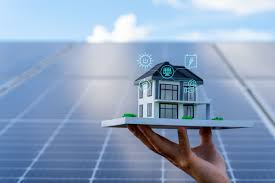
Residential energy efficiency is gaining renewed international attention as green building organisations, policymakers and environmental coalitions call for faster home renovations and wider adoption of renewable energy. On November 5, 2026, the discussion gained particular relevance through Renovate Europe Day 2026 in Dublin, Ireland, where the building sector’s transition towards affordable, energy efficient and sustainable properties remained a central concern. The broader policy debate across Europe and North America highlights an important question for homeowners: how can existing houses become more efficient, affordable to operate and less dependent on fossil fuels?
Solar panels are an important part of this transition, but they are only one element of a successful residential retrofit. Insulation, efficient heating systems, improved windows, ventilation, battery storage and smart energy management can all contribute to lower household energy consumption. Together, these improvements can help families manage electricity costs, improve indoor comfort and reduce exposure to changing energy prices.
There is, however, an important distinction between international policy discussions and binding regulations. No verified announcement establishes that a single International Green Building Council or a unified European and North American coalition introduced mandatory solar retrofits for existing homes on November 5. Instead, the current developments involve established regional regulations, national renovation programmes and international industry initiatives that are moving towards similar sustainability objectives.
Why Residential Solar Retrofits Are Receiving Greater Attention
Homes account for a substantial share of energy consumption, particularly in countries where buildings rely heavily on electricity, natural gas or other fossil fuels for heating and cooling. Older properties can be especially inefficient because they were constructed before modern insulation standards, energy efficient windows and renewable energy technologies became widely available.
During winter, poorly insulated homes can lose heat through roofs, walls, floors and windows. During summer, inadequate insulation and ventilation can allow indoor temperatures to rise, increasing demand for air conditioning. These problems affect household budgets and can make homes uncomfortable during extreme weather.
Solar energy offers an opportunity to reduce dependence on conventional electricity supplies. A rooftop photovoltaic system can generate electricity for household appliances, lighting and other domestic needs. When combined with battery storage, it may also allow homeowners to use some of the electricity generated during daylight hours after sunset.
However, installing solar panels without addressing basic energy inefficiencies may limit the financial and environmental benefits. A home that continuously loses heat or requires excessive cooling will still consume substantial energy. This is why modern retrofit strategies increasingly consider the entire building rather than treating solar installation as an isolated improvement.
European Building Regulations Are Driving the Renovation Agenda
Europe has established one of the most significant regulatory frameworks for improving building energy performance through its revised Energy Performance of Buildings Directive. The legislation entered into force in May 2024 and required member states to incorporate its provisions into national law by May 29, 2026.
The directive establishes targets for reducing energy consumption across residential buildings and introduces stronger renovation requirements for inefficient properties. EU countries must develop national building renovation plans that reflect their housing conditions, climate, financial resources and construction standards.
For residential buildings, member states must ensure that average primary energy use decreases by at least 16 percent by 2030 compared with 2020 levels. The required reduction increases to between 20 and 22 percent by 2035.
At least 55 percent of the reduction must come from renovating the 43 percent of residential buildings with the poorest energy performance. This approach directs attention towards properties where improvements could deliver substantial energy savings.
The directive also establishes solar installation requirements for certain categories of buildings. However, these requirements do not mean that every existing European homeowner must immediately install rooftop solar panels.