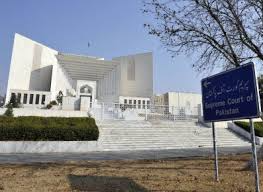
Today the United States Supreme Court issued a sweeping decision that preserves birthright citizenship as a constitutional guarantee, rejecting legal efforts to narrow the scope of citizenship by birth. The ruling, announced on July 1, 2026, resolves one of the most contested questions in American immigration law and delivers immediate and profound consequences for families, legal systems, and public policy at home and abroad.
What the Court decided and why it matters
The Court held that the Fourteenth Amendment s guarantee of citizenship to all persons born or naturalized in the United States and subject to its jurisdiction cannot be read to exclude children born on U.S. soil regardless of their parents immigration status. The majority opinion grounded its reasoning in constitutional text history and precedent, concluding that attempts to reinterpret the birthright clause to create categories of excluded births would require an amendment not a judicial redefinition.
This decision settles litigation that reached multiple federal courts and many state legislatures where lawmakers pursued measures to limit automatic citizenship at birth. For families and advocates who feared that the legal footing of children born in the United States could be weakened the ruling provides immediate legal clarity and renewed protections under federal law.
Legal reasoning and the majority opinion
The majority wrote that the plain language of the Fourteenth Amendment confers citizenship on persons born within the United States and subject to its jurisdiction and that this language must be interpreted in light of the amendment s original public meaning and subsequent judicial understanding. The opinion engaged with historical materials from the post civil war era and later case law to demonstrate continuity of interpretation. The justices also rejected arguments that Congress s immigration powers allow a statutory or administrative override of constitutional birthright.
Several key points guided the Court s analysis. First the Fourteenth Amendment s phrase subject to the jurisdiction of the United States was examined not as an invitation to create ever narrower classes but as a limitation designed to exclude only narrow categories such as children of foreign diplomats. Second the majority emphasized separation of powers reasoning noting that any broad change to who is a citizen by birth must proceed through the constitutional amendment process rather than judicial or executive action. Third the decision took account of settled reliance interests of millions of people and institutions who have depended on birthright citizenship for legal status, benefits and civic identity.
Concurring and dissenting views
Justices who joined the majority authored concurring opinions that emphasized different facets of the ruling. Some underscored the constitutional text and original public meaning while others highlighted precedent and reliance. A robust dissent argued that the historical record and federal statutes allow more nuanced readings of jurisdiction and urged greater deference to congressional authority over immigration. Dissenting justices warned of policy consequences the majority declined to address and left open the possibility of future legislative reform within constitutional bounds.
Immediate legal and administrative effects
The ruling has immediate operational effects across federal, state and local agencies. Birth certificates, Social Security enrollment, passport applications, and school registrations that rest on the presumption of citizenship by birth will proceed under a reaffirmed constitutional standard. Agencies that had begun or contemplated changes to forms or practices in response to prior litigation will now need to align with the Supreme Court s interpretation.
Immigration enforcement agencies retain their statutory authorities but no longer may use executive or administrative measures to strip citizenship rights at birth. Attorneys for impacted families are expected to file motions to vacate adverse administrative decisions that relied on the narrower interpretations now rejected by the Court.
Human stories behind the legal fight
Behind the legal briefs are lives shaped by uncertainty. Parents who arrived in the United States seeking work and community now face the relief of knowing their children s citizenship is secure. For many children born in urban hospitals and rural clinics alike the decision affirms a status that affects access to education health care and social services. At a community health center in Texas a nurse described how expectant parents would ask about citizenship before they asked about vaccines or prenatal care. That quiet anxiety will ease for countless families who sought stability for their newborns.
Advocacy groups on both sides reacted with strong emotions. Organizations that work with immigrant communities celebrated the Court s reaffirmation of the Fourteenth Amendment as a protection for children and family unity. Those who sought limits to birthright citizenship expressed disappointment and signaled intent to pursue legislative channels within the constitutional framework the Court outlined.
Policy choices and the path forward
The ruling shifts the center of political debate from immediate judicial reinterpretation to legislative policymaking. Lawmakers who oppose unconditional birthright citizenship may now pursue statutory or constitutional avenues consistent with the Court s guidance. Any significant change to the constitutional guarantee would require an amendment a high bar that necessitates broad bipartisan consensus and state ratification mechanisms.
At the same time policymakers who favor comprehensive immigration reform see an opening to refocus on pathways to lawful status border processing and integration policies that address economic and humanitarian challenges without contesting established constitutional rights. Legal experts note that clarifying ancillary immigration rules and improving administrative processes can alleviate many of the practical pressures that fueled the dispute over birthright citizenship.
International implications and comparative perspectives
The United States decision will reverberate globally because birthright citizenship has long been a distinguishing feature of American nationality law. Countries that rely on jus soli birthright systems and those that condition citizenship on parentage will watch how the ruling shapes migration patterns family formation and diplomatic relations. International law scholars point out that while nation states control their citizenship rules the reaffirmation of a broad birthright principle in the United States may influence debates elsewhere about inclusion exclusion and the rights of children born on foreign soil.
For migrants and refugees the ruling reduces one axis of uncertainty when families make complex decisions about travel settlement and cross border family ties. Advocates working with international organizations are already reassessing advice and program design to reflect the clarified U.S. position.
What this means for families and communities
For many families the decision delivers reassurance that a child s place in the civic community will not be subject to shifting administrative interpretations. Children can continue to claim citizenship benefits that affect daily life from school enrollment to travel documents. The ruling also affirms the principle that constitutional protections apply equally to those born within U.S. jurisdiction reinforcing civic norms about equality and legal predictability.
Where to follow developments
As the Supreme Court s opinion is implemented various federal agencies will publish guidance and procedural updates. Readers seeking the full text of the opinion can consult the Supreme Court s official website and legal reporting from established outlets for annotated analysis. For background on the Fourteenth Amendment and historical treatments of citizenship the Library of Congress and legal scholarship repositories provide comprehensive resources such as historical documents and scholarly commentary.
Selected resources include a full run of primary documents on constitutional history at the Library of Congress Library of Congress and case law coverage at the Legal Information Institute hosted by Cornell Law School Cornell Law School.
Final perspective
The Supreme Court s decision reaffirms a core constitutional promise and resolves a contentious legal debate that touched millions of lives. The ruling narrows the path for judicial or administrative circumvention while inviting democratic debate about immigration policy within the constitutional order. For families who feared losing certainty the decision provides a concrete measure of relief and a renewed legal foundation for citizenship by birth.