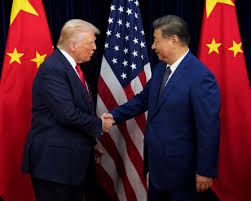
We stand at a pivotal moment in global affairs as President Donald Trump readies himself for a high-stakes summit with Chinese President Xi Jinping in Beijing on May 10, 2026. The air feels thick with anticipation, much like the humid tension before a summer storm in the Chinese capital. This meeting carries the weight of unresolved trade frictions, the simmering Taiwan question, and Iran’s nuclear ambitions, all against a backdrop of shifting alliances that could reshape the world order. Our team has closely tracked these developments, and we sense both promise and peril in the days ahead.
The Road to Beijing: A Timeline of Tensions
President Trump’s return to the White House in 2025 reignited old rivalries with China, yet it also opened doors for direct diplomacy. Trade deficits ballooned last year, with U.S. imports from China hitting record levels despite tariffs imposed during his first term. Beijing retaliated by curbing rare earth exports, hitting American tech firms hard. Now, as supply chains strain under geopolitical pressures, Trump seeks concessions on intellectual property theft and market access.
Taiwan adds urgency. Recent Chinese military drills near the island have U.S. lawmakers on edge, prompting increased arms sales from Washington. Xi views Taiwan as a core interest, while Trump has pledged unwavering support for Taipei’s democracy. A misstep here risks escalation, evoking memories of Cold War brinkmanship.
Iran enters the fray through proxy conflicts. Tehran’s drone strikes on Saudi oil fields and Houthi attacks in the Red Sea have disrupted global energy flows, indirectly benefiting China’s oil imports. Trump aims to rally Xi against Iran’s nuclear program, but Beijing’s economic ties to Tehran complicate matters. We witness families in American heartlands paying more at gas pumps, feeling the ripple effects of these distant power plays.
Trade Talks: Bargaining Chips and Breaking Points
At the summit’s core lies the U.S.-China trade imbalance, a sore point since 2018. Trump enters with leverage from booming domestic manufacturing, bolstered by the CHIPS Act that funneled billions into semiconductor plants. Yet China dominates electric vehicle batteries and solar panels, sectors vital for America’s green transition.
Negotiators whisper of potential deals: China easing restrictions on U.S. agricultural exports like soybeans and pork, in exchange for relaxed tech export controls. Imagine Midwestern farmers breathing easier, their silos filling once more. But hazards loom. Xi might demand exemptions from tariffs on consumer goods, flooding U.S. markets and undercutting local jobs.
Our analysis draws from patterns in past summits. The 2019 Osaka G20 truce collapsed under mutual distrust. This time, with global recession fears mounting due to Europe’s energy woes, both leaders face domestic pressures to deliver wins. Failure could spike inflation, hitting working families hardest.
Key Trade Demands at a Glance
- U.S. priorities: Stronger IP enforcement, reduced subsidies for state-owned enterprises, and fair access to Chinese financial services.
- China’s asks: Phased tariff reductions, technology transfer allowances, and cooperation on climate tech amid COP31 talks.
- Wild cards: Currency manipulation accusations and forced labor concerns in Xinjiang cotton supply chains.
Taiwan Strait: Walking the Tightrope
The Taiwan issue evokes raw emotion. Picture Taiwanese citizens gazing across the strait toward mainland patrols, their futures hanging in balance. Trump’s administration has boosted defense aid, including advanced missiles, signaling resolve. Xi, marking the 75th anniversary of the People’s Republic this fall, cannot appear weak.
Diplomatic channels buzz with backroom efforts. A joint statement affirming “peaceful coexistence” might emerge, but enforcement remains tricky. We recall the 1996 Taiwan Strait Crisis, when U.S. carriers sailed through contested waters. Today, hypersonic missiles and cyber capabilities raise the stakes exponentially.
Experts like those at the Council on Foreign Relations warn of miscalculation risks. A single incident, say a downed drone, could spiral. Trump and Xi must navigate red lines, perhaps through confidence-building measures like hotline expansions.
Tehran Triangle: Aligning Against Iran
Iran’s shadow stretches long. Its uranium enrichment nears weapons-grade levels, per International Atomic Energy Agency reports. Trump, who withdrew from the 2015 nuclear deal, now seeks a tougher stance. China, Iran’s top oil buyer, holds sway but resists sanctions that hike its energy costs.
The summit offers a forum to coordinate. Joint pressure on Tehran could include UN resolutions or naval patrols in the Gulf. Yet Beijing prioritizes stability for its Belt and Road projects in the Middle East. American allies like Israel watch closely, fearing a repeat of 2024’s proxy escalations.
We feel empathy for Iranian dissidents risking lives for change, caught between regimes. A Trump-Xi pact might isolate Tehran, paving paths for talks, but cultural divides persist. Success hinges on mutual incentives, like shared anti-piracy ops in the Arabian Sea.
Global Dynamics: Allies, Rivals, and Wild Cards
Shifting sands define this era. Russia’s Ukraine quagmire diverts U.S. attention, while India’s neutral stance in QUAD meetings irks Washington. Europe grapples with Chinese EV imports, fracturing transatlantic unity.
Trump arrives with a diverse entourage: trade reps, Taiwan experts, and Iran hawks. Xi hosts amid economic slowdowns, with youth unemployment at 18 percent. Personal chemistry matters; their 2017 Mar-a-Lago rapport thawed ice, but COVID-era blame games soured it.
Vivid scenes unfold: Secret Service agents scanning Beijing’s Forbidden City backdrop, interpreters bridging idioms. We root for breakthroughs that ease burdens on ordinary people, from Detroit autoworkers to Shanghai factory hands.
Potential Outcomes and Scenarios
| Scenario | Likelihood | Impact |
|---|---|---|
| Grand Bargain | Low | Trade truce, Taiwan de-escalation, Iran sanctions unity; markets rally. |
| Modest Wins | Medium | Partial deals on ag exports and IP; tensions simmer. |
| Stalemate | High | Rhetoric hardens; tariffs rise, risking recession. |
| Breakdown | Low | Public barbs lead to crises in Taiwan or Gulf. |
Human Stories Amid the Power Plays
Behind headlines pulse real lives. In Ohio, steelworker Mike Harlan worries tariffs protect his job but raise gadget prices for his kids. In Guangdong, factory owner Li Wei frets over U.S. boycotts threatening her apparel line. These voices ground our reporting.
Taiwanese teacher Chen Mei tutors students on democracy’s fragility, haunted by air raid drills. Iranian engineer Reza dreams of normalized trade, escaping sanctions’ grip. Empathy drives us to highlight such narratives, reminding leaders of their stakes.
As the summit unfolds, we monitor live from Washington. Early signals point to extended sessions, a good sign. Yet hazards persist: nationalist fervor in both nations, intelligence leaks, or unforeseen events like a Taiwan election surprise.
What Lies Beyond Beijing?
A successful summit could stabilize markets, with the Dow potentially gaining 5 percent. It might foster trilateral talks with Tehran or bolster APEC unity. Failures, however, invite chaos: supply shortages, military posturing, energy spikes.
We urge vigilance. Citizens worldwide deserve leaders prioritizing dialogue over dominance. Track updates via our live blog and Reuters for real-time insights. This is more than diplomacy; it’s a bid to secure prosperity for generations.