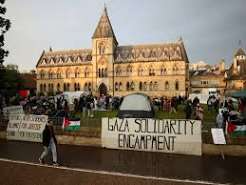
Parliamentary attention has turned sharply onto British universities after investigations revealed aggressive disciplinary action against students involved in pro Palestine demonstrations, with King’s College London at the centre of a widening debate about academic freedom and campus protest rights.
What triggered the parliamentary spotlight
Over the past academic year dozens of student protesters across UK universities faced suspensions, expulsions, or formal misconduct proceedings after participating in pro Palestine demonstrations. The issue gained national prominence when faculty members, alumni, and civil liberties groups shared case files showing that student unions and university discipline committees applied sanctions ranging from temporary bans from campus to permanent expulsion in some instances. Reports of heavy handed measures, including the use of security personnel and accusations of coordinated surveillance, prompted petitions and letters to MPs who now seek answers about proportionality and due process.
Why King’s College London is in the frame
King’s College London has become a focal point because multiple documented cases point to a pattern of firm disciplinary responses. Student groups there reported that individuals who participated in demonstrations were called before disciplinary panels, required to sign behavioural agreements, and in certain cases faced suspension pending investigation. Faculty and alumni have raised concerns that the process lacked transparency and appeared to penalise students for political expression rather than specific misconduct. The concentration of cases at a single institution turned King’s into a test case for wider questions about how universities balance safety, free speech, and political protest.
How the rules for campus protest actually work
Universities in the United Kingdom operate under a complex web of legislation and guidance. The Higher Education (Freedom of Speech) Act 2023 created a statutory framework intended to protect free speech on campus and established a complaints mechanism through the Office for Students. At the same time, the Public Order Act 1986 and associated protest regulations give police and institutions powers to manage demonstrations that may cause disruption or threaten safety. Guidance from the Office for Students and legal advice from bodies such as the Equality and Human Rights Commission stress that protest rights must be weighed against duties to protect staff and students and to maintain orderly teaching and research.
This legal landscape creates room for disagreement. Universities argue they must enforce rules to prevent disruption and protect people on site. Student advocates argue that protest penalties are sometimes disproportionate and that discipline is used to send a political message rather than to remedy specific misconduct. The tension is not unique to pro Palestine demonstrations but has sharpened because those protests have been large, sustained, and emotionally charged.
What universities say they are protecting
University leaders cite several practical concerns. They point to episodes where demonstrations blocked classroom access, interrupted lectures, or led to confrontations that risked harm to staff and students. Security reports from some campuses describe incidents where protesters occupied buildings, damaged property, or engaged in verbal harassment. In response universities have invoked codes of conduct that require prior notice of protests, limit the times and locations for assemblies, and impose sanctions for violations. The stated aim is to preserve academic continuity and physical safety rather than to suppress political speech.
Voices from students and faculty
Students who faced disciplinary action describe a sense of isolation and fear about future employment if sanctions appear on academic records. Some recount being summoned to meetings with little notice and feeling pressured to sign agreements acknowledging misconduct without legal representation. Faculty members who spoke on background expressed concern that discipline committees often lack clear rules distinguishing protected speech and legitimate protest from actual misconduct. The human cost is visible in students who have withdrawn from courses, avoided activism, or left campus feeling alienated.
Supporters of university action argue that some protest behaviour crossed the line from peaceful assembly into disruption and intimidation. They contend that students should be able to advocate for political positions without impeding others from attending classes or working safely. That perspective is not about silencing speech but about maintaining a campus environment where all students can learn.
What investigators and rights groups are finding
Civil liberties organisations and academic freedom groups have begun collecting case studies that suggest a pattern of overreach in some institutions. Their reports highlight instances where sanctions appeared disproportionate to the conduct, where disciplinary procedures lacked transparency, and where students felt they were being punished for political beliefs rather than for actual harm. These findings have fed into parliamentary questions and prompted calls for an independent review of how universities handle protest related discipline.
Why the issue matters beyond individual cases
The stakes extend beyond any single campus. Universities are meant to be places where ideas are tested and citizenship is practiced. When students feel that protest carries a heavy personal cost, civic engagement may shift away from open debate and into more opaque channels. Employers, scholarship bodies, and international partners watch how universities handle dissent because it shapes perceptions of institutional integrity and academic freedom.
What can be done to restore trust
There are practical steps that universities, regulators, and student groups can take to reduce friction and protect rights while maintaining order. The following measures have been recommended by civil liberties advocates and legal experts to create clearer, fairer processes for handling protest related complaints.
- Publish clear, accessible protest policies that define what counts as misconduct versus protected expression and outline proportional sanctions.
- Ensure disciplinary hearings include independent oversight and allow students to be accompanied by advisers or legal representatives.
- Create rapid review mechanisms so that students facing interim suspensions can seek timely hearings rather than waiting weeks or months.
- Require universities to report protest discipline data to the Office for Students to enable benchmarking and identify outliers.
Parliament’s next moves and what they could mean
MPs are now asking for written evidence from university leadership and for testimony from student representatives and civil liberties groups. Questions in committee focus on the legal basis for sanctions, the consistency of disciplinary procedures, and the role of external security firms in managing campus events. The pressure is likely to produce either a formal government review or targeted guidance from the Office for Students on handling protest related complaints. The outcome could reshape how universities across the UK approach student activism and set new standards for transparency and due process.
How to follow the debate and find reliable information
For readers who want to track developments and understand the legal background, official guidance from the Office for Students and reports from independent civil liberties groups provide detailed context. The Office for Students maintains a free speech complaints scheme and publishes guidance for higher education providers while organisations like the National Union of Students and Liberty provide summaries of cases and policy analysis. These resources help separate verified facts from claims that circulate on social media.
What this means for students and universities going forward
The parliamentary scrutiny is a signal that the status quo is under review. Universities that rely on heavy discipline without clear procedural safeguards risk reputational damage and regulatory intervention. Students who participate in protests must understand that disruption can carry consequences but also that they have rights to fair hearings and to challenge sanctions. The path forward requires a balance that protects both orderly academic life and the right to express political views without fear of disproportionate punishment.
For official guidance on free speech and student discipline visit the Office for Students and for independent analysis of civil liberties and protest rights consult Liberty. Both sources offer practical information for students, faculty, and administrators seeking to navigate this complex issue.