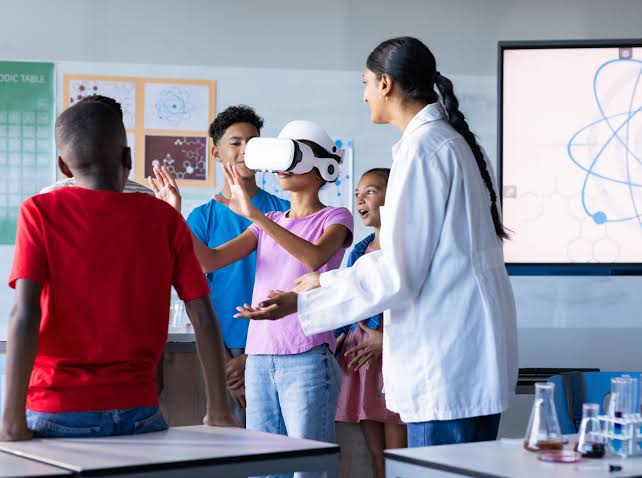
Universities around the world are facing a defining moment as generative artificial intelligence becomes increasingly common in classrooms, research laboratories, and academic administration. On November 7, 2026, UNESCO and international university consortiums convened to advance discussions on unified ethical frameworks and safety guidelines for integrating AI tools into global higher education curricula. The initiative reflects growing concern that universities need consistent principles for using AI responsibly while protecting academic integrity, student privacy, research quality, and equal access to educational opportunities. From engineering students using AI assistants to analyze complex data to professors incorporating generative tools into scientific research, higher education institutions are being challenged to establish clear rules that support innovation without compromising the fundamental purpose of learning.
Why Global Universities Need Common AI Education Standards
Generative AI has moved rapidly from experimental technology into everyday academic activities. Students increasingly use AI powered applications to explain difficult concepts, summarize research papers, generate programming examples, and organize assignments. Faculty members are also exploring these tools to prepare teaching materials, develop assessments, support research, and reduce administrative workloads.
However, the speed of adoption has created a difficult situation for universities. Some institutions have introduced detailed AI policies, while others continue to rely on general academic integrity rules that were written before generative AI became widely accessible.
This inconsistency can create confusion for students studying across different countries or participating in international research programs. A particular use of AI might be permitted at one university but prohibited at another. Similarly, expectations regarding disclosure, automated writing assistance, and AI generated research material can vary significantly between academic departments.
International cooperation could help address these differences by establishing shared principles that universities can adapt to their own legal systems, educational traditions, and institutional requirements.
The objective is not necessarily to impose identical rules on every institution. Rather, a common framework can establish minimum expectations for transparency, accountability, safety, fairness, and responsible academic use.
UNESCO’s Role in Responsible Artificial Intelligence Education
UNESCO has become an important international voice in discussions about artificial intelligence and education. Its work focuses on ensuring that technological development supports human rights, educational inclusion, cultural diversity, and equitable access to knowledge.
The organization has previously published guidance addressing generative AI in education and research, encouraging governments and educational institutions to develop policies that protect learners while allowing responsible experimentation.
Its approach recognizes that AI tools can provide meaningful educational benefits, but their use must remain guided by human judgment. Automated systems should support teachers and researchers rather than replace their professional responsibilities or remove the human relationships that make education effective.
UNESCO’s artificial intelligence and education initiatives provide an important foundation for universities developing institutional policies and national education strategies.
Academic Integrity Becomes a Central Priority
One of the most challenging questions surrounding generative AI concerns the definition of original academic work. Modern AI applications can produce essays, computer programs, research summaries, presentations, and even complex technical explanations within seconds.
These capabilities create opportunities for learning, but they also make it more difficult to determine whether submitted work genuinely reflects a student’s understanding.
Universities are increasingly reconsidering traditional assessment methods. Assignments based exclusively on written submissions may not always reveal whether students can independently explain, evaluate, or apply the information they present.
Clear Rules for AI Assisted Assignments
A practical international framework could encourage universities to establish transparent rules describing when and how students may use AI tools.
For example, an institution might permit students to use generative AI to identify grammar mistakes, brainstorm research questions, or receive explanations of difficult scientific concepts. However, submitting AI generated work as entirely independent research without disclosure could violate academic integrity requirements.
Students should understand that responsibility for submitted work remains with them, regardless of whether an AI application helped produce it. They must verify facts, check references, examine calculations, and ensure that their final submissions meet institutional standards.
Faculty members also need clear guidance. Without consistent expectations, instructors may unintentionally apply different standards to students completing similar assignments.
Moving Beyond AI Detection Software
AI detection technology has attracted considerable attention as universities search for ways to identify automatically generated assignments. However, automated detection systems can produce inaccurate results and may incorrectly flag writing produced independently by students.
For this reason, universities should avoid relying exclusively on detection scores when making academic misconduct decisions.
More reliable assessment strategies could include oral examinations, classroom discussions, supervised practical exercises, research journals, and assignments requiring students to explain their reasoning.
These methods allow educators to evaluate genuine understanding instead of focusing entirely on the appearance or writing style of a submitted document.
STEM Education Faces Significant Changes From Generative AI
Science, technology, engineering, and mathematics programs are among the academic fields most directly affected by advances in generative AI. Students in these disciplines increasingly encounter tools capable of writing code, interpreting scientific information, generating mathematical explanations, and assisting with engineering simulations.
These applications can make difficult subjects more accessible, particularly for students who need additional explanations or opportunities to practice technical skills. An engineering student, for example, might use an AI assistant to understand a programming error, while a mathematics student could request alternative explanations of a complicated equation.
However, educational institutions must ensure that AI assistance does not replace the practical experience and independent reasoning required to develop professional competence.
AI Literacy Becomes an Essential Academic Skill
Universities may increasingly incorporate AI literacy into STEM curricula, teaching students how generative systems work, where their limitations exist, and how to evaluate their outputs.
Students should learn that AI generated answers are not automatically accurate. Mathematical calculations can contain errors, scientific explanations can omit important conditions, and programming suggestions can introduce security vulnerabilities.
Future engineers, scientists, and technology professionals will need more than the ability to operate AI applications. They will need the judgment to identify unreliable results, question automated recommendations, and take responsibility for decisions involving technology.
UNESCO’s AI Competency Framework for Students provides a useful foundation for developing these skills. It organizes AI learning around human centered thinking, ethical awareness, technical knowledge, and AI system design.
Data Privacy and Student Protection Require Stronger Safeguards
Student privacy is another major issue facing universities as they adopt external generative AI platforms. Many applications process information through cloud infrastructure, creating questions about how personal information is collected, stored, shared, and used.
Students may unknowingly submit personal details, unpublished research, examination materials, or confidential institutional information to third party services. If universities do not establish clear policies, sensitive information could be exposed to unnecessary risks.
A responsible international framework should encourage institutions to examine the privacy practices of AI providers before approving their products for academic use.
Universities should also explain what information students can safely share with AI systems and which categories of data must remain confidential. Research departments handling medical records, commercial information, or sensitive scientific findings may require particularly strict controls.
Institutions should consider several protective measures:
- Review the privacy policies and data handling practices of AI providers before institutional adoption.
- Prevent students and researchers from uploading confidential information without authorization.
- Establish clear procedures for reporting data breaches and inappropriate system behavior.
- Provide training on personal information protection and responsible AI usage.
- Ensure that students understand their rights regarding the collection and processing of educational data.
Addressing AI Bias and Unequal Access Across Countries
Global AI education standards must also address differences in technology access. Universities in wealthier countries may have the resources to purchase advanced AI subscriptions, develop specialized computing facilities, and train faculty members. Institutions in developing countries may face financial limitations, unreliable internet connectivity, and shortages of qualified technical personnel.
Without deliberate international cooperation, these differences could create a wider educational divide. Students with access to advanced AI systems might receive additional research support and learning opportunities, while others could struggle to participate in increasingly technology dependent academic environments.
Language presents another challenge. Many generative AI systems perform better in widely represented languages than in less commonly supported languages. This can disadvantage students whose education takes place in regional or minority languages.
International standards should therefore encourage accessible educational technology, multilingual AI development, affordable institutional solutions, and training programs that reach underserved academic communities.
Bias within AI systems also requires attention. If training data does not adequately represent different populations, cultures, and geographical regions, automated outputs may reproduce stereotypes or provide misleading information.
Universities should evaluate whether AI applications produce fair results for different student groups and ensure that automated systems do not become the sole basis for important academic decisions.
Research Institutions Must Protect Scientific Accuracy
Generative AI is increasingly being used in academic research, where it can assist with literature reviews, data organization, programming, translation, and the preparation of research manuscripts.
These capabilities may reduce certain administrative burdens and allow researchers to devote more time to experimental work and critical analysis. However, the technology also creates risks involving fabricated references, inaccurate findings, manipulated information, and unclear authorship.
Research institutions must establish standards requiring researchers to verify AI generated information before including it in academic publications. Scientific findings should remain supported by reproducible methods, reliable evidence, and transparent documentation.
Human Accountability Must Remain Central
Researchers should remain responsible for the accuracy and integrity of their publications, even when AI tools contribute to the writing or analysis process.
Universities could require researchers to disclose significant AI assistance, particularly when automated systems contribute to data interpretation, code generation, or manuscript preparation.
Academic journals and research organizations also have an important role in establishing consistent disclosure requirements. Clear expectations can help prevent disputes over authorship while maintaining public confidence in scientific research.
Faculty Training Will Determine Whether AI Integration Succeeds
Introducing new technology into university classrooms is only one part of successful AI integration. Teachers and professors must also understand how to use these systems appropriately and recognize situations in which automated assistance could undermine learning.
A professor who understands AI capabilities can design assignments that encourage students to question generated answers, compare different approaches, and explain their conclusions. Without sufficient preparation, educators may struggle to distinguish useful AI assistance from inappropriate academic dependence.
Universities should therefore invest in professional development programs covering AI literacy, educational applications, privacy protection, assessment design, and ethical decision making.
Faculty members should also participate in developing institutional policies. Their experience with students, examinations, research supervision, and classroom instruction can help ensure that regulations remain practical rather than becoming administrative restrictions that are difficult to implement.
What the Proposed International Framework Could Mean for Universities
The reported UNESCO and university consortium discussions could contribute to a more consistent approach to generative AI across international higher education. However, establishing shared principles will require further cooperation between governments, universities, researchers, technology providers, and student organizations.
International guidelines would not automatically become legally binding regulations. Individual countries and institutions would still need to determine how shared principles should be incorporated into national education policies and university procedures.
Several priorities are likely to shape future discussions:
- Academic transparency: Clear disclosure expectations for AI assisted assignments and research.
- Ethical technology adoption: Evaluation of AI systems before they are introduced into academic environments.
- Student protection: Stronger privacy, security, and data protection measures.
- Curriculum development: AI literacy and responsible technology use across academic disciplines.
- International accessibility: Greater access to educational AI tools for universities in developing countries.
- Human oversight: Maintaining the authority of qualified educators and researchers in important academic decisions.
What Students Should Expect From the Next Generation of University Education
For students, the expansion of AI standards could gradually change how university assignments, examinations, research projects, and classroom activities are organized.
Rather than simply prohibiting generative AI, universities may increasingly distinguish between acceptable learning assistance and the inappropriate replacement of independent academic work.
Students could be expected to explain how they used AI, verify the information it produced, and demonstrate their own understanding of the material. Practical examinations and research presentations may become more important as institutions seek stronger evidence of individual competence.
These changes could also encourage students to develop skills that remain valuable even as AI systems become more capable. Critical thinking, communication, problem solving, creativity, scientific reasoning, and ethical judgment will continue to matter across professional fields.
For students entering STEM careers, familiarity with AI systems may become an increasingly valuable professional advantage. However, technical knowledge and independent reasoning will remain essential for using these technologies responsibly.
A Global Conversation About the Future of Higher Education
The November 7 discussions surrounding global AI integration standards reflect a broader international challenge: ensuring that technological progress strengthens education rather than weakening its fundamental values.
UNESCO’s existing policy work, international AI competency frameworks, and recent discussions among education ministers provide a foundation for developing more consistent approaches to generative AI in universities. The September 2026 UNESCO Digital Learning Week discussions also demonstrated growing international interest in protecting education as a public good while addressing the opportunities and risks associated with artificial intelligence.
The outcome of further cooperation will depend on whether institutions can translate broad ethical principles into practical classroom policies, research requirements, faculty training, and meaningful safeguards for students.
Ultimately, successful AI integration should not be measured by how many universities adopt automated tools. It should be measured by whether students learn more effectively, researchers produce reliable knowledge, educators retain professional independence, and educational opportunities become more accessible.
Generative AI is likely to remain an important part of higher education, but its role must be carefully defined. By developing shared standards that protect academic integrity, encourage scientific innovation, and place human judgment at the center of learning, international education institutions have an opportunity to establish a more responsible foundation for the next generation of global scholarship.