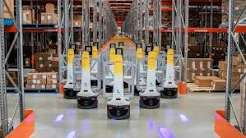
On July 4, 2026 I walked through a converted warehouse on the outskirts of a port city where the hum of conveyor belts has been replaced by the quieter, precise choreography of mobile robots. Developers and logistics firms are rapidly retooling traditional brick and mortar shipping facilities into fully integrated robotic fulfillment centers to meet changing global supply chain demands. The shift reshapes industrial real estate, labor patterns, and regional economies while offering a glimpse of how goods will move and reach customers in the coming decade.
Why conversion makes financial and operational sense
Older warehouses were designed for pallet racking and longshore workflows. They often sit on well connected land near ports, highways, and rail lines. That location value remains. What has changed is demand for speed, density, and automation. E commerce growth, nearshoring trends, and tighter delivery windows drove logistics operators to prioritize smaller, higher throughput nodes. Converting existing assets into robotic centers is faster and often cheaper than new builds because utilities, zoning, and transport links are already in place. For many owners the math favors conversion over greenfield development.
What conversion looks like on the ground
Physical alterations can include reinforced floors to handle automated vehicles, new mezzanine levels for dense storage, integrated safety systems, and upgraded power and network infrastructure to support fleets of autonomous mobile robots, conveyors, and vision systems. Software integration is equally important. Warehouse management systems are replaced or augmented with real time orchestration platforms that schedule robots, track inventory by SKU and pallet, and manage inbound dock scheduling with carrier APIs. The result is a facility that looks calm at a glance yet operates with intense synchronized motion.
Key technical upgrades
- High capacity electrical upgrades and redundant networking to sustain continuous robot operations.
- Sensor grids and cell networks for precise indoor localization and collision avoidance.
- Modular racking and dynamic storage to permit fast reconfiguration for seasonal peaks.
- Edge compute nodes and cloud connectivity for real time analytics and predictive maintenance.
Labor dynamics and community impact
Converting to robotic fulfillment reduces the need for manual order pickers doing repetitive motion tasks. That spurs both anxiety and new opportunities. Workers I spoke with described initial uncertainty about job security followed by cautious optimism when employers offered retraining for robot maintenance, system monitoring, and quality assurance roles. Communities face a mixed picture. Some local economies lose traditional warehousing jobs that supported families, while others gain higher skilled positions and more stable shift patterns. Municipal leaders must consider workforce programs that fund reskilling and partnerships between developers, tech providers, and vocational schools.
Developers, operators, and the capital stack
Real estate developers are partnering closely with automation integrators and software vendors to offer turnkey fulfillment products to retailers and third party logistics providers. That partnership model changes capital allocation. Lenders now underwrite both real estate and automation hardware and expect predictable service level agreements from operators. Lease structures have adapted with longer initial terms and performance linked fees tied to throughput or uptime. Institutional investors favor assets with flexible layouts that can support multiple automation stacks, reducing obsolescence risk.
Environmental and zoning considerations
Conversions often improve energy efficiency through LED lighting, optimized HVAC for thermal zones, and energy management systems that shift heavy compute loads to off peak times. However increased power draw for charging robot fleets and edge servers requires grid coordination. Some municipalities are updating zoning and permitting processes to accommodate denser mechanical and electrical footprints. Local stakeholders frequently demand mitigation plans for traffic, noise, and night operations. Developers that proactively invest in community benefits such as transit connections and training programs find smoother permitting paths.
Supply chain resilience and strategic placement
Operators rethink geographic networks to place smaller, automated nodes closer to major consumer markets, reducing last mile miles and carbon footprint. This decentralization can shorten lead times and buffer against port congestion. At the same time strategic placement near ports remains crucial for import heavy inventory, enabling rapid deconsolidation and replenishment. The hybrid model blends regional micro hubs for rapid fulfillment with larger automated deconsolidation centers that handle bulk flows.
Cost considerations and return on investment
Automation capital is substantial but the value proposition centers on throughput gains, reduced error rates, and lower operating variability. For many projects developers model payback periods through improved space utilization, lower labor turnover, and higher order density per square foot. Sensitivity analyses often focus on energy costs, software licensing fees, and maintenance schedules. Early adopters with flexible lease terms and diversified client rosters typically navigate downturns more effectively than single tenant configurations dependent on volatile retail partners.
Technology vendors and interoperability
Interoperability has become a practical concern. Operators prefer modular systems that allow swapping different robot vendors and integrating third party vision and sorting systems without a costly rip and replace. Standardized APIs, open robotics middleware, and clear data schemas for inventory and telemetry simplify integration. Vendors offering robust developer ecosystems and clear service level commitments tend to win long term contracts, while those with proprietary lock in encounter resistance from operators seeking flexibility.
Regulatory and safety frameworks
Safety is paramount. Human robot collaboration areas require physical separation, clear signage, and emergency stop protocols. Regulators and insurers are developing standards for indoor autonomous vehicle operations to cover liability, maintenance records, and cybersecurity. Operators create redundancy in critical systems and implement detailed incident response playbooks. Transparent reporting and third party audits of safety practices build trust with workers and insurers alike.
Case studies and early adopters
Several converted properties I visited showed measurable improvements in throughput and fill rate while reducing order error. One suburban facility moved from manual pick to a pick to light and robot assisted sortation model, shortening average order processing time by half. Another near a major port reconfigured truck marshalling with automated lane management and real time dock assignment, reducing dwell time for inbound containers. These early wins encourage more conversions but also highlight the need for careful change management and phased rollouts.
Readers seeking deeper analysis on industrial real estate trends and automation economics can consult industry reports from market researchers and logistics groups for granular data on yield and vacancy dynamics CBRE and ISM.
Where this movement goes next
Converting warehouses into robotic fulfillment hubs is not a single technology story. It is an ecosystem shift that ties together real estate finance, workforce development, energy policy, and supply chain strategy. The most successful projects will balance automation with human centered planning, invest in training, and design facilities that can adapt as robotics and software evolve. I left the converted facility hearing the measured beeps and feeling the purposeful rhythm of a new logistics future. The work now is social as much as technical ensuring that the benefits of automation are distributed and that communities gain stable, higher quality jobs alongside faster deliveries for consumers.