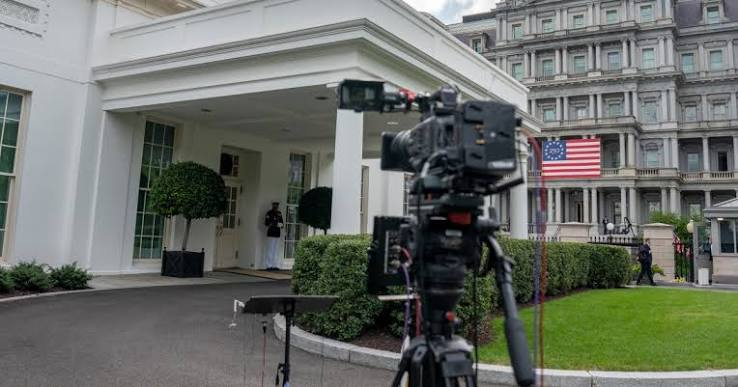
A widening dispute over access to the White House is drawing coordinated attention from journalists, media organizations, and press freedom advocates as questions about accreditation, digital reporting, and independent coverage move into the center of a national debate. The latest conflict has involved restrictions affecting CNN, MS NOW, and Politico, followed by solidarity actions from other news organizations. For journalists working across borders, the episode raises a broader question that reaches beyond Washington: when governments control physical and digital access to public officials, how much independence can reporters retain while covering those in power?
Why Press Access Has Become a Major Public Issue
Press credentials may look like little more than identification cards, but for a White House correspondent they can determine whether a reporter can enter the complex, attend official events, ask questions, observe proceedings directly, and gather information without relying entirely on government supplied material.
The current dispute intensified after President Donald Trump announced that CNN, MS NOW, and Politico would be barred from the White House. Journalists from those organizations were subsequently denied entry and had credentials confiscated. The affected organizations challenged the restrictions in court, arguing that the government had violated constitutional protections for journalism and due process. :contentReference[oaicite:0]{index=0}
The White House has presented a different position. Its official statement argues that the First Amendment protects the ability of news organizations to publish but does not automatically guarantee access to White House facilities, briefing rooms, or press pools. :contentReference[oaicite:1]{index=1}
That disagreement is at the heart of the controversy. The issue is not simply whether a particular reporter can walk through a particular gate. It concerns the standards used to determine who receives access to government officials and whether those standards can be applied because of the content or perceived quality of a news organization’s reporting.
Journalists Respond With Coordinated Solidarity
The response from other media organizations has demonstrated how interconnected modern news coverage has become. Television networks have relied on shared press pool arrangements to provide independent audio and video from presidential events. When several major networks suspended pool coverage in solidarity with the affected outlets, the consequences became visible to audiences almost immediately.
On September 21, major television networks including ABC, CBS, Fox News, NBC, and CNN suspended portions of White House pool coverage. The action demonstrated the practical importance of a press pool, which allows organizations to share the cost and logistics of covering presidential events while distributing material to a much larger audience. :contentReference[oaicite:2]{index=2}
We can see the significance of that arrangement most clearly when it disappears. Without an independently operated pool, audiences may have to depend more heavily on footage, audio, photographs, or livestreams supplied directly by the government. That material can still provide valuable information, but it does not replace the independent editorial judgment of journalists who are able to observe, question, verify, and report for themselves.
The Dispute Has Also Reached the Courts
The legal response has quickly become one of the most consequential parts of the story. CNN, MS NOW, and Politico challenged their exclusion, arguing that the administration’s actions violated constitutional protections and procedural requirements.
On September 24, a federal judge ordered the White House to temporarily restore the journalists’ credentials. Reporters from the affected organizations were subsequently allowed to regain access, although disputes continued over whether particular journalists could enter certain events. :contentReference[oaicite:3]{index=3}
The court proceedings have placed particular attention on due process. The question is not merely whether officials have authority to establish reasonable security and access rules. It is also whether journalists are given adequate notice of the standards they must follow and a fair opportunity to challenge the loss of access.
The White House Correspondents’ Association has argued that access should not be revoked arbitrarily or because officials object to the content of reporting. The organization represents hundreds of journalists and news outlets covering the presidency. :contentReference[oaicite:4]{index=4}
Why Digital Press Access Matters Beyond the Building
The modern press room is no longer limited to a physical location. Journalists publish through websites, livestreams, newsletters, social platforms, podcasts, mobile applications, and video services. A restriction that begins with a physical credential can therefore affect a much wider digital reporting operation.
Social media has become particularly important for journalists covering fast moving political events. Reporters use social platforms to distribute verified information, publish photographs, communicate with audiences, provide live updates, and direct readers toward longer investigations. When access to a government event is restricted, the effect can therefore extend into the digital spaces where audiences increasingly consume news.
This does not mean every social media restriction is automatically a press freedom violation. Governments and institutions can establish legitimate rules concerning security, privacy, classified information, event capacity, and technical operations. The difficult question is whether restrictions are based on neutral and consistently applied standards or whether access changes because officials dislike particular reporting.
That distinction matters for international journalists as well. Reporters covering American foreign policy, international diplomacy, trade, security, immigration, and global crises may depend on access to White House briefings and presidential events to provide context for audiences outside the United States.
International Media Organizations Are Watching Closely
The dispute carries implications beyond American newsrooms because the White House remains a major source of information for journalists around the world. International correspondents routinely translate American policy decisions into reporting for audiences in Europe, Asia, Africa, Latin America, and the Middle East.
When access becomes uncertain, international reporting can become more dependent on secondary material. A journalist who cannot enter an event may need to rely on public video, statements, other reporters, or government releases. Those sources can be useful, but direct access gives journalists an additional opportunity to ask questions and independently assess what officials say.
For international media organizations, solidarity can also become a practical expression of professional standards. Supporting another newsroom does not require agreement with every article that newsroom publishes. It can instead reflect a broader principle that access rules should be predictable and that journalists should be able to perform their work without government retaliation for unfavorable coverage.
The Public Consequences Are Larger Than the Newsroom
At first glance, a credential dispute may appear to be an argument between politicians and reporters. The consequences, however, reach ordinary readers and viewers.
People depend on journalists to investigate government decisions, compare official claims with evidence, ask uncomfortable questions, and provide information that allows the public to form its own conclusions. When independent access becomes narrower, the range of information available to the public can also narrow.
The issue becomes particularly sensitive when the subject of reporting is the same institution controlling access to that reporting. A government can reasonably need security procedures and operational rules. At the same time, a press system requires safeguards against access decisions becoming tools for rewarding favorable coverage or punishing unfavorable coverage.
That tension is not unique to one administration or one country. It is a recurring challenge wherever governments and independent media operate in close proximity.
What the Current Dispute Could Mean for Journalism
The immediate legal proceedings will determine important questions about the specific White House restrictions, but the broader debate is likely to continue regardless of the outcome of this particular confrontation.
Several practical issues deserve close attention:
- Whether press accreditation standards are written clearly and applied consistently.
- Whether journalists receive notice and an opportunity to challenge the loss of access.
- Whether restrictions distinguish genuine security concerns from disagreement with reporting.
- Whether digital and social media access becomes part of future press credentialing policies.
- Whether shared press pools can continue providing independent coverage when individual organizations are excluded.
These questions matter because technology has changed the way journalism reaches the public. A reporter standing outside a government building with a smartphone can reach millions of people within minutes. A photographer denied entry can still publish images from public areas. A newsroom excluded from a briefing can continue reporting through documents, interviews, court filings, and independent sources. Restricting one channel does not necessarily silence journalism, but it can change the quality, speed, and completeness of the information available.
A Larger Test for Independent Reporting
The current White House access dispute illustrates a basic principle of democratic journalism: independence is not measured only by whether reporters are permitted to publish. It also depends on whether they can gather information through fair and transparent means.
The White House says access is a privilege subject to government rules, while affected news organizations and press freedom advocates argue that once general press access is provided, it cannot be withdrawn arbitrarily or as punishment for reporting. Courts are now being asked to examine those competing claims under constitutional and procedural standards. :contentReference[oaicite:5]{index=5}
For readers, viewers, and journalists around the world, the most consequential part of this story may be what happens next. Press access policies establish more than newsroom logistics. They shape how the public receives information about people exercising government power.
We should therefore watch the legal proceedings, accreditation rules, press pool arrangements, and digital access policies with the same attention given to the political events they are designed to cover. A functioning press does not require government officials to agree with journalists. It requires clear rules, meaningful access, independent reporting, and a public that can distinguish official information from independently gathered journalism.