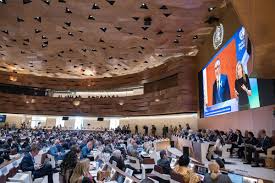
At the 79th World Health Assembly in Geneva on May 18, 2026, World Health Organization Director General Dr. Tedros Adhanom Ghebreyesus presented the Award for Global Health to four international leaders whose careers have shaped modern medicine and public health. The ceremony was a measured blend of solemn gratitude and warm celebration, with delegates from more than 190 countries filling the chamber and a palpable sense of collective purpose in the air.
Winners and the work that defined them
The four honorees represent distinct but complementary strands of global health practice: clinical research, healthcare delivery in low resource settings, health systems strengthening, and emergency preparedness. Each recipient received the award for lifetime achievement and for demonstrable contributions that have saved lives, built institutions, and influenced policy across multiple regions.
Clinical innovation that changed standards of care
One laureate was recognized for pioneering therapeutic trials that reshaped treatment protocols for infectious disease and chronic conditions in low income countries. Colleagues described long hours in laboratories and clinical wards, a steadiness under pressure, and a willingness to take scientifically measured risks to test affordable interventions. The work moved from small pilot trials to adoption in national treatment guidelines, illustrating how rigorous clinical science can translate into widespread public benefit.
Community based care and health equity
A second recipient won praise for decades of community centered work that built primary care networks in rural regions. Her approach combined training for local health workers with scalable supply chain innovations and culturally informed health education. The result was measurable improvement in maternal and child health indicators and a sustainable model for community ownership of health services. At the ceremony, community health workers who trained under her leadership spoke about the dignity her mentorship restored to grassroots caregiving.
Strengthening health systems and policy
The third honoree helped governments design resilient health systems that withstand shocks and expand routine access to essential services. His advisory roles with ministries of health and international agencies led to reforms in data systems, financing mechanisms, and workforce planning that increased service coverage and improved governance. Presenters highlighted his role in translating complex financing models into operational reforms that were both politically feasible and technically sound.
Emergency preparedness and outbreak response
The fourth award recognized a leader in epidemic preparedness whose career spans field epidemiology and international coordination during major outbreaks. Years of rapid response deployments taught lessons about logistics, risk communication, and the social dimensions of containment. Recipients of his training now staff national rapid response teams in several continents, providing a lasting operational legacy that strengthens global readiness.
Scenes from the assembly
The Assembly hall carried a mixture of formal protocol and human warmth. Delegates arrived in crisp suits, traditional garments, and the functional uniforms of humanitarian agencies. Cameras clicked gently as each laureate received a scroll and a medal from Dr. Tedros. Applause rose and fell, sometimes replaced by the quiet of held breath when a speaker recounted personal stories of loss and recovery linked to the honorees work.
Outside the plenary, side events and small group meetings created an atmosphere of practical planning. Nonprofit leaders and government ministers traded notes on scaling successful programs, while younger public health professionals circled speakers to ask for mentorship and referrals. The physical sensation of the week was a steady flow of conversations, coffee, and the rustle of briefing papers as delegates moved between sessions.
Why these awards matter now
The awards arrive at a time when global health faces multiple pressures: persistent inequalities in access to care, the ongoing need to prepare for future epidemics, and the imperative to integrate climate resilience into health planning. Honoring lifetime achievement makes a case for continuity and institutional memory in a sector that can reward short term wins over durable systems building. It signals that patient level interventions, community health, robust policy, and rapid response are interdependent components of a functioning health ecosystem.
Practical implications for policy and funding
Recognition at this level can influence funding priorities and policy agendas. Donors and national governments often take cues from WHO when positioning resources. Awards that highlight systems strengthening and workforce development may encourage longer term investments in training programs and infrastructure. Similarly, attention to community based care can push global partners to support models that are cost effective and responsive to local needs.
Voices from delegates and beneficiaries
Several ministers of health emphasized the inspirational as well as the practical value of the ceremony. One minister said the awards reminded policy makers that bold decisions in healthcare often require sustained personal commitment as well as political courage. Frontline nurses and community health workers attending the sessions shared that seeing leaders honored for work that closely maps to their daily struggles gave them renewed motivation to continue despite low pay and sometimes difficult conditions.
Laureates themselves used their acceptance remarks to call for humility and partnership. They urged a focus on listening to communities, building local capacity, and developing metrics that capture long term gains rather than short term outputs. The tone was earnest and forward looking, balancing celebration with the sober recognition that much work remains unfinished.
Global context and resources for readers
The World Health Assembly is WHO’s decision making body and gathers delegations from member states to set priorities and approve budgets. For readers who want to review the Assembly agenda and resolutions this year, the official WHO pages provide session documents and adopted measures at WHO. For historical context on global awards and major health initiatives the World Bank offers analyses of health financing and systems performance that can deepen understanding of how sustained investments translate into outcomes.
Looking ahead
The awards ceremony is a marker as well as a motivator. It celebrates careers that changed practice and shaped institutions, and it calls the global health community to sustain those gains. The challenge for governments, funders, and practitioners is to convert the recognition into policies that build capacity across regions, protect vulnerable populations, and ensure that future emergencies meet faster and more humane responses.
As delegates disperse back to ministries and clinics, the memory of the ceremony will carry practical demands. The work honored on May 18 urges a return to the often unglamorous tasks of training, systems design, and community engagement that make resilient health possible. The real tribute to these leaders will be continued commitment to those tasks until their lessons become the everyday practice of health systems everywhere.