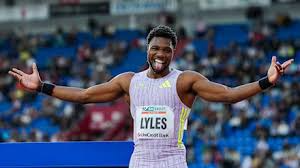
World Athletics has put Noah Lyles at the center of its newest event by naming the Olympic sprint star as the Ultimate MC and creative advisor for the inaugural Ultimate Championship in Budapest. The choice blends sport, entertainment, and athlete voice in a way that suggests the competition will be designed not only to crown winners, but to feel alive from the moment fans enter the venue.
A bold role for a bold personality
Few track athletes carry the same mix of speed, charisma, and public confidence as Lyles. He has built a profile that reaches well beyond the lanes, and this appointment reflects that reality. By asking him to lead presentation, fan engagement, and creative branding direction, World Athletics is signaling that it wants the Ultimate Championship to feel distinct from a standard meet. It wants atmosphere, personality, and a clear emotional connection with the audience.
That matters because modern sports events are no longer judged only by results. They are judged by how they feel. Fans want rhythm, identity, and a sense that the event understands them. Lyles is a fitting figure for that task because he has always seemed comfortable in the spotlight. He speaks with the energy of a performer and competes with the urgency of a champion, which gives him a rare credibility in a role that blends athletics with showmanship.
Why World Athletics chose him
World Athletics appears to be betting that one of the sport’s most visible stars can help define a new era for its competitions. The inaugural Ultimate Championship in Budapest needs more than a schedule and a medal table. It needs a tone. It needs a personality that can carry across broadcast graphics, fan activations, arena presentation, and the broader visual identity of the event. Lyles brings the kind of recognizable presence that can help achieve that goal.
His appointment also suggests that governing bodies are paying closer attention to how younger audiences experience sport. Viewers do not only consume competition. They consume storytelling, music, visuals, social media clips, and personality driven moments that give an event a lasting imprint. By placing an athlete in a creative leadership role, World Athletics is acknowledging that the presentation of sport is now part of the sport itself.
What the Ultimate Championship needs
The inaugural nature of the Budapest event makes every decision more significant. New competitions must earn attention quickly, and they do that by creating a clear identity. If the Ultimate Championship is to stand out in a crowded global sports calendar, it needs to feel purposeful, memorable, and easy to explain. Lyles can help shape that image because he is already familiar to fans who follow elite sprinting, but he also brings enough cultural presence to attract people who may not normally tune into track and field.
The job description is broader than many casual observers may realize. Presentation is not simply about announcing athletes. Fan engagement means building moments that make spectators feel involved before, during, and after competition. Creative branding direction means deciding how the event looks and sounds across every touchpoint, from venue signage to social content to on screen identity. That is a serious responsibility, and it shows that this appointment is more than symbolic.
The athlete as storyteller
There is something fitting about an athlete leading the creative framing of a sporting event. Competitors know the emotional texture of a meet in a way that executives often do not. They understand what the crowd sees during the tense minutes before a race, the silence before the gun, the surge after a finish, and the pride that follows a breakthrough performance. Lyles can bring that lived perspective into the event design process.
That perspective matters because elite sport is built on feeling as much as facts. The roar of a stadium, the tension in the call room, the flash of lights on the track, and the rhythm of the announcer’s voice all shape the memory a fan takes home. When athletes help design those moments, the experience can feel more authentic. It can feel less like a product and more like a shared event with a pulse.
Budapest as the backdrop
Budapest gives the championship a dramatic setting. The city has long been a strong host for major international sport, and its architecture and riverfront atmosphere offer a distinctive visual identity. For an event looking to launch with energy, the location matters. A memorable host city can help shape how the world perceives the competition from the start.
The success of the Ultimate Championship will depend not only on the racing but on how well its setting supports the event’s identity. Lyles and the organizing team now have the chance to create something that feels modern without losing the prestige associated with world class athletics. If they succeed, Budapest could become the place where a new track and field brand first found its voice.
Fan experience and future value
This appointment is also about long term value. A strong first edition can create loyalty, and loyalty is built through experience. If spectators leave the stadium feeling that they saw something fresh, exciting, and emotionally coherent, they are more likely to return. That is where creative direction matters. It influences memory, and memory influences demand.
For track and field, which often competes for attention against larger commercial sports, the challenge is to make elite competition feel immediate and accessible. Lyles is well suited to that mission. He can help bridge the gap between the intense technical excellence of athletics and the broader public audience that wants entertainment, storylines, and a reason to care deeply about each session.
A sign of where the sport is headed
World Athletics’ decision points to a bigger shift in global sport. Governing bodies are increasingly looking for ways to combine authenticity with presentation, and athletes with strong public identities are becoming central to that strategy. The old model treated presentation as separate from competition. The new model treats it as part of the competition’s appeal.
Noah Lyles now sits at the intersection of those ideas. He is not only one of the sport’s marquee names. He is also being asked to shape how the sport presents itself to the world. That is a meaningful responsibility, and it will be watched closely by fans, athletes, and event organizers alike. If the Ultimate Championship succeeds in Budapest, this appointment may be remembered as one of the key reasons it felt different from the start.
For readers following the broader athletics calendar, the World Athletics official site and the Olympics platform provide useful context on the sport’s top level events and athlete profiles.