
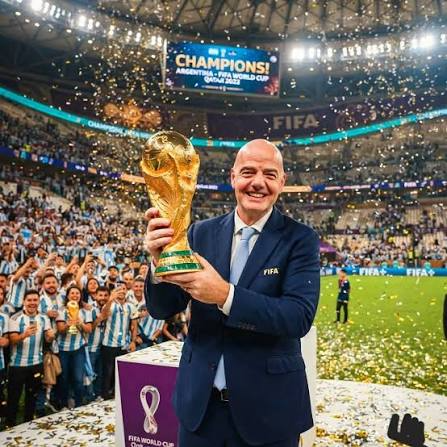
With the World Cup still unfolding on July 9, 2026, FIFA appears to be moving toward a financial milestone that would have sounded oversized only a few tournament cycles ago. The expanded 48 team format and 104 match schedule are on pace to help the governing body generate a record 11 billion dollars in commercial revenue, a figure that reflects both the tournament’s global reach and the scale of modern sports business.
A tournament built for scale
The 2026 World Cup is unlike any edition before it. By expanding from 32 teams to 48 and stretching the competition to 104 matches, FIFA has created a tournament that reaches more countries, more fans, and more broadcast windows than ever before. That increase in inventory is the engine behind the revenue surge, giving sponsors, broadcasters, and hospitality buyers more ways to participate in the event and more opportunities to pay for access.
From a business perspective, the logic is straightforward. More matches mean more ticket sales, more premium seating packages, more media rights value, and more commercial inventory for brands that want to associate with the world’s largest single sporting event. In a stadium, that feels like a louder crowd, longer calendars, and more orange, blue, and red shirts moving through the concourses. On the balance sheet, it feels like momentum.
Why the money is rising
Commercial revenue in football has become increasingly dependent on scale, prestige, and global timing. The World Cup has all three. Corporate sponsors want a platform that can deliver not just visibility but emotional resonance. Broadcasters want live content that can command attention across time zones. Host cities and hospitality operators want the tourism lift that comes when supporters spend on hotels, transport, food, and merchandise. FIFA is able to convert all of that activity into a larger commercial return because the tournament now lasts longer and includes more national teams.
[tralac](https://www.tralac.org/news/article/17154-tralac-daily-news-1-july-2026.html)
The 11 billion dollar projection also reflects how much the World Cup has become a centerpiece of the international sports economy. Football remains one of the few products capable of drawing massive audiences across languages, borders, and income levels. That reach gives FIFA a commercial advantage that few other sports bodies can match. Even so, the financial upside is not just a function of popularity. It is also the product of careful packaging, premium rights sales, and the ability to turn every extra match into another revenue generating asset.
[tralac](https://www.tralac.org/news/article/17154-tralac-daily-news-1-july-2026.html)
What the expansion changes
For fans, the expanded format means more countries in the mix and more group stage action to follow. For FIFA, it means a broader commercial footprint. The extra teams increase the chances that more regions will stay engaged for longer, which in turn makes the tournament more attractive to global advertisers. In practical terms, that means more viewers, more conversations, and more moments that sponsors can attach their brands to.
There is also a geographic dimension. The World Cup is now less concentrated in the traditional heavyweight nations and more open to teams that would previously have been on the outside looking in. That matters commercially because it expands the emotional map of the event. A supporter in Asia, Africa, North America, or the Middle East may be far more likely to tune in consistently if their own national team has a realistic path into the tournament. In sports media, that is not just inclusivity. It is also audience retention.
[forbes](https://www.forbes.com/sites/anuraghunathan/2026/07/08/thailands-red-bull-rival-carabao-combats-export-dip-with-sales-push-on-home-turf/)
The revenue mix
FIFA’s projected total is driven by several streams at once. Broadcasting rights remain the largest and most important source, but sponsorship, licensing, hospitality, and event related services all contribute to the final figure. Each layer benefits from the expanded tournament structure. A larger schedule means more inventory to sell, more premium experiences to package, and more reasons for partners to commit higher budgets.
Hospitality deserves particular attention because it is one of the clearest symbols of how the World Cup now operates as a luxury and business event as much as a sporting one. Corporate guests, executives, and high value fans buy access to premium seating, special dining, and branded experiences that sit above the ordinary match day ticket. Those packages help push total revenue higher because they can be sold at a significant premium to standard admission.
[tralac](https://www.tralac.org/news/article/17154-tralac-daily-news-1-july-2026.html)
The fan experience question
Whenever revenue records are mentioned, the next question is whether the tournament still feels like a celebration for ordinary supporters. That question matters. Fans do not experience the World Cup through spreadsheets. They experience it through ticket prices, travel costs, crowd atmosphere, and the feeling of being part of something larger than themselves.
There is a genuine tension here. A bigger tournament can create more access and more national representation, but it can also fuel concerns about commercialization, congestion, and the burden on fans who must follow a longer schedule. Some supporters will welcome the added matches and the broader field. Others will worry that the event is becoming too large, too expensive, and too shaped by the logic of revenue extraction. Both reactions are understandable, and both reflect the scale of what FIFA has built.
[tralac](https://www.tralac.org/news/article/17154-tralac-daily-news-1-july-2026.html)
What it means for host markets
The economic ripple effects are substantial. More matches mean more demand for hotels, restaurants, ride services, security, and local transportation. Cities hosting games benefit from the spending associated with traveling supporters and media crews. At the same time, the pressure on infrastructure rises as well. Transport systems, public spaces, and stadium precincts all need to absorb larger crowds over a longer period.
For local businesses, the tournament can feel like a rush of daylight after a long winter. A café near a stadium fills earlier. Merchandise stalls stay busy late into the night. Workers who handle logistics, event management, and hospitality find themselves part of a giant machine moving hundreds of thousands of people through a tightly timed sequence. The commercial lift is real, but so is the operational strain.
[tralac](https://www.tralac.org/news/article/17154-tralac-daily-news-1-july-2026.html)
A bigger business model for global football
The projected 11 billion dollar revenue figure says as much about football’s business model as it does about this particular tournament. FIFA has learned to monetize scale in a way that mirrors other major entertainment industries. The product is no longer just the match itself. It is the surrounding ecosystem of broadcasting, branding, digital attention, premium access, and global anticipation.
That model works because football remains emotionally potent. A single goal can stop a room, and a single upset can travel around the world in minutes. FIFA is selling access to that emotional intensity at a planetary scale. The expanded tournament simply multiplies the number of chances for something memorable to happen, which helps explain why commercial partners are willing to pay so much to be involved.
[tralac](https://www.tralac.org/news/article/17154-tralac-daily-news-1-july-2026.html)
What to watch next
The most important question now is whether the revenue projection holds as the tournament progresses and final commercial figures are reported. Attention will center on how broadcast performance, attendance, and sponsor activations compare with pre tournament expectations. Analysts will also watch whether the larger format produces sustained fan enthusiasm or whether the added volume begins to test patience in some markets.
For now, the numbers suggest that FIFA has built a financial machine capable of producing historic returns. The challenge is making sure that the event still feels like football first and commerce second. That balance has always been delicate, but in a 104 match World Cup, it may matter more than ever.
[forbes](https://www.forbes.com/sites/anuraghunathan/2026/07/08/thailands-red-bull-rival-carabao-combats-export-dip-with-sales-push-on-home-turf/)
For readers who want to follow global tournament and governance standards, the official FIFA website carries tournament information, while the OECD provides broader analysis on international sports economics and event driven development.

