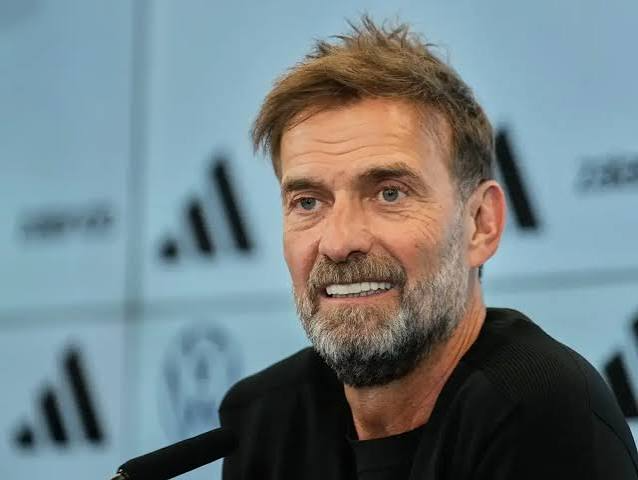
Jürgen Klopp has been appointed Germany manager through the 2030 FIFA World Cup, a move that brings one of football’s most recognizable figures back into the spotlight at a moment when the national team is searching for stability, identity, and a sharper competitive edge. For Germany, this is more than a coaching change; it is a statement of intent built around a manager whose career has long been defined by energy, structure, and belief.
A familiar face with a different mission
Klopp arrives with the kind of profile that immediately changes the mood around a team. His reputation was forged across long, demanding spells at Mainz, Borussia Dortmund, and Liverpool, where he blended emotional intensity with tactical clarity and produced some of the defining teams of modern European football. The appointment signals that Germany want not just a tactician, but a leader capable of restoring conviction in a squad that has struggled at major tournaments in recent years. Public records and club summaries show that Klopp’s managerial record includes domestic titles in Germany and England, a Champions League crown, and a Premier League championship, achievements that underline why he is viewed as a transformative figure in the game.
[transfermarkt](https://www.transfermarkt.us/jurgen-klopp/erfolge/trainer/118)
Why this appointment matters
The timing matters almost as much as the name. Germany are not appointing Klopp for a short term reset; the mandate runs through the 2030 World Cup, which suggests a long horizon and an unusually broad remit. That kind of deal gives a coach room to shape culture, integrate younger players, and build continuity across a cycle that includes qualifying campaigns, tournament preparation, and likely some difficult transitions in personnel. It also reflects a recognition that modern international management is no longer only about match day decisions, but about creating a clear footballing identity that survives pressure.
Klopp’s track record suggests he is well suited to that challenge. At Liverpool, he was widely credited with restoring hope, identity, and competitiveness to a club that was searching for direction when he arrived in 2015. His teams were typically aggressive without becoming reckless, organized without becoming rigid, and emotionally charged without losing discipline. That blend is exactly what many national teams seek and few ever fully achieve.
[liverpoolfc](https://www.liverpoolfc.com/info/jurgen-klopp)
The Klopp method
Klopp’s football has always been about more than slogans or touchline passion. The core of his approach is high intensity pressing, compact defensive structure, fast transitions, and a collective belief that every player must contribute to the team’s rhythm. When it works, his sides feel like they are moving as one organism, with the stadium itself seeming to rise and fall with every press, counterpress, and surge forward. That style has won trophies, but it has also built identities, and identity is often what national teams lack when tournament pressure tightens.
Germany’s challenge will be to adapt that method to the shorter rhythms of international football. Unlike club management, there is limited training time and far less room for repetition, which makes communication, selection, and clarity even more important. Klopp’s greatest advantage may be his ability to simplify complex demands and make players believe they can execute them quickly. In a national team setting, that can matter as much as any formation.
What he inherits
The German national team has long carried the weight of expectation, but recent years have brought more questions than answers. Even when the talent pool has looked strong on paper, performances have not always matched the scale of the name on the shirt. That disconnect has placed pressure on every layer of the setup, from tactical planning to squad selection to the broader culture around the team. Klopp now inherits that burden, along with the opportunity to reshape it.
He also inherits a player pool rich in technical ability and athletic range, which should suit a manager who values tempo and collective movement. The key question is whether he can create a structure that allows Germany’s best players to express themselves without drifting into the kind of imbalance that has hurt them in recent tournaments. A strong international side is rarely built on star power alone; it is built on trust, timing, and shared habits.
Long runway to 2030
The deal through 2030 gives Germany something many national teams envy: time. That window creates the possibility of building not just for one tournament, but for a broader cycle in which youth development, senior selection, and tactical evolution all move in step. It also means expectations will rise quickly, because a coach of Klopp’s stature is rarely hired to wait for results. The promise is immediate ambition paired with a longer term plan, and the balance between those two things will define his tenure.
For supporters, the emotional appeal is obvious. Klopp has a rare ability to make football feel communal, to turn a team into a cause, and to make big occasions feel even bigger. For a national side, that connection is priceless. It can soften doubt, sharpen belief, and turn pressure into purpose.
What to watch next
The early stages of his tenure will tell us a great deal about how Germany intend to evolve. I will be watching three things closely: whether Klopp immediately identifies a core group of trusted players, how aggressively he tries to impose his pressing principles, and whether his staff can build a system that survives the stop start nature of international football. His success will depend not only on charisma, but on translation: turning club level ideas into national team habits.
For readers who want to follow Germany’s broader path in world football, the official FIFA tournament hub provides the most direct route to fixtures and competition context at FIFA tournaments, while the German Football Association remains the central source for national team developments at DFB. Those are the arenas where Klopp’s next chapter will be measured, not by reputation alone, but by results, rhythm, and resilience.
The larger meaning
This appointment feels significant because it arrives at the intersection of reputation and need. Klopp is a manager whose best work has often come when he has been asked to rebuild belief, and Germany appear to be asking exactly that of him now. The task through 2030 is ambitious, but it is also coherent: find a clear football identity, reconnect with supporters, and make Germany a team that opponents expect to suffer against. If Klopp can do that, this will be remembered as one of the boldest and most consequential national team appointments in recent memory.