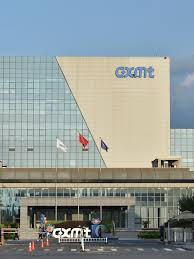
Chinese memory chipmaker CXMT surged nearly 470 percent in its Shanghai market debut on July 27, 2026, drawing immediate attention from investors who have spent much of the year chasing exposure to artificial intelligence hardware. The leap turned the listing into Asia’s largest initial public offering of the year and underscored how intensely global markets are rewarding companies tied to the data center buildout that now defines the AI economy.
For traders, the debut was more than a dramatic first day pop. It was a signal that memory semiconductors remain one of the most strategically important layers in the AI supply chain, especially as cloud providers, chip designers, and server makers compete to secure the high bandwidth components needed to keep training systems and inference workloads moving at scale.
Why the debut mattered
CXMT’s rally reflected a market mood that has stayed stubbornly bullish on infrastructure plays linked to machine learning. As AI models grow larger and more demanding, they require vast amounts of memory capacity and faster data throughput, which places memory chipmakers at the center of the current investment cycle. Investors have increasingly treated memory not as a commodity corner of the semiconductor market but as a strategic enabler of the entire AI stack.
The scale of the listing also made it notable beyond the technology sector. A major IPO of this size can reshape sentiment across domestic exchanges by pulling capital into manufacturing, advanced materials, and equipment suppliers. In practical terms, the debut gave market participants a new benchmark for how much value they are willing to assign to companies that sit inside the AI hardware boom rather than merely on its edges.
AI hardware demand keeps building
The demand backdrop is hard to ignore. Hyperscale data centers continue to expand, and every new generation of AI systems requires more memory bandwidth, greater storage capacity, and more resilient hardware supply chains. That environment has created a powerful tailwind for semiconductor makers that can show exposure to high growth end markets.
For CXMT, that means the company is being read through the lens of future demand as much as current output. Even a first day surge that large suggests investors expect the AI spending cycle to persist, with cloud operators, enterprise buyers, and government backed digital infrastructure projects all contributing to the order pipeline. When capital markets reward a listing this aggressively, they are signaling confidence not just in one issuer but in the durability of the entire category.
What the listing says about Chinese capital markets
The debut also highlights the growing ambition of mainland exchanges to channel savings into strategic industries. By welcoming a high profile semiconductor listing at a moment of intense global interest in AI infrastructure, Shanghai has positioned itself as a venue for companies that sit at the intersection of industrial policy and market demand. That matters for issuers seeking deep local liquidity and for investors looking to back firms aligned with national technology priorities.
At the same time, a rapid surge on day one can invite caution. Sharp first day gains often reflect scarcity, enthusiasm, and expectations that may be difficult to sustain over time. Investors will now watch whether CXMT can convert its debut excitement into steady earnings growth, operational discipline, and reliable supply execution. Early trading strength is impressive, but long term credibility in semiconductors is built on consistent delivery.
Memory chips and the AI supply chain
Memory chips are not always the most visible part of the technology story, but they are among the most essential. AI systems depend on them to store and move data quickly enough for training and inference workloads. In plain terms, the bigger and more complex the model, the more pressure there is on the memory layer to keep pace. That makes producers of DRAM and related memory products critical to the entire digital infrastructure buildout.
This is one reason the sector has become so politically and economically sensitive. Memory supply affects server makers, cloud operators, consumer electronics firms, and industrial technology companies. When a chipmaker linked to that supply chain posts a spectacular market debut, it tells us that investors are betting not only on one company but on the continued escalation of global demand for computation itself.
Investor reaction and market psychology
The sheer size of the first day move likely drew in momentum investors, domestic institutions, and retail traders eager to participate in a headline making deal. In markets like these, psychology can matter as much as fundamentals in the short run. A prized IPO creates a sense of urgency, and that urgency can magnify price action far beyond the subscription level set before trading begins.
Yet large rallies also raise expectations. New shareholders will want to see whether the company can justify its valuation through execution, margins, and capacity expansion. Semiconductor businesses are notoriously cyclical, and memory makers often face sharp swings in pricing, inventory, and capital expenditure. That means the real test begins after the celebration ends and the company has to prove it can keep up with demand without overextending itself.
Risks that sit beneath the excitement
Even in a strong AI cycle, memory chipmakers face familiar risks. Industry pricing can change quickly, supply expansions can overshoot demand, and technology shifts can require heavy reinvestment. Firms in this space also operate under geopolitical scrutiny, since semiconductors remain a strategic sector across Asia, North America, and Europe.
For investors, that means a dramatic debut should be read alongside longer term operational questions. How much capacity can CXMT add? How stable is its customer base? Can it keep pace with the technical requirements of advanced AI infrastructure? Those are the questions that will determine whether today’s rally becomes a foundation or a peak.
Broader implications for global markets
Another reason this IPO matters is that it reinforces a broader market pattern. Capital is still flowing toward companies that can claim a role in the buildout of AI data centers, semiconductors, power infrastructure, and advanced manufacturing. That flow has already influenced valuations across the technology sector, and CXMT’s debut adds fresh proof that the appetite for hardware exposure remains strong.
For policymakers and industrial planners, the message is equally clear. Countries that can support semiconductor capacity, equipment supply, and technical talent are likely to attract more investment as the AI economy expands. A listing of this size is not just a financial event. It is a snapshot of where markets believe the next phase of growth will come from.
What to watch next
In the weeks ahead, attention will turn to post listing performance, analyst coverage, and any signs that demand is broadening beyond the initial wave of enthusiasm. Investors will want updates on production, capital spending, and customer relationships, especially in relation to AI server demand and memory pricing trends. If the company can show stable execution, the debut could stand as a watershed moment for the sector.
For now, the message from Shanghai is unmistakable. AI hardware remains one of the most powerful themes in global markets, and memory chips sit near the center of it. CXMT’s nearly 470 percent leap did not happen in isolation. It happened because investors still believe the world is building more compute than ever before, and that those who supply the memory behind that compute may be among the biggest beneficiaries.