Blackstone said on July 27, 2026 that the valuation of its data center real estate portfolio has reached 185 billion dollars, a figure that captures how deeply cloud computing and artificial intelligence infrastructure are reshaping global property markets. The number is striking not only for its size but for what it signals about where capital is flowing now: toward the buildings, power systems, and fiber connections that keep digital services running every second of the day.
We are watching a market where warehouses of servers have become some of the most prized real estate in the world. Data centers are no longer a niche asset class. They are central to the way businesses store information, train models, serve customers, and manage everything from payments to logistics. Blackstone’s latest valuation suggests investors still see that demand as durable, broad based, and only partly satisfied.
Why the valuation matters
A 185 billion dollar portfolio valuation is significant because data centers sit at the intersection of property, energy, and technology. These assets depend on massive electrical capacity, high speed connectivity, reliable cooling systems, and land that can support long term expansion. Unlike traditional office towers or retail centers, their value is closely tied to the growth of digital workloads and the long term contracts signed by cloud and enterprise customers.
For Blackstone, the number also reinforces the firm’s position in one of the most competitive corners of alternative real estate. The company has spent years building exposure to logistics, industrial property, and digital infrastructure, and the latest valuation shows how strongly data center demand has outpaced many other real estate categories. When investors see that kind of growth, they tend to view the asset class less like a speculative bet and more like essential infrastructure.
Cloud and AI continue to drive demand
The central force behind the portfolio’s rise is simple: the world needs more computing capacity than ever before. Cloud platforms continue to expand, enterprises are moving more workloads online, and AI systems require enormous computing resources to train and operate at scale. Every one of those trends depends on physical infrastructure that can handle dense racks of servers and constant power draw.
That is why data center valuation has become such a sensitive barometer of the broader technology cycle. When AI model training accelerates, demand for server space, cooling, and power access follows. When companies migrate more operations to cloud environments, occupancy rises. Blackstone’s portfolio valuation reflects this persistent pull and suggests that the market still sees years of buildout ahead.
Real estate built for machines
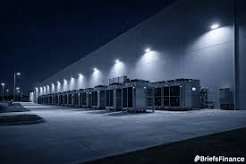
Data center property looks very different from the office buildings that dominate traditional commercial real estate. These facilities often have fewer windows, thicker security controls, more robust backup systems, and infrastructure designed around uninterrupted uptime. In many cases, the real value sits below the surface in electrical substations, backup generators, fiber routes, and cooling architecture.
That makes the asset class unusually dependent on location and utility access. A site that can be connected to power faster or more reliably can be worth far more than a similarly sized parcel elsewhere. As a result, data center developers and owners are increasingly competing not just for land but for energy capacity, permitting speed, and network proximity. Blackstone’s valuation highlights how those operational details have become core financial drivers.
What this means for the broader market
The scale of Blackstone’s portfolio speaks to a larger shift in capital markets. Investors are continuing to favor infrastructure tied to digital growth, particularly when that infrastructure can produce long term contracts and steady cash flow. Data centers offer both. That is part of why pension funds, sovereign investors, private equity firms, and listed real estate players have all shown strong interest in the sector.
For the real estate market as a whole, the rise of data centers is also changing how analysts think about value. Traditional metrics such as square footage and location still matter, but they are now joined by metrics like power availability, cloud adjacency, and density of demand from AI workloads. In other words, the market is pricing buildings not only as structures but as operating platforms for computation.
Energy, grid access, and expansion risk
One of the biggest challenges facing the sector is energy. Data centers are power hungry by design, and the surge in AI related demand has made access to electricity a strategic constraint. In many markets, developers are running into grid limitations, longer interconnection timelines, and higher costs associated with delivering reliable service at scale.
That creates both opportunity and risk. Firms that can secure power and build efficiently may capture outsized returns, while those stuck waiting for approvals or utility upgrades may see projects delayed. Blackstone’s valuation rise suggests investors believe the company is positioned well for that environment, but it also reminds us that future growth will depend on how quickly the energy system can keep pace with digital infrastructure needs.
Why investors are paying attention now
The broader investment case for data centers has become stronger as AI and cloud adoption have moved from trend to necessity. Corporate buyers are less interested in whether they will need more computing capacity and more interested in how quickly they can secure it. That urgency supports occupancy, rents, and development pipelines across the sector.
At the same time, financing conditions matter. Large scale digital real estate requires significant upfront capital, and portfolio value can swing with interest rates, lease structures, and expansion costs. Blackstone’s latest figure will likely be read as a sign that the firm believes those pressures remain manageable relative to the long term demand outlook. For many investors, that is exactly the kind of signal they want to see in a capital intensive market.
The human side of the digital boom
There is something almost paradoxical about the story. The public sees artificial intelligence as software, as interfaces, as models answering questions or generating images. Yet behind that invisible layer sits a very physical economy of land, steel, concrete, power lines, and cooling systems. Blackstone’s 185 billion dollar valuation gives that hidden infrastructure a very visible price tag.
For communities near data center corridors, the growth brings jobs, tax revenue, and in some cases new pressure on utilities and zoning systems. For engineers and technicians, it offers specialized work at the intersection of construction and technology. For investors, it presents a way to participate in digital growth through assets with long lived income potential. The story is not just about one firm gaining value. It is about the changing shape of modern infrastructure itself.
What to watch next
Going forward, investors will be watching whether demand continues to justify aggressive capital spending across the sector. Key questions include how quickly new capacity comes online, whether utility bottlenecks ease, and how leasing markets respond as more companies compete for premium data center space. The pace of AI adoption will remain central to all of that.
Blackstone’s update places it firmly at the center of one of the most important property stories of the year. A 185 billion dollar valuation is more than a milestone. It is a reminder that the real estate market is being rewritten by computation, and that some of the most valuable buildings in the world may be the ones most people never see.