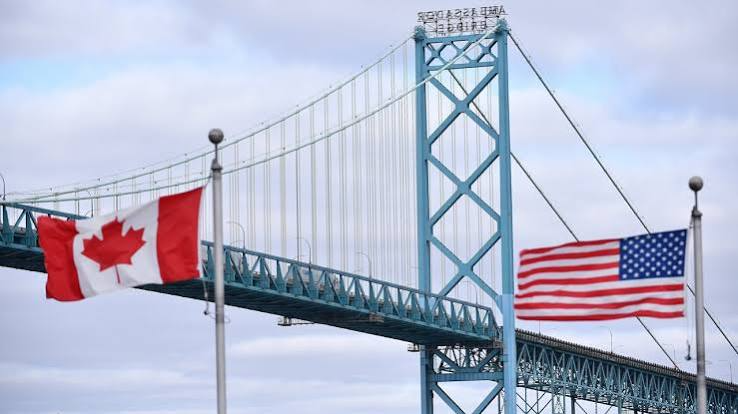
We are watching a deadline clock tick down on one of North America’s most consequential trade relationships, and the tension is palpable even from a distance. As of August 17, 2026, negotiators from Washington and Ottawa remain locked in intense, closed door talks, racing to strike a deal before a threatened 50 percent tariff on a range of Canadian goods takes effect early Wednesday morning. What began as a dispute over dairy quotas, alcohol sales, and automotive trade has escalated into a standoff with the power to reshape supply chains, grocery prices, and factory floors on both sides of the border.
How the Standoff Reached This Point
To understand the urgency in these final hours, it helps to trace how quickly this conflict accelerated. Last month, the White House invoked a rarely used provision of a 1930 trade law to justify new tariffs, arguing that Canada’s retaliatory measures from the previous year amounted to unfair discrimination against American products. The administration signed proclamations targeting Canadian autos, alcohol, and dairy, covering roughly twenty billion dollars in imported goods, with no exemption carved out for products that would otherwise qualify under existing North American trade rules.
Canada, for its part, has not simply absorbed these pressures quietly. Officials point to a twenty five percent tariff Ottawa imposed on American made vehicles as a direct response to earlier US measures, along with provincial restrictions that have effectively halted much of the cross border alcohol trade. There is also longstanding frustration in Washington over dairy market access, with US officials arguing that European producers enjoy more favorable terms in Canada than American farmers do, despite decades of North American trade cooperation.
What Happens if the Deadline Passes Without a Deal
We think it is worth pausing on what this actually means for real people rather than treating it as an abstract policy dispute. A fifty percent tariff on goods like Canadian wine, hockey sticks, cement, and vehicles would ripple through supply chains that have operated seamlessly for decades. Auto manufacturing in particular could face serious disruption, since the industry routinely ships partially finished vehicles back and forth across the border multiple times before a single car reaches a dealership lot. A sudden tariff shock at that scale does not just raise prices. It threatens to freeze production lines that depend on predictable, low friction cross border movement.
Trade groups on both sides have been sounding the alarm about just how much is riding on these talks. Industry estimates suggest that roughly 1.4 million American jobs and 2.5 million Canadian jobs depend on the health of this bilateral relationship, a staggering figure that underscores why business leaders on both sides of the border have been pushing hard for a resolution rather than a rupture.
Inside the Negotiating Room
Canadian officials, led by Trade Minister Dominic LeBlanc and chief negotiator Janice Charette, have met repeatedly with US Trade Representative Jamieson Greer in Washington over recent weeks, describing the discussions as constructive even as significant gaps remained unresolved heading into the weekend. We find something genuinely human in the reports coming out of these sessions, exhausted negotiators working through weekends, officials measuring every public statement carefully so as not to derail delicate progress, and business leaders anxiously watching for any signal about which way the talks might break.
According to reporting from the Washington Post’s coverage of the negotiations, the emerging framework under discussion could pair Canadian concessions on tariffs with commitments in areas like energy cooperation, defense spending, and critical minerals access, offered in exchange for the United States agreeing to shelve the newly threatened levies and ease existing steel and aluminum tariffs. Nothing has been finalized, and people familiar with the talks describe the details as still fluid even in these closing hours.
A Relationship Bigger Than Any Single Deadline
We think it is important to place this moment within its broader context. The United States and Canada conducted close to nine hundred billion dollars in trade last year, a staggering figure that reflects one of the most deeply integrated economic relationships anywhere in the world. Communities along the border, from auto workers in Michigan and Ontario to dairy farmers in Wisconsin and Quebec, have built livelihoods around the assumption that goods, parts, and produce can cross that border with minimal friction. A breakdown here would not simply be a diplomatic setback. It would touch dinner tables, factory paychecks, and small business balance sheets on both sides.
There is also a larger question hovering over these talks, one that extends beyond the immediate tariff threat. A successful agreement could provide momentum for the broader renegotiation of the United States Mexico Canada Agreement, the trade pact that has governed North American commerce since the president’s first term in office. Washington has already opened preliminary discussions with Mexico on potential changes to that agreement, but formal talks with Ottawa have lagged behind. A deal struck under this deadline pressure could finally set that broader renegotiation in motion, or, if talks collapse instead, could poison the well for cooperation just as that larger process is set to begin.
Why This Moment Feels Different
We have covered trade friction between these two allies before, but something about the current standoff carries a sharper edge. Previous disputes often unfolded with more runway for negotiation and less public brinkmanship. This time, a hard deadline looms within days, and the tariff rate under threat, fifty percent, sits far above anything typically seen between two countries that have functioned for decades as each other’s closest trading partners. Business leaders following the talks describe them as constructive, which offers some genuine grounds for optimism, but few are willing to predict the outcome with confidence given how quickly the situation has shifted in recent weeks.
What to Watch in the Coming Days
For anyone trying to make sense of the coming hours, we would point to a few key signals worth tracking. Watch for whether negotiators present a completed framework to the White House ahead of the Wednesday deadline, since officials have indicated they hope to reach that milestone as early as Monday. Watch also for any public statements from Canadian provincial leaders, since decisions around alcohol sales restrictions fall largely outside federal control and will require buy in from provincial governments to fully unwind. Finally, watch how markets react in the auto, agriculture, and beverage sectors, since investors and executives alike are positioning now for either outcome.
A Relationship Worth Protecting
We approach this moment with a mixture of concern and cautious hope. Trade disputes between allies rarely serve either side’s long term interests, and the economic entanglement between these two countries runs deep enough that genuine rupture would carry costs far beyond any short term political win. What happens in these final hours before the deadline will shape not just tariff rates on wine and vehicles, but the broader tone of a partnership that millions of workers, farmers, and families on both sides of the border have quietly relied upon for generations. We will be watching closely to see whether that partnership holds.