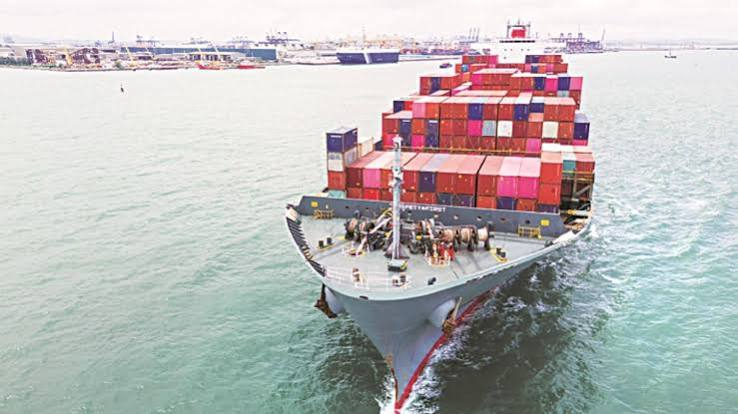
China has begun a new chapter in global shipping with the launch of the first regular container service through the Arctic’s Northern Sea Route, creating a faster seasonal link between Asia and Europe while challenging the traditional geography of international trade. The service, launched by Chinese shipping company Sea Legend, sends container vessels from Ningbo toward Europe along Russia’s northern coastline, opening what Beijing has described as part of an emerging “Ice Silk Road.”
The first vessel departed Ningbo on August 15, 2026, with the service scheduled to operate regular weekly sailings during the Arctic navigation season. The route is expected to connect Ningbo with Felixstowe in the United Kingdom in roughly 18 days, potentially cutting the sailing time associated with conventional routes by almost half. :contentReference[oaicite:0]{index=0}
Why China Is Turning North for European Trade
For generations, the main maritime routes between Asia and Europe have been shaped by geography and a handful of strategic chokepoints. Ships traveling from China’s eastern ports to Europe have traditionally moved through the Suez Canal, while disruptions in the Red Sea have pushed some operators to take the much longer route around the Cape of Good Hope.
The Northern Sea Route offers a radically different option. It follows Russia’s Arctic coastline from the Pacific toward the Atlantic, creating a shorter geographical connection between northern Asia and Europe. The route stretches for roughly 5,500 kilometers along Russia’s northern coast and can substantially reduce sailing distances between major Asian and European ports during the navigable season. :contentReference[oaicite:1]{index=1}
For China, the attraction is not simply speed. A new maritime corridor gives exporters another option when traditional shipping lanes become expensive or vulnerable to geopolitical disruption. The Arctic route can also be particularly attractive for time sensitive cargo, including electric vehicles, solar equipment and other higher value manufactured goods.
The “Ice Silk Road” Begins With a Seasonal Service
Sea Legend’s new China Europe Arctic Express is not yet a replacement for the Suez Canal or other established global shipping networks. The service is seasonal, with operations concentrated during the period when Arctic ice conditions are more favorable.
That limitation is crucial. The Northern Sea Route remains an extreme environment where sea ice, weather, navigation requirements and limited infrastructure can affect schedules. Commercial operators therefore have to make decisions based on constantly changing ice conditions rather than relying on a fixed timetable in the same way they might on a conventional ocean route.
Even so, the launch is commercially significant because it moves Arctic container shipping beyond experimental voyages and into scheduled service. Sea Legend had already tested the route in 2025, when a trial voyage demonstrated that container transportation between China and northern Europe could be completed in around 20 days. :contentReference[oaicite:2]{index=2}
The transition from a trial voyage to regular service suggests that shipping companies now see enough commercial potential to test whether customers will consistently pay for a faster Arctic connection.
What the Route Could Mean for Global Trade
If the service proves reliable, its influence could extend well beyond the vessels actually traveling through the Arctic. Shipping markets are highly sensitive to competition between routes. The existence of an alternative corridor can affect freight pricing, scheduling decisions and supply chain planning even when most cargo continues to use traditional routes.
European importers could gain another option for receiving goods from China. Chinese exporters could gain greater flexibility when shipping conditions deteriorate in the Red Sea or other major maritime corridors. Logistics companies could also begin designing combined sea and land networks around Arctic arrivals.
The route could be especially useful for cargo where delivery speed matters. An electric vehicle manufacturer waiting for components or a solar equipment producer facing a tight delivery schedule may value a shorter transit time even if Arctic shipping carries additional insurance and navigation costs.
Climate Change Has Helped Open the Route
The commercial opportunity in the Arctic is inseparable from a profound environmental change. Rising temperatures have reduced Arctic sea ice over the long term, making parts of the Northern Sea Route increasingly accessible during summer and early autumn.
That development creates a striking contradiction. The same climate change that is opening new maritime possibilities is also placing the Arctic environment under greater pressure. Researchers and environmental groups warn that additional commercial traffic could increase risks to one of the world’s most fragile ecosystems.
Scientific American recently reported that melting Arctic ice is helping create conditions for a new commercial shipping corridor while raising concerns about environmental damage in the polar region. :contentReference[oaicite:3]{index=3}
We should therefore resist describing the new route simply as a triumph of logistics. The economic opportunity exists partly because the physical environment is changing at an extraordinary pace.
Russia Controls a Critical Part of the New Trade Corridor
One of the most important geopolitical features of the Ice Silk Road is that much of the Northern Sea Route runs through waters controlled and administered by Russia.
Russia has invested heavily in developing Arctic infrastructure and relies on its state nuclear company Rosatom to manage important aspects of Northern Sea Route operations. Ships require permits, ice information and navigation support, while some vessels may need assistance from specialized icebreakers depending on conditions.
For China, this creates both an opportunity and a strategic dependency. The route provides an alternative to maritime corridors vulnerable to instability elsewhere, but it also requires cooperation with Russia.
That relationship has become particularly significant since Russia’s invasion of Ukraine and the resulting Western sanctions. The Arctic corridor therefore sits at the intersection of commercial shipping, energy security, Russian infrastructure and China’s long term strategic ambitions.
A New Route Around Global Chokepoints
The timing of the launch is especially notable because global shipping has faced repeated disruptions around traditional maritime chokepoints.
The Red Sea crisis has forced many vessels to take longer journeys around southern Africa, increasing fuel consumption, transit times and freight costs. Instability around the Strait of Hormuz has also increased concern about the vulnerability of global energy and shipping networks.
The Arctic route cannot replace those waterways at present, but it offers something increasingly valuable: another option.
That matters because supply chains become more resilient when companies have multiple ways to move goods. A manufacturer that depends entirely on one route is vulnerable when that route becomes blocked, attacked or dramatically more expensive.
Why the Arctic Route Is Not Yet a Suez Canal Replacement
Despite the excitement surrounding the Ice Silk Road, serious limitations remain.
First, the route is seasonal. The Suez Canal operates throughout the year, while Arctic navigation is strongly influenced by ice conditions.
Second, Arctic infrastructure remains limited compared with the dense network of ports, repair facilities, rescue services and logistics hubs surrounding established European and Asian trade corridors.
Third, insurance and operational costs can be higher because ships face extreme weather, ice hazards and limited emergency response capabilities. A shipping company must consider not only the time saved but also the financial consequences of an accident or prolonged delay.
Finally, geopolitical risks cannot be ignored. Russia’s control over the route means that international sanctions and political tensions could influence commercial access and insurance arrangements.
Environmental Risks Are Difficult to Ignore
More shipping activity in the Arctic brings environmental concerns that are fundamentally different from those associated with heavily trafficked conventional routes.
An accident in remote polar waters could be extremely difficult to respond to because emergency infrastructure is sparse. Oil spills can be particularly damaging in cold environments, while black carbon released by ships can settle on snow and ice and contribute to faster warming.
There is also a broader question about whether opening new shipping corridors because Arctic ice is disappearing creates a cycle in which climate change produces new commercial opportunities that can then contribute to further environmental pressure.
The International Maritime Organization’s Polar Code establishes mandatory safety and environmental standards for ships operating in polar waters. Nevertheless, the harshness and remoteness of the Arctic mean that regulation cannot eliminate every risk.
China’s Polar Ambitions Go Beyond Shipping
The Ice Silk Road is part of a broader Chinese interest in the Arctic. Beijing has increasingly described the region as strategically important for trade, energy, science and transportation.
China has previously referred to its Arctic interests through the concept of a Polar Silk Road, linking northern infrastructure and maritime cooperation with the wider Belt and Road Initiative.
Earlier planning indicated that China Europe Arctic shipping could support faster movement of high value goods and potentially strengthen connections between Chinese manufacturing centers and European consumers. Chinese government reporting has described the Arctic corridor as an emerging international route capable of shortening transit times compared with conventional maritime journeys. :contentReference[oaicite:4]{index=4}
The new scheduled service gives that strategy a tangible commercial dimension. Instead of discussing an Arctic trade corridor only as a future possibility, Chinese shipping companies are now testing whether it can function as a repeatable business.
European Ports Could Become More Important
The new route also has implications for European ports. Felixstowe in the United Kingdom is expected to serve as a major destination for the service, potentially giving British logistics networks a new connection to China’s eastern manufacturing regions.
If Arctic shipping expands, ports positioned to receive vessels arriving from the Northern Sea Route could gain strategic importance. Warehouses, rail connections, customs infrastructure and inland distribution networks could all become part of a new Arctic trade ecosystem.
Other European ports may eventually compete for cargo arriving through the northern corridor. The result could be greater competition among logistics centers and new patterns of cargo distribution across Europe.
What Businesses Should Watch
Companies that import or export between Asia and Europe should treat the Arctic service as an emerging option rather than an immediate replacement for existing shipping arrangements. The most useful indicators over the next several seasons will be reliability, freight pricing and the ability of operators to maintain schedules under changing ice conditions.
- Transit times between Ningbo and northern European ports
- Reliability of weekly Arctic departures
- Insurance and navigation costs
- Ice conditions during the operating season
- Availability of suitable container ships
- Russian regulatory and geopolitical developments
- European demand for faster Asia to Europe cargo delivery
If the economics remain attractive, more shipping companies could eventually enter the market. If delays, insurance costs or political restrictions prove too high, the route may remain a specialized seasonal service.
A Strategic Shift With Global Consequences
The first regular container service through the Northern Sea Route is significant because it combines three forces that are reshaping global commerce: climate change, geopolitical competition and the search for resilient supply chains.
China gains a faster maritime connection to Europe. Russia gains greater relevance as a gateway to an emerging international trade corridor. European ports gain another potential source of Asian cargo. At the same time, businesses gain an alternative route around some of the world’s most vulnerable maritime chokepoints.
But the Arctic does not offer an easy solution. Its waters remain dangerous, its infrastructure is limited and its political environment is complicated. The environmental consequences of greater commercial activity are also profound.
The Arctic Is Becoming a Commercial Frontier
The departure of Sea Legend’s first regular Arctic container service may eventually be remembered as an early milestone in a much larger transformation of global shipping. For now, however, the prudent view is one of cautious significance.
The Ice Silk Road is not about replacing the Suez Canal overnight. It is about creating another option in a world where shipping companies increasingly need alternatives. If Arctic conditions continue to permit reliable seasonal navigation and commercial demand remains strong, the Northern Sea Route could gradually become an established part of Asia Europe logistics.
For the people living closest to the Arctic, however, the stakes are larger than freight rates and transit times. The opening of a new trade corridor brings jobs, infrastructure and economic opportunities, but it also brings ships into one of Earth’s most sensitive environments.
China’s first regular Arctic container service therefore represents more than a new shipping schedule. It is a signal that the geography of global trade is beginning to change. Whether the Ice Silk Road becomes a durable commercial corridor or remains a limited seasonal experiment will depend on economics, geopolitics, technology and, increasingly, the changing Arctic itself.