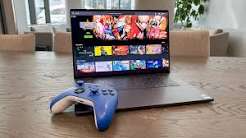
The gaming industry is moving toward a future where expensive consoles and high performance gaming computers may no longer be essential for enjoying the latest titles. New developments in next generation console technology and cloud gaming are bringing attention to cross platform streaming, allowing players to access demanding games across televisions, computers, smartphones, and other connected devices. As gaming companies look beyond traditional hardware sales, expanding access in emerging regional markets is becoming an increasingly important part of their long term strategies. The shift could change how millions of people discover, purchase, and experience video games, particularly in regions where the cost of dedicated gaming equipment remains a significant obstacle.
Gaming Companies Look Beyond Traditional Console Hardware
For decades, the conventional gaming experience has depended on dedicated hardware. Players typically needed to purchase a console or build a capable gaming computer before accessing visually demanding titles. Although this model has supported the growth of major gaming franchises, it has also created a financial barrier for consumers who cannot justify spending hundreds of dollars on specialized equipment.
The growing popularity of cloud gaming is challenging that arrangement. Instead of running an entire game locally, cloud gaming services process the experience on remote servers and transmit the resulting video and audio to a player’s device. The user sends commands through a compatible controller, keyboard, touchscreen, or other input device, while the remote system handles the demanding calculations.
This approach allows compatible devices to access games that would otherwise require substantially more powerful hardware. A relatively affordable laptop or supported smart television could potentially provide access to experiences previously associated with expensive gaming systems.
Recent industry developments point toward a broader strategy involving cloud infrastructure, cross platform compatibility, and more flexible access to gaming libraries. Rather than treating consoles as the only gateway to premium gaming, companies are increasingly considering them one part of a larger connected ecosystem.
Cloud Gaming Could Reduce the Cost of Entering the Gaming Market
Hardware affordability remains one of the biggest challenges facing the global gaming industry. Modern consoles offer impressive graphical performance, fast loading times, and sophisticated processing capabilities, but purchasing a complete gaming setup can be expensive. The total cost may increase further when consumers need additional controllers, accessories, displays, subscriptions, and individual games.
Cloud gaming offers a different financial model. Instead of purchasing an expensive console, users may be able to access selected titles through a subscription or supported streaming service. In some cases, an existing television, computer, or mobile device may provide everything needed apart from a compatible controller and reliable internet connection.
Amazon’s cloud gaming developments illustrate this direction. Its Amazon Luna platform provides an example of how streaming infrastructure can bring gaming experiences to devices beyond traditional consoles. The company has also discussed approaches that use relatively affordable streaming hardware to make premium gaming more accessible.
For consumers, the potential advantage is straightforward. People who already own compatible devices may not need to purchase an entirely separate gaming system. This could make premium gaming more attractive to students, families, casual players, and consumers in markets where dedicated hardware is relatively expensive.
Cross Platform Streaming Is Becoming a Major Industry Priority
Another important development is the growing focus on cross platform gaming. Traditionally, players often had to remain within a particular hardware ecosystem to access their purchased games, friends lists, achievements, and saved progress. Moving between platforms could create unnecessary complications, particularly when different services offered separate accounts and game libraries.
Modern gaming strategies increasingly aim to reduce these restrictions. Cross platform frameworks allow supported games and services to connect players across multiple devices. Depending on the platform and individual title, users may be able to continue their progress on a different screen without restarting their experience.
Microsoft has outlined this broader direction through its Xbox strategy, which connects console, PC, mobile, and cloud gaming. Its announced Project Helix initiative is designed to support both Xbox console games and PC games, while its wider ecosystem focuses on making gaming experiences more consistent across different screens.
The company’s Xbox Play Anywhere program also demonstrates the benefits of connected gaming. Supported titles allow players to move between compatible Xbox consoles and Windows computers while retaining their progress. Microsoft reported that the program’s catalog had exceeded 1,500 games in its March 2026 developer update.
For players, these developments could mean fewer restrictions on where and how they enjoy their favorite games. For developers, broader compatibility creates opportunities to reach audiences without relying exclusively on one hardware category.
Emerging Markets Could Become the Next Major Growth Opportunity
One of the most significant opportunities for cloud gaming lies in emerging regional markets. Countries across Asia, Africa, Latin America, and the Middle East have large populations of mobile and internet users, creating considerable potential for gaming companies seeking new audiences.
However, access to premium gaming has not developed equally across these regions. High import costs, currency differences, limited retail availability, and expensive gaming hardware can make traditional console ownership difficult for many consumers.
Cloud streaming could help address some of these limitations by reducing the need for specialized equipment. A household with a compatible television and a suitable internet connection may eventually be able to access gaming services without purchasing a dedicated console.
For example, players in Pakistan, India, Indonesia, Brazil, and other price sensitive markets could benefit from more affordable access models if companies provide suitable regional pricing, payment options, and service availability.
Nevertheless, affordability involves more than the initial cost of a device. Subscription charges, internet packages, data limits, and electricity expenses all influence whether cloud gaming becomes a realistic alternative. Companies entering these markets will need to consider local purchasing power rather than simply applying prices designed for wealthier regions.
Smart TVs Could Become Important Gaming Devices
Televisions are emerging as an interesting part of the cloud gaming expansion. Modern smart TVs already provide access to streaming entertainment, online applications, and connected services. Adding gaming platforms to these devices could make the living room another important destination for interactive entertainment.
A notable example is the partnership between TCL and Xbox, announced in September 2026. The companies revealed plans to bring Xbox Cloud Gaming experiences to selected TCL smart televisions through future software updates in supported markets.
The proposed experience requires a compatible television, a controller, an eligible Game Pass subscription, and a stable internet connection. Instead of connecting a conventional gaming console, users will be able to access supported games through the television’s software environment once the feature becomes available on eligible models.
This development reflects a broader change in how gaming companies approach hardware distribution. Rather than requiring customers to purchase a separate console, partnerships with television manufacturers could provide another route to potential players.
Why Television Integration Matters
Television based gaming could be particularly useful for families and casual players. A compatible television already occupies a central position in many homes, making it a convenient location for shared entertainment.
It could also reduce setup complexity. Players would not necessarily need to install a large gaming system or manage extensive game downloads. However, the quality of the experience will depend on the television’s compatibility, available games, controller support, and network performance.
Internet Speed and Latency Remain Major Challenges
Despite its advantages, cloud gaming is not a perfect replacement for traditional gaming hardware. Its biggest technical challenge is the need for consistent communication between the player’s device and remote servers.
When someone presses a button on a controller, the command must travel through the internet to the server. The server processes the action, generates the updated game image, and sends the result back to the screen. Every stage introduces some delay.
This delay is commonly described as latency. Even relatively small increases can affect gameplay, particularly in competitive shooters, racing games, fighting games, and other experiences that require precise timing.
Internet stability is equally important. A connection that frequently drops or experiences significant fluctuations can produce blurry images, interruptions, or sudden changes in responsiveness.
Several technical improvements could help address these problems:
- Regional data centers: Placing computing infrastructure closer to players can reduce communication distances and improve responsiveness.
- Improved compression: More efficient video encoding can reduce bandwidth requirements while maintaining image quality.
- Network optimization: Better routing and traffic management can help reduce interruptions and inconsistent performance.
- Flexible streaming quality: Adaptive streaming can adjust image quality according to available internet bandwidth.
For emerging markets, these improvements are especially important because internet quality can vary significantly between major cities, smaller towns, and rural communities.
Next Generation Consoles Will Still Have an Important Role
The expansion of cloud gaming does not necessarily mean that traditional consoles are approaching the end of their useful life. Dedicated gaming hardware continues to offer several advantages, including predictable performance, local processing, offline functionality for supported games, and greater control over the gaming environment.
Enthusiasts who prioritize high resolution graphics, consistent frame rates, competitive performance, and advanced visual effects may continue to prefer dedicated systems.
Microsoft’s Project Helix reflects this continuing importance of hardware development. The company has described its next generation console as a system designed to combine console and PC gaming capabilities. Its partnership with AMD focuses on future graphics processing, rendering, and simulation technologies.
The most likely direction is a combination of local and cloud computing rather than the complete disappearance of consoles. Dedicated systems can provide premium performance at home, while cloud services offer additional flexibility across compatible devices.
Game Developers Could Reach Larger International Audiences
Cloud gaming expansion also creates opportunities for developers and publishers. Traditionally, releasing a demanding game across several platforms requires substantial development resources, testing, optimization, and ongoing technical support.
Cross platform ecosystems can help simplify parts of this process by providing more consistent development environments and distribution channels. They also allow studios to introduce their games to consumers who may not own the hardware originally targeted by a particular title.
Independent developers could benefit from this wider reach. Smaller studios often struggle to compete with major publishers because of limited marketing budgets and restricted distribution opportunities. Cloud based platforms may provide additional ways to introduce their work to international audiences.
However, developers must still consider licensing arrangements, platform fees, regional content restrictions, performance requirements, and revenue sharing agreements. Reaching more players does not automatically guarantee stronger financial returns.
What Gamers Should Consider Before Choosing Cloud Gaming
Consumers interested in streaming based gaming should evaluate their existing internet connection and the requirements of their preferred service before purchasing a subscription. A service may advertise access to premium titles, but the actual experience can vary depending on location, network conditions, and supported hardware.
Potential users should consider several practical factors:
- Check whether the gaming service officially supports your country or region.
- Review subscription prices and determine whether local payment methods are accepted.
- Check the recommended internet speed and available data limits.
- Confirm that your television, computer, or mobile device is compatible.
- Review the available game library before paying for a subscription.
- Compare streaming costs with the long term expense of owning a console.
These considerations can help consumers avoid paying for services that may not deliver a satisfactory experience in their particular location.
The Future of Gaming Will Depend on Choice and Accessibility
The expansion of next generation console technology and cloud streaming represents a significant change in the gaming industry’s priorities. Hardware performance remains important, but companies are increasingly exploring ways to make premium gaming available beyond traditional console ownership.
Cross platform compatibility, smart television partnerships, regional cloud infrastructure, and flexible subscription models could help bring more people into the gaming community. These developments may be particularly meaningful in emerging markets, where the desire to play premium titles often exists alongside financial and technical barriers.
We believe the most important measure of this shift will be whether consumers actually gain more affordable and reliable ways to play. Simply making games available through streaming is not enough. Services must offer reasonable pricing, broad device compatibility, responsive controls, and game libraries that justify their costs.
The next generation of gaming will not necessarily be defined by one powerful console or a single streaming platform. It may instead be shaped by an interconnected ecosystem where players can move between devices, maintain their progress, and enjoy their favorite experiences wherever suitable connectivity is available.
For millions of potential gamers, that possibility represents a meaningful change. The future of gaming could be less about owning the most powerful machine and more about having convenient access to the experiences people want to enjoy.
Frequently Asked Questions
What is cloud gaming?
Cloud gaming is a technology that allows users to play supported video games through internet streaming. Remote servers run the games and transmit the resulting video to compatible devices, reducing the need for powerful local hardware.
Will cloud gaming replace traditional consoles?
Cloud gaming is unlikely to replace dedicated consoles completely in the near future. Both approaches offer different advantages, and many companies are developing ecosystems that combine local hardware performance with remote streaming access.
Can players enjoy console quality games on smart TVs?
Yes, supported smart televisions can run cloud gaming applications that stream games from remote servers. Availability depends on the television model, gaming service, supported titles, controller compatibility, and internet connection.
Is cloud gaming suitable for emerging markets?
Cloud gaming has considerable potential in emerging markets because it can reduce the need to purchase expensive dedicated hardware. However, affordable subscriptions, reliable internet access, regional infrastructure, and suitable payment options will determine how quickly adoption grows.