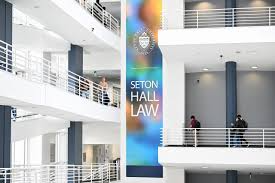
On June 5, 2026 deans and faculty from law schools across the United States and partner institutions worldwide gathered at the Association of American Law Schools workshop to coordinate institutional strategies that defend academic freedom and to establish mandatory student mental health protocols across legal education systems. The gathering combined urgent policy work with candid conversations about the pressures facing law faculties and students, producing a set of commitments that aim to protect open inquiry while addressing the rising mental health needs of law students.
Why the workshop mattered
The AALS convening came at a moment when campuses are navigating intensified scrutiny over classroom speech, political polarization and the wellbeing of students pursuing demanding professional degrees. Academic freedom debates have moved from abstract principles to high stakes governance issues, with ramifications for hiring, curricular choices and faculty governance. Simultaneously, law students report high levels of anxiety, depression and burnout tied to heavy workloads uncertain job markets and evolving pedagogies. The workshop made clear that defending the conditions for free scholarly expression and ensuring robust mental health support must proceed together.
Key outcomes and commitments
Participants produced a set of coordinated actions that universities can adopt. These include firm statements reaffirming the centrality of academic freedom in teaching and scholarship, model policy language for due process when academic speech is contested and guidance on protecting academic appointment decisions from political interference. On student wellbeing the workshop advanced mandatory baseline mental health protocols for accredited law programs including minimum counseling resources crisis response plans and curriculum sensitive to student mental health. Importantly the AALS emphasized that these protocols should be adaptable to local context while meeting consistent standards for access and quality.
Voices from the room
Conversation at the workshop mixed legal theory with practical experience. A dean from a mid sized public law school described waking at three in the morning to threatening emails after a faculty guest lecture sparked controversy. A clinic director recounted the stress students felt when public attention turned to classroom debates that touched on ongoing litigation. Several junior faculty spoke about chilling effects on scholarship when tenure committees face external pressure. On the student side representatives shared stories of panic attacks before oral arguments, poor sleep during bar exam preparation and the stigma they feared in seeking counseling.
Those personal accounts framed the policy work. Delegates emphasized that defending academic freedom is not a purely defensive exercise but a proactive institutional design challenge: it requires clear rules, transparent decision making and strong support for those who exercise unpopular speech while also protecting vulnerable community members from harassment and targeted abuse.
Model policies and procedural safeguards
The AALS circulated draft policy templates that participating schools can adapt. These templates outline procedures for handling complaints related to classroom speech, timelines for investigation, and protections for both faculty and students that preserve due process. They recommend independent review panels for high conflict cases and explicit prohibitions on penalties that are disproportionate or politically motivated. For hiring and promotion the guidance stresses evaluations rooted in peer review and documented scholarly contribution rather than external political pressures.
Faculty governance experts at the workshop urged institutions to codify protections that make clear who decides when boundaries are crossed and what constitutes permissible pedagogical provocation. Establishing these lines reduces ad hoc decision making that can produce inconsistent or unfair outcomes and helps shield academic deliberation from capricious public pressures.
Minimum mental health protocols for law programs
On student wellbeing the AALS proposed baseline protocols intended to ensure that every accredited law program offers timely, adequate mental health care. Key components include a minimum counselor to student ratio that accounts for the intensity of legal training, guaranteed crisis intervention availability, mandatory orientation modules on stress management and faculty training to recognise and respond to signs of distress. The proposals also recommend structured pauses in the academic calendar around high stress assessment periods and an expansion of low cost group therapy and peer support models tailored to law students.
Delegates stressed that mandatory protocols should not be bureaucratic checklists but living programmes integrated with academic advising and career services so students receive holistic support. Confidentiality, affordability and culturally competent care were repeatedly identified as non negotiable elements for effective services.
Academic freedom and student safety: reconciling tensions
A central theme was how to reconcile robust academic freedom with commitments to protect students from harassment and hostile conduct. Workshop speakers outlined a framework that treats these aims as complementary rather than opposing. Academic exchange that challenges accepted views is vital for legal education, yet institutions also have a duty to act when expression crosses into targeted harassment or when power imbalances create harm. The proposed approach emphasises context sensitive adjudication, proportional remedies and support services for affected individuals.
Practically that means clear definitions of harassment distinct from protected academic speech, expedited interim supports for impacted students and restorative options that prioritise learning and repair where appropriate. Several law schools reported pilot programmes that pair facilitated dialogues with academic accommodations to resolve classroom conflicts without defaulting to punitive sanctions.
Global perspectives and comparative lessons
International attendees contributed comparative perspectives that enriched debate. Colleagues from jurisdictions with stronger statutory protections for academic freedom shared examples of legal backstops that have preserved tenure and faculty autonomy. Others described different tensions where universities operate under political environments that restrict certain lines of inquiry. Those contrasts underscored the need for flexible institutional safeguards that reflect local legal frameworks while adhering to shared professional norms.
Global mental health practices also varied, with some systems offering national student health coverage that removes financial barriers to care. Delegates explored how lessons from these models might inform policy proposals in settings with fragmented health provision.
Implementation challenges and resource needs
Participants acknowledged that adopting these commitments requires resources and political will. Scaling counseling services, training panels and administering fair grievance processes involves ongoing funding. Smaller and resource constrained schools warned they might struggle to meet proposed minimums without external support. The AALS committed to offering technical assistance, model contract language and shared training modules to reduce costs and speed adoption.
Several attendees urged philanthropic and government support for implementation, arguing that investment in both academic freedom infrastructure and student wellbeing yields long term benefits in legal education quality, public trust and professional readiness.
Next steps and accountability
The workshop concluded with a plan for follow up. The AALS will publish finalized model policies and suggested metrics for mental health services within 90 days and invite member schools to pilot the protocols. The association also proposed a voluntary reporting framework that would allow schools to share progress on implementation while preserving institutional autonomy. Peer review networks and regional workshops were planned to help schools adapt policies to local conditions and to share best practices for handling complex disputes.
Resources and further reading
Law schools and legal professionals seeking the AALS draft materials and implementation guidance can find links and resources through the association s official site and through university legal education centres that publish research on academic governance and student wellbeing. For comparative perspectives on academic freedom see major legal journals and international educational organisations that track academic rights and professional standards.
Would you like a one page summary of the AALS model policy language and the minimum mental health protocols that law schools can adopt quickly