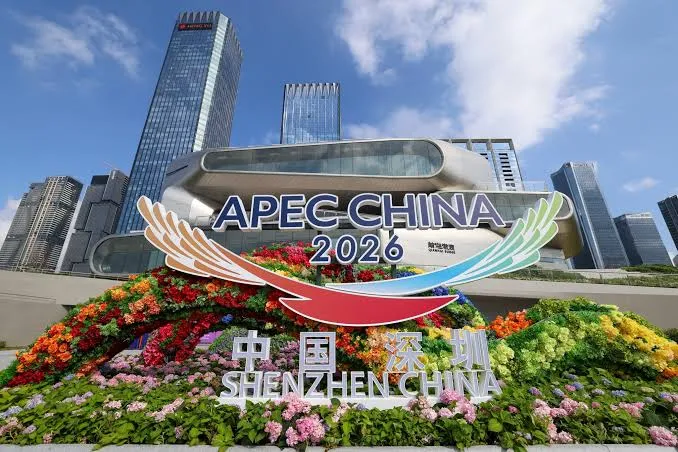
Global business leaders gathered in Shenzhen on November 17, 2026, for the APEC CEO Summit, bringing renewed attention to international trade, economic cooperation and the future of investment across the Asia Pacific region. The high level discussions unfolded against a difficult financial backdrop, as equity markets weakened ahead of Nvidia’s quarterly earnings announcement and investors assessed the consequences of an unexpected leadership crisis at the influential semiconductor company. The contrast between calls for stronger international economic cooperation and growing uncertainty in financial markets highlighted the challenges facing businesses as they plan their next phase of growth.
APEC CEO Summit Brings Global Business Leaders to Shenzhen
The APEC CEO Summit 2026 brought together senior executives, government representatives and business leaders from economies across the Asia Pacific region. The gathering formed part of the wider APEC Economic Leaders’ Week in Shenzhen, China, where discussions focused on cooperation, trade, investment and the economic opportunities emerging across the region.
Hong Kong Chief Executive John Lee addressed the summit on November 17, highlighting the importance of continued cooperation among governments and businesses. He pointed to the participation of more than 2,000 business and government leaders from APEC economies, including representatives from approximately 115 Fortune Global 500 companies. Their presence demonstrated the importance of maintaining economic relationships despite increasingly complicated international conditions.
The summit’s theme, “To Prosper and Win the Future Together,” reflected a broader message about shared economic progress. Businesses operating across international markets face challenges that cannot always be addressed through domestic policies alone. Supply chain disruptions, changing trade regulations, technological competition and investment uncertainty increasingly require coordination between governments and private sector organizations.
For companies operating in multiple countries, these discussions carry practical consequences. Access to international markets, reliable suppliers, predictable regulations and cross border investment opportunities can influence everything from manufacturing costs to long term expansion plans.
Trade Cooperation Takes Center Stage Amid Economic Uncertainty
International trade remained a central concern as business leaders considered the economic outlook for the Asia Pacific region. The region includes major manufacturing centers, technology suppliers, financial markets and some of the world’s largest consumer economies. Its interconnected business environment makes cooperation particularly important when geopolitical tensions or changing regulations threaten established commercial relationships.
China’s role as host added significance to the discussions. Shenzhen is one of the country’s most prominent technology and manufacturing centers, with a business environment closely connected to electronics, advanced manufacturing, artificial intelligence and international commerce. The city provided a relevant setting for conversations about the relationship between technological development and economic competitiveness.
For business executives, the immediate challenge is balancing international opportunities with growing operational risks. Companies must consider whether their supply chains are sufficiently diversified, whether they can adapt to new trade restrictions and how changes in major economies might affect customer demand.
Small and medium sized businesses also have a stake in these developments. Although they may not participate directly in major international negotiations, their access to suppliers, export markets and affordable technology often depends on decisions made by larger trading partners. Greater economic coordination could help create more predictable conditions for these businesses.
Technology and Artificial Intelligence Remain Important Economic Priorities
Technology was another important part of the wider economic conversation surrounding the summit. Artificial intelligence, semiconductor manufacturing, cloud computing and digital infrastructure are increasingly connected to national competitiveness and private sector investment.
The growing demand for advanced computing capacity has created opportunities for semiconductor manufacturers, data center operators and software companies. However, the same expansion has introduced new questions about financing, regulation, energy consumption and access to advanced chips.
These issues are particularly relevant to Asia Pacific economies, which occupy important positions in the global electronics and semiconductor supply chain. Taiwan, South Korea, Japan and China all have significant roles in different stages of technology production, while regional economies are competing to attract investment in digital infrastructure.
Business leaders must therefore consider more than the immediate commercial benefits of artificial intelligence. They also need to evaluate the availability of computing resources, the stability of suppliers and the possibility that government restrictions could affect international technology partnerships.
The discussions in Shenzhen took place at a moment when those questions had become especially urgent, with Nvidia’s leadership upheaval and the approaching earnings announcement adding another layer of uncertainty to an already unsettled technology sector.
Global Stock Markets Fall Ahead of Nvidia Earnings
While business leaders discussed international cooperation in Shenzhen, investors elsewhere faced a difficult trading environment. Global equity markets weakened as semiconductor and artificial intelligence related shares came under pressure ahead of Nvidia’s third quarter earnings announcement, scheduled for November 17.
The decline reflected concerns about the sustainability of technology valuations, the scale of artificial intelligence investment and the possibility that disappointing corporate results could trigger additional selling. Nvidia has become one of the most influential companies in the technology market, making its financial performance important not only to semiconductor investors but also to broader equity market sentiment.
US markets had already experienced substantial pressure during the previous trading session. The S&P 500 declined approximately 1.9 percent, while the Nasdaq Composite lost around 2.5 percent. The Dow Jones Industrial Average also fell, reflecting weakness extending beyond a single technology company.
International markets faced similar pressure. Semiconductor shares in South Korea and Taiwan weakened, while European equities also experienced losses after reaching strong levels during the previous week. These movements demonstrated how quickly concerns surrounding major technology companies can influence markets across different countries.
Investors were particularly cautious because Nvidia’s earnings report was expected to provide an important indication of whether demand for artificial intelligence infrastructure remained strong enough to justify substantial spending on advanced computing equipment.
Nvidia Leadership Crisis Adds Pressure to Technology Stocks
Nvidia’s financial position was not the only issue attracting investor attention. The company was dealing with an extraordinary leadership disruption following the resignation of cofounder and longtime chief executive Jensen Huang in November.
The leadership change followed reports involving alleged personal relationships and national security concerns connected to a businesswoman suspected by US intelligence of having links to Chinese intelligence operations. The allegations raised questions about corporate governance, potential regulatory exposure and the company’s relationships with international technology markets.
Nvidia announced on November 12 that Huang had resigned as president, chief executive officer and board member. Chief Financial Officer Colette Kress was appointed interim chief executive while the board began searching for a permanent replacement. Harvey C. Jones was appointed chairman of the board.
The sudden departure was significant because Huang had become closely associated with Nvidia’s growth and its position at the center of the artificial intelligence boom. His leadership had helped establish the company as a major supplier of graphics processing units used for artificial intelligence training, data centers and advanced computing applications.
Investors now face questions about whether the company can maintain its strategic direction during the leadership transition. Nvidia’s future decisions involving product development, customer relationships, capital allocation and international expansion will be closely watched.
The situation also raises broader questions about corporate governance at major technology companies. When a business becomes central to an entire industry, uncertainty surrounding its leadership can affect suppliers, customers, investors and competing manufacturers.
Why Nvidia’s Earnings Matter Beyond One Company
Nvidia’s earnings announcement carries significance beyond its own shareholders because the company occupies a central position in the artificial intelligence infrastructure market. Cloud computing providers, technology developers and data center operators depend heavily on advanced semiconductor products to expand their computing capabilities.
Investors are therefore looking for evidence that demand remains strong and that major customers continue to commit substantial resources to artificial intelligence development. Revenue growth, profitability, forward guidance and management commentary could all influence expectations for the wider technology sector.
Another important consideration is whether customers can maintain their current spending levels. Building artificial intelligence infrastructure requires substantial investment in processors, servers, networking equipment, electricity and specialized facilities. If companies slow their expansion plans, the effects could spread throughout the semiconductor supply chain.
Market participants are also assessing whether Nvidia’s leadership transition could affect its ability to navigate international trade restrictions. Semiconductor exports have become a sensitive policy issue, particularly in relations between the United States and China. Any changes in regulations could influence where advanced chips can be sold and how companies organize their international operations.
For investors, the combination of earnings uncertainty and leadership disruption creates a complicated risk assessment. Strong financial results may provide reassurance about demand, but they may not immediately resolve questions surrounding governance or future strategy.
What the Market Volatility Means for International Businesses
The market declines surrounding the summit illustrate why international economic cooperation remains important. Financial volatility can influence corporate investment decisions, borrowing costs, business confidence and the availability of capital for expansion.
Technology companies may respond by reviewing their investment commitments, diversifying suppliers or delaying projects until market conditions become clearer. Manufacturers could face additional uncertainty if semiconductor prices, delivery schedules or export requirements change.
Businesses outside the technology industry are not entirely insulated from these developments. Companies in logistics, retail, financial services and manufacturing increasingly depend on digital infrastructure. Changes in technology investment can therefore influence productivity and operating costs across several sectors.
Executives can respond to this environment by focusing on practical risk management rather than relying entirely on optimistic market forecasts. Several priorities deserve attention:
- Supply chain diversification: Businesses should assess their dependence on individual suppliers and identify alternative sources for essential components.
- Financial planning: Companies should evaluate their exposure to changing interest rates, currency movements and unexpected financing costs.
- Technology investment: Organizations should connect artificial intelligence spending to measurable operational needs and realistic financial expectations.
- Regulatory awareness: International businesses should monitor changes in trade policies, semiconductor export restrictions and data regulations.
- Regional cooperation: Companies should maintain relationships with partners across multiple markets to reduce exposure to isolated economic disruptions.
These measures cannot eliminate uncertainty, but they can help businesses make more informed decisions when international conditions change rapidly.
Shenzhen Summit Highlights the Importance of Regional Cooperation
The APEC CEO Summit provided an important platform for discussing how governments and businesses can maintain economic relationships during a period of technological and financial uncertainty. Its discussions reflected the reality that international commerce depends on more than market access. It also requires trust, predictable policies and the ability to work through disagreements.
Shenzhen’s technology driven economy offered a particularly relevant backdrop for these conversations. The city’s experience in manufacturing, electronics and innovation reflects many of the opportunities and challenges facing the broader Asia Pacific region.
However, cooperation does not automatically remove differences between major economies. Competition over advanced technology, semiconductor production and strategic industries will continue to influence trade relationships. Business leaders must prepare for an environment in which commercial partnerships and regulatory considerations increasingly overlap.
The summit is scheduled as a two day gathering on November 17 and 18, forming part of APEC Economic Leaders’ Week. The wider program also includes the 33rd APEC Economic Leaders’ Meeting on November 18 and 19. Consequently, the November 17 proceedings represent the opening day of the CEO Summit rather than its completed conclusion.
What Comes Next for Global Markets and APEC Economies?
Attention now turns to the next developments in both the financial markets and the regional economic discussions. Nvidia’s earnings report could provide an important indication of the health of artificial intelligence demand, while the company’s board faces the longer term task of selecting permanent leadership.
Investors will also monitor interest rate expectations, international trade policies and corporate spending plans. These factors could determine whether recent market weakness represents a temporary correction or the beginning of a more sustained reassessment of technology valuations.
For APEC economies, the coming discussions offer an opportunity to strengthen cooperation on trade, digital development and investment. The region’s long term economic prospects will depend partly on its ability to maintain productive commercial relationships while adapting to technological change and geopolitical uncertainty.
Readers seeking broader information about regional economic cooperation can explore the official Asia Pacific Economic Cooperation website, which provides information about member economies, policy initiatives and regional meetings. Investors following semiconductor developments can also consult Nvidia’s investor relations website for corporate announcements and financial disclosures.
A Defining Moment for Business Confidence
The events surrounding November 17 illustrate two important realities of the global economy. International cooperation remains essential for businesses seeking stable trade relationships and long term investment opportunities, while financial markets can react sharply when uncertainty affects companies at the center of major industries.
The APEC CEO Summit brought business and government leaders together to discuss shared economic priorities at a time when confidence needed renewed support. Meanwhile, Nvidia’s leadership crisis and the approaching earnings announcement reminded investors that even the most influential technology companies remain exposed to governance challenges, regulatory pressures and changing market expectations.
For businesses across the Asia Pacific region, the immediate priority is to remain adaptable without losing sight of long term opportunities. Stronger regional relationships, responsible technology investment and sound financial planning will remain essential as companies navigate an increasingly complicated international economy.