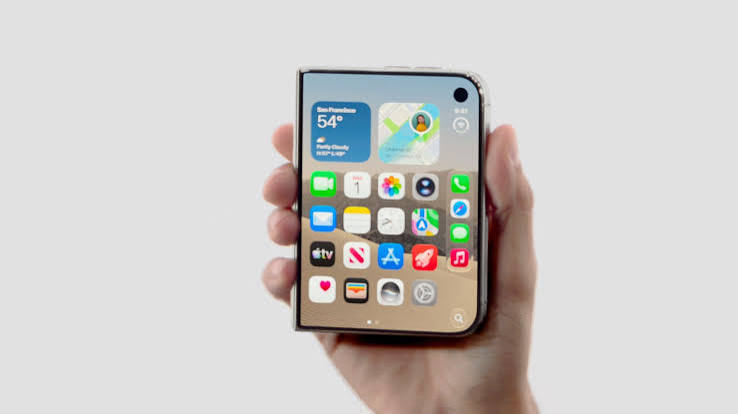
Apple has formally entered the foldable smartphone market with the unveiling of the iPhone Duo, marking a major new chapter for one of the most closely watched product categories in consumer technology. Announced on September 9, 2026, the new device arrives alongside Apple’s A20 Pro chip, built using a 2 nanometer manufacturing process. Together, the foldable phone and new processor signal a broader shift in how Apple plans to compete as smartphones become more flexible, powerful, and increasingly dependent on advanced semiconductor technology.
Apple Steps Into a Smartphone Category It Once Watched From the Sidelines
For years, Apple remained outside the foldable smartphone race while companies across Asia and other major technology markets experimented with devices that could open into larger screens. Samsung, Huawei, Motorola and several Chinese manufacturers helped establish consumer expectations around flexible displays, compact designs, multitasking and larger viewing areas.
The arrival of the iPhone Duo changes that equation. Apple entering the category gives foldable smartphones a much larger place in the mainstream consumer conversation. For many buyers, the appeal is straightforward. A phone that can remain compact in a pocket while opening into a larger display can offer a different balance between portability and screen space.
We should also expect Apple’s approach to influence consumer expectations beyond hardware specifications. Apple has historically placed considerable attention on how hardware, software and services work together. That makes the iPhone Duo more significant than simply another foldable handset entering an increasingly crowded market.
Why the iPhone Duo Could Matter to Global Smartphone Competition
The global smartphone industry has already become highly competitive, but foldable devices represent an important area where manufacturers can distinguish themselves. Conventional smartphones have reached a level of maturity where yearly improvements can feel incremental to ordinary buyers. A flexible form factor offers manufacturers another way to create a visible difference.
Apple’s entry could increase pressure on competing brands to improve their own foldable products. Display durability, hinge reliability, battery efficiency, camera performance, software support and repairability are likely to become even more important as customers compare devices.
Price will also matter. Foldable phones have traditionally occupied a premium segment because flexible displays and complex hinge systems require sophisticated manufacturing. If Apple can make the category feel more dependable and practical to a wider audience, other manufacturers may face stronger pressure to offer better value.
The A20 Pro Brings the Semiconductor Story Into Focus
The iPhone Duo is not the only major hardware announcement associated with Apple’s launch. The company has also introduced the A20 Pro chip, produced using a 2 nanometer process. The smaller manufacturing process represents another step in the semiconductor industry’s continuing effort to place more computing capability into increasingly compact devices.
A smaller process can potentially support improvements in performance and power efficiency, although the real world experience depends on the complete chip design, software optimization, thermal management and workload. For smartphone users, those technical developments matter because battery life, responsiveness, photography, gaming and artificial intelligence features all depend heavily on the processor.
The A20 Pro therefore gives Apple another competitive dimension. The foldable design may attract attention first, but the processor will help determine whether the device feels genuinely different during everyday use.
What a 2 Nanometer Chip Means for Ordinary Users
Semiconductor manufacturing terminology can sound distant from the experience of someone holding a phone in their hand. Yet advances in chip manufacturing eventually affect familiar activities.
- Apps can become faster and more responsive.
- Artificial intelligence tasks can run more efficiently on the device.
- Power management can improve when performance and efficiency are carefully balanced.
- Advanced photography and video processing can become more practical.
None of these benefits should be assumed simply because a chip uses a smaller process. The actual experience depends on how Apple has designed the processor and how iOS uses its capabilities. Still, the move toward 2 nanometer manufacturing demonstrates how closely smartphone innovation is tied to the global semiconductor race.
Foldable Hardware Creates New Software Challenges
A foldable phone also requires developers to think differently. Applications must be able to respond naturally as the available screen area changes. Multitasking, split screen experiences, media viewing and productivity tools can potentially benefit from a larger unfolded display, but those advantages only become useful when software supports them well.
This could become one of the most important parts of Apple’s strategy. The company controls both the hardware and operating system, giving it the ability to coordinate the physical design with the software experience. Developers will also have to consider how their applications behave across different display states.
For users, the best foldable experience should feel natural rather than complicated. Opening the phone should provide an obvious benefit instead of simply making the device look different.
Durability Will Be Closely Watched
There is another question that will follow the iPhone Duo wherever it goes: durability. Consumers buying an expensive smartphone want confidence that it will survive years of ordinary use. Foldable devices contain moving components and flexible display technology, creating different engineering demands from traditional smartphones.
That makes long term reliability particularly important. Customers will likely pay attention to hinge performance, screen resistance, dust protection, crease visibility, battery health and repair options. Apple’s reputation for building tightly integrated devices means expectations are likely to be high.
For people considering their first foldable phone, these practical issues may matter more than headline specifications. A beautiful display is valuable, but reliability is what determines whether a device remains useful after the excitement of launch day has disappeared.
The Broader Impact on the Global Technology Industry
Apple’s decision also has implications beyond smartphones. Foldable devices require specialized displays, hinge systems, batteries, processors and manufacturing equipment. Greater demand could influence suppliers across the electronics industry.
The semiconductor side of the announcement is equally significant. Advanced manufacturing is becoming strategically important as companies compete for access to cutting edge chip production. Information about semiconductor manufacturing and research can be explored through resources from the National Institute of Standards and Technology, which provides broader technical context on advanced technology and manufacturing.
Meanwhile, the smartphone industry will be watching consumer response closely. If buyers show strong interest in the iPhone Duo, competitors could accelerate their own foldable roadmaps. If consumers remain cautious because of price or durability concerns, manufacturers may rethink how quickly the category can expand.
What Consumers Should Consider Before Buying a Foldable Phone
The arrival of a new Apple foldable does not automatically mean every smartphone user needs to replace their existing device. For someone considering the switch, the most useful questions are practical.
Does the larger display solve a real problem?
People who read extensively, manage documents, watch videos or multitask from their phone may benefit more than users who primarily make calls, send messages and browse social platforms.
Is durability worth the premium?
Buyers should consider warranty coverage, repair costs and expected ownership length rather than focusing only on the launch price.
Will the software fit the new design?
A larger internal display is most useful when applications take advantage of it. The quality of the software experience will therefore be just as important as the physical hardware.
How much performance is actually needed?
The A20 Pro may offer substantial computing capability, but most users should judge performance according to their own needs. Gaming, video production and advanced artificial intelligence tasks place different demands on a phone than ordinary messaging and browsing.
A New Chapter for Apple and the Smartphone Market
The iPhone Duo represents more than Apple’s arrival in a new hardware category. It places one of the world’s most influential smartphone makers directly into a competition that has already been shaped by years of experimentation from other manufacturers.
At the same time, the A20 Pro and its 2 nanometer manufacturing process show that the company is competing on two fronts. One concerns the physical shape of the smartphone. The other concerns the increasingly sophisticated computing technology inside it.
For consumers, that competition could ultimately be beneficial. Stronger competition can push manufacturers toward better displays, longer software support, more capable processors, improved battery efficiency and more thoughtful device designs.
The real test will begin after the launch excitement fades. We will learn whether people find the foldable format genuinely useful, whether the hardware can withstand years of daily use, and whether the iPhone Duo can make flexible smartphones feel less like an experimental luxury and more like a practical part of everyday life. Apple has now entered the foldable market. The next chapter will be written by consumers.