Asia Pacific companies in building coatings and home furnishings are placing greater attention on regional cooperation, adaptable products and more resilient supply networks as international trade conditions remain uncertain. Announcements involving Chinese coatings manufacturer 3TREES and furniture brand VIKTOTIA on November 21, 2026, point to two related priorities: strengthening industrial cooperation across borders and offering households practical, affordable ways to improve their living spaces. While the announcements do not confirm a new joint supply agreement between the companies, they reflect a wider business response to tariff volatility, uneven housing demand and changing consumer expectations.
Regional cooperation becomes a business priority
For manufacturers and retailers across the Asia Pacific, the pressure to manage costs and maintain reliable deliveries has become a central business concern. Tariff changes can affect the price of imported materials, finished furniture, coatings and construction supplies. Companies that depend heavily on a single production location or export market may find themselves exposed when trade rules change or shipping costs rise.
Against this background, stronger regional connections offer a possible route to greater stability. Businesses can explore partnerships with distributors, suppliers and manufacturers in neighboring markets, allowing them to diversify sourcing, reach new customers and respond more quickly to local requirements. Cooperation may also involve technical support, shared standards, product development and investment in production capacity.
The latest statements from 3TREES and VIKTOTIA illustrate different sides of this shift. One focuses on industrial technology and regional business relationships, while the other highlights the practical needs of households seeking comfortable and functional furniture. Together, they show how companies are considering both the supply side and the consumer side of the home improvement market.
3TREES promotes technology sharing and green manufacturing
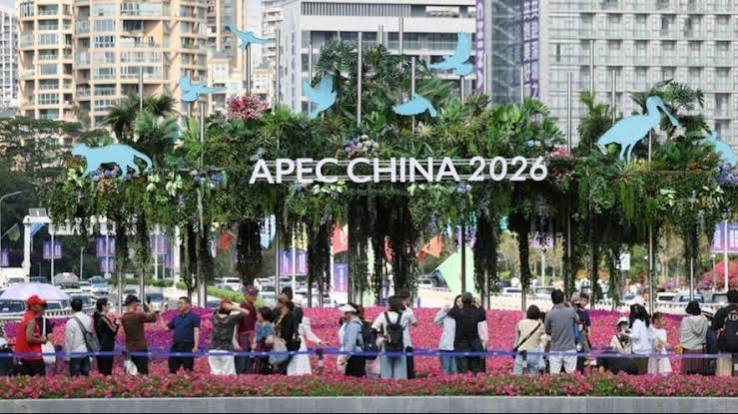
Hong Jie, chairman and president of SKSHU Paint Co Ltd, known as 3TREES, discussed regional cooperation during the Asia Pacific Economic Cooperation CEO Summit held in Shenzhen, Guangdong province, from November 17 to 18. He described the region as a place where economies can benefit from stronger connectivity and complementary industrial capabilities.
Hong’s message went beyond the traditional model of exporting finished products. He argued that international business relationships can create greater value when companies transfer technology, develop standards together and share expertise with partners in other markets. This approach could help manufacturers build longer lasting commercial relationships rather than relying only on individual shipments.
For the coatings industry, that distinction matters. Paints, waterproofing materials and insulation products are closely connected to local construction practices, climate conditions and building regulations. A product that performs well in one market may require adjustments before it can be used effectively in another. Technical cooperation can help companies understand those differences and provide solutions suited to local projects.
Green materials and energy efficiency
Sustainability was another major theme in Hong’s remarks. He said green technologies need to be accessible, affordable and capable of being replicated across different markets. Rather than treating sustainability as a feature of one individual product, 3TREES has developed a broader collection of application systems covering interior and exterior wall coatings, waterproofing, insulation, industrial coatings, floor coatings, home decoration materials and construction applications.
The company has also introduced specialized materials such as radiation cooling coatings and aerogel energy saving coatings. These technologies are intended to address building performance and energy consumption, although their practical benefits depend on the building design, installation conditions and local climate.
Energy efficiency is increasingly relevant to property owners because the cost of operating a building can continue long after construction is complete. Better insulation and suitable surface materials may help reduce heating or cooling requirements. For developers and contractors, these considerations can influence material selection, project budgets and long term maintenance plans.
3TREES reported that it operates 16 green production bases in China and other markets, has more than 1,000 researchers and maintains business coverage in over 30 countries and regions. These figures indicate an established international footprint, although the company’s latest remarks did not identify specific new cross border supply contracts.
Digital manufacturing could make supply chains more reliable
Hong also addressed the role of digital technology in traditional manufacturing. He described digitization as a way to make complex industrial processes more manageable and traceable, rather than simply moving a company into a different line of business.
For coatings producers, digital systems can connect research, production, inventory, distribution and customer service. Better information across these stages can help companies monitor material availability, identify production delays and coordinate deliveries. It can also make it easier to trace products and maintain consistent quality across different facilities.
These capabilities matter when companies work across borders. A manufacturer supplying several countries must manage different delivery schedules, documentation requirements, product specifications and customer expectations. Digital tracking and more connected operations can help reduce confusion, although technology alone cannot remove customs delays, policy changes or transport disruptions.
Regional partnerships may therefore become more valuable when supported by shared technical processes and dependable information systems. Companies that combine local market knowledge with efficient production and distribution may be better positioned to respond to changes in demand.
VIKTOTIA focuses on adaptable and affordable home furnishings
While 3TREES addressed industrial cooperation, VIKTOTIA highlighted a consumer focused approach to modern home furnishing. In an announcement issued on November 21, the furniture brand described its range and room planning guidance as centered on comfort, practical function and accessible style.
The company’s presentation covers living rooms, dining areas and bedrooms, with attention to warm textures, contemporary designs and furniture intended to support everyday routines. The message reflects a challenge familiar to many households: making a home comfortable and attractive without spending beyond a realistic budget.
Furniture choices are rarely based on appearance alone. A dining table must fit the available floor space and accommodate the people who use it. A sofa needs to provide suitable seating while allowing enough room to move around. Storage furniture must hold everyday belongings without making a room feel crowded.
VIKTOTIA’s approach connects design decisions with these practical considerations. Its product examples include adaptable dining furniture, textured seating and storage pieces intended for different areas of the home. Such options may appeal to households that want furniture to serve more than one purpose, particularly where living space is limited.
Flexible furniture for changing household needs
Adaptability has become an important consideration in home furnishing. An extendable dining table, for example, can occupy a smaller footprint during ordinary family meals and provide additional space when guests arrive. Modular seating can help households arrange a living room around different activities, while storage cabinets can serve more than one room as needs change.
These choices are especially relevant when consumers are cautious about major purchases. When housing transactions slow and families remain in their current homes for longer, improving an existing room may feel more manageable than moving or undertaking a large renovation. Furniture that supports several uses can offer practical value without requiring a complete redesign.
Affordability, however, should not be judged by the initial price alone. Buyers also need to consider construction quality, materials, dimensions, delivery costs and maintenance requirements. A lower priced item may not represent good value if it does not withstand regular use. Clear product information and realistic room planning can help customers make more confident decisions.
Housing market weakness puts pressure on home improvement businesses
The wider housing environment helps explain why companies are paying attention to flexibility and cost control. When property sales and new construction activity slow, demand for some building materials and large furniture purchases can weaken. Developers may postpone projects, contractors may face tighter budgets and households may delay replacing expensive items.
Yet slower housing turnover does not necessarily remove the need for home improvement. People continue to repair walls, maintain buildings, replace worn furniture and adjust rooms as families and working patterns change. Spending may shift away from large renovation projects toward smaller upgrades, practical storage, surface repairs and products that improve comfort.
That shift creates opportunities for businesses able to serve customers with different budgets. Coatings manufacturers may focus on durable, energy conscious materials and solutions for maintenance projects. Furniture brands may concentrate on versatile products that fit smaller spaces and provide useful functions over time.
For suppliers, the challenge is to match production and inventory with more selective demand. Holding excessive stock can tie up capital, while insufficient inventory can lead to missed sales and delayed projects. Regional sourcing and closer relationships with distributors may help companies respond to these pressures, provided that the arrangements are commercially sound.
Tariff uncertainty makes supply diversification more important
Tariffs can influence the home improvement sector at several stages. Duties on imported furniture, wood products, coatings ingredients, metal components or other building materials can raise costs for importers. Businesses may then need to absorb the additional expense, renegotiate supplier terms or pass some of the increase on to customers.
The impact is not always straightforward. A tariff affecting one product category may encourage buyers to seek alternative suppliers, but changing a supply chain takes time. Companies must evaluate product quality, production capacity, certification, shipping arrangements and the reliability of potential partners. A new supplier is useful only if it can meet the required specifications consistently.
Regional cooperation can provide additional options, but it is not a guarantee against trade disruption. Companies operating in several markets still need to monitor customs rules, local standards and changes in trade policy. They also need to understand whether production in a different country genuinely reduces risk or simply creates a new dependency.
For businesses in the Asia Pacific, a balanced strategy may involve maintaining several qualified suppliers, building relationships with local distributors and investing in technology that improves visibility across the supply chain. Such measures can make operations more adaptable when market conditions change.
What the developments mean for consumers and industry partners
For consumers, the most direct effect of these industry priorities may be seen in product availability, pricing and the range of home improvement choices. If manufacturers build more resilient distribution networks, customers may benefit from steadier access to materials and furniture. If companies invest in energy efficient coatings and practical product design, households may also gain more options for managing comfort and maintenance costs.
For contractors, retailers and distributors, the announcements point to the importance of understanding both product performance and supply reliability. A coating supplier needs to provide technical information and consistent quality. A furniture distributor needs dependable delivery, accurate dimensions and clear details about materials and care. Strong commercial relationships depend on these everyday requirements as much as on broad regional ambitions.
For manufacturers, the next test will be whether cooperation leads to measurable results. New partnerships, technology sharing and improved production systems can support growth, but their value must ultimately be reflected in dependable deliveries, competitive prices, product quality and customer satisfaction.
A regional strategy shaped by practical needs
The developments involving 3TREES and VIKTOTIA do not amount to evidence of a single coordinated supply agreement. They instead reveal two business priorities emerging at a time when the home improvement market faces uncertainty. 3TREES is presenting regional cooperation, green materials and digital manufacturing as foundations for international growth. VIKTOTIA is focusing on furniture that connects comfort, everyday function and affordability.
Both approaches respond to a market in which businesses and households are weighing costs more carefully. Companies want dependable access to materials and customers, while consumers are looking for products that justify their price and serve real needs at home.
The broader direction is clear: Asia Pacific manufacturers and furnishing brands are looking beyond isolated product sales toward stronger relationships, more adaptable operations and solutions designed around long term use. Whether these efforts produce substantial new cross border supply arrangements will depend on future investment and commercial agreements. For now, the announcements offer a useful view of how companies are preparing for a market shaped by trade uncertainty, changing housing activity and growing attention to practical value.
Further context on regional economic cooperation is available through the Asia Pacific Economic Cooperation forum, while the RV Industry Association’s tariff updates illustrate how changing trade measures can affect building related products and supply decisions.