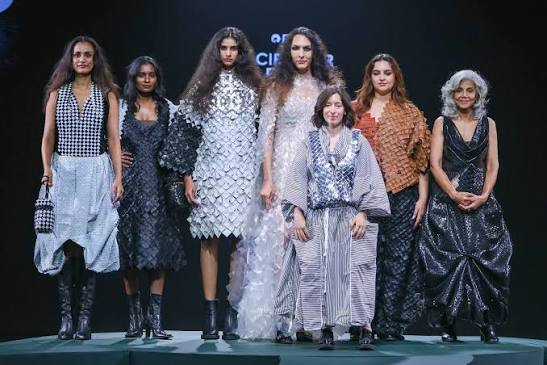
I stood backstage as the lights dimmed and the first model stepped onto the runway. The fabric shimmered under the spotlights, but it was not silk or satin. It was Musa cloth, woven from banana fibers harvested in Davao. The air smelled faintly of natural dyes and handloomed thread. This was the opening moment of Mindanao International Fashion Week on July 31, 2026, where global designers showcased zero waste collections built on indigenous sustainable textiles, signaling a decisive turn toward circular luxury and eco craftsmanship in high fashion.
[homes](https://homes.ph/news/from-waste-to-runway-how-davaos-discarded-banana-stems-are-weaving-a-new-future)
A Runway Built on Regeneration
The theme of this year’s event was clear from the first look. Designers were not just presenting clothes. They were presenting a philosophy. Every seam, every stitch, and every fiber was chosen with the intent to close the loop, to eliminate waste, and to honor the hands that made the material possible.
[swissglam](https://www.swissglam.ch/sustainable-trends-at-fashion-week-fw-25-26/)
What I witnessed was not an isolated experiment. It was part of a global movement. From Copenhagen to Paris, fashion weeks are mandating that a majority of collections use certified sustainable or deadstock fabrics. Designers are reworking vintage pieces, using salvaged materials, and creating biodegradable textiles that challenge the very definition of luxury. Mindanao International Fashion Week placed this conversation at the heart of its programming, proving that circular fashion is not a trend. It is the future.
[swissglam](https://www.swissglam.ch/sustainable-trends-at-fashion-week-fw-25-26/)
Zero Waste Collections That Tell a Story
The collections on display were unified by a commitment to zero waste design. Patterns were engineered to use every scrap of fabric. Off cuts became embroidery, fringe, or structural elements. Nothing was discarded.
[swissglam](https://www.swissglam.ch/sustainable-trends-at-fashion-week-fw-25-26/)
One standout collection featured modular garments that could be reconfigured by the wearer. A single piece could be worn as a dress, a skirt, or a top, extending its lifecycle and reducing the need for multiple purchases. Another designer presented a line of tailored suits made entirely from repurposed textile remnants, each patch telling a story of its origin.
[fashionrevolution](https://www.fashionrevolution.org/vegfest-pilipinas-rework-runway/)
These were not conceptual pieces meant only for the runway. They were wearable, desirable, and commercially viable. The message was clear. Circular fashion does not require sacrifice. It requires ingenuity.
Indigenous Textiles at the Heart of High Fashion
The soul of this event was the textiles. Designers drew from a rich palette of indigenous materials, including piña from Aklan, abaca from Mindanao, and banana fiber from Davao. These fabrics were not treated as exotic curiosities. They were treated as premium materials, worthy of the most sophisticated designs.
[gmanetwork](https://www.gmanetwork.com/news/scitech/science/248273/saluyot-dresses-and-talahib-bags-on-the-fashion-runway/story/)
House of Musa, founded by Joy Soo, brought its signature banana fiber textiles to the runway. The fabric, known as Musa cloth, is extracted from discarded banana pseudostems, a byproduct of the region’s vast plantations. What was once agricultural waste is now a high value textile, woven by artisans and even produced inside correctional facilities in Davao del Norte, providing skills and income to persons deprived of liberty.
[homes](https://homes.ph/news/from-waste-to-runway-how-davaos-discarded-banana-stems-are-weaving-a-new-future)
Other designers incorporated abaca fibers, showcasing the strength and sheen of Manila hemp. Still others used naturally dyed fabrics, with colors derived from mayana, guava, mahogany, and indigo. These materials were not just sustainable. They were deeply connected to place and culture, carrying the stories of the communities that produced them.
[gmanetwork](https://www.gmanetwork.com/news/scitech/science/248273/saluyot-dresses-and-talahib-bags-on-the-fashion-runway/story/)
Eco Craftsmanship as a Luxury Standard
The craftsmanship on display was extraordinary. Handloomed weaves, intricate embroidery, and natural dyeing techniques were presented not as folk art, but as luxury standards. Designers worked closely with artisan communities, ensuring fair wages and preserving traditional skills.
[fashionrevolution](https://www.fashionrevolution.org/vegfest-pilipinas-rework-runway/)
This approach aligns with a broader shift in the fashion industry. Consumers are increasingly demanding transparency and ethical production. They want to know where their clothes come from and who made them. By centering indigenous textiles and eco craftsmanship, Mindanao International Fashion Week is setting a new benchmark for what luxury can be.
[vionisxy](https://vionisxy.com/sv/news/circular-fashion-in-2026-how-the-textile-industry-is-turning-waste-into-premium-materials)
Global Designers, Local Impact
The runway featured a diverse array of designers, from local Filipino talents to international names. Each brought their own perspective, but all shared a commitment to circular principles.
[manilainternationalfashionweek](https://manilainternationalfashionweek.com/blog/f/mifw-season-7-stands-with-asean-philippines-2026)
Some designers focused on upcycling, transforming discarded denim and textile scraps into new garments. Others explored bio based materials, such as bio sequins and fibers derived from agricultural waste. The result was a collection of looks that were innovative, beautiful, and responsible.
[fashionrevolution](https://www.fashionrevolution.org/vegfest-pilipinas-rework-runway/)
The impact of this event extends beyond the runway. By showcasing these materials and techniques on a global stage, designers are creating demand that can support entire communities. The economic ripple effect is significant. From fiber extractors to weavers to seamstresses, the circular fashion economy is creating jobs and revitalizing local industries.
[homes](https://homes.ph/news/from-waste-to-runway-how-davaos-discarded-banana-stems-are-weaving-a-new-future)
Why This Matters for the Future of Fashion
The fashion industry is one of the largest polluters in the world. It consumes vast amounts of water, energy, and raw materials, while generating enormous quantities of waste. The shift toward circular fashion is not just an aesthetic choice. It is an environmental and ethical imperative.
[vionisxy](https://vionisxy.com/sv/news/circular-fashion-in-2026-how-the-textile-industry-is-turning-waste-into-premium-materials)
Mindanao International Fashion Week is proving that this shift is possible. By combining indigenous knowledge with contemporary design, by prioritizing zero waste and eco craftsmanship, and by centering the stories of the people who make the materials, the event is offering a blueprint for a more sustainable future.
[philfida.da.gov](https://philfida.da.gov.ph/2026/05/12/philfida-joins-inoblasyon-2026-to-champ-indigenous-textiles-and-weaving-innov/)
For those interested in learning more about sustainable fashion practices, the Fashion Revolution platform offers resources and guidance on ethical production, transparency, and circular design.
[fashionrevolution](https://www.fashionrevolution.org/vegfest-pilipinas-rework-runway/)
A New Definition of Luxury
As the final model walked the runway, I realized that what I had witnessed was more than a fashion show. It was a statement. A statement that luxury does not have to come at the cost of people or the planet. That beauty and responsibility can coexist. That the future of fashion is circular.
[fashionrevolution](https://www.fashionrevolution.org/vegfest-pilipinas-rework-runway/)
The collections on display were not just clothes. They were arguments. Arguments for a different way of making, consuming, and valuing fashion. And they were convincing.
[swissglam](https://www.swissglam.ch/sustainable-trends-at-fashion-week-fw-25-26/)
I left the venue with a sense of hope. The fashion industry is changing. And it is changing for the better. Mindanao International Fashion Week has shown us that the future is not something to fear. It is something to create.
[homes](https://homes.ph/news/from-waste-to-runway-how-davaos-discarded-banana-stems-are-weaving-a-new-future)