Medalists from the 2026 Commonwealth Games have begun returning home to packed airport halls, emotional family reunions and public celebrations after a demanding campaign in Glasgow. National federations and government bodies are now recognizing athletes in boxing, judo and para athletics with cash awards, certificates and ceremonial honors that acknowledge both their results and the years of work behind each medal.
Homecomings filled with pride
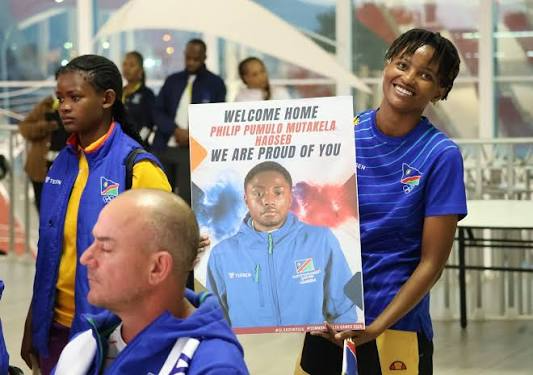
For athletes arriving after weeks of competition abroad, the journey home has carried a different feeling from the flight to Glasgow. At airports, relatives waited with flowers, flags and mobile phones held high. Coaches embraced competitors near arrival gates, while supporters applauded athletes who had spent months training through injury, financial pressure and long separations from their families.
India’s returning contingent received especially warm welcomes in Delhi and Mumbai, where cheering crowds, drums and national flags turned airport arrivals into public celebrations. Several athletes returned wearing their medals, while family members placed garlands around their necks and thanked the coaches who helped prepare them for the Games.
[outlookindia](https://www.outlookindia.com/amp/story/sports/india-at-commonwealth-games-2026-athletes-return-home-from-glasgow-in-pics)
Those scenes offered a reminder that a medal is never won by one person alone. Behind every boxing bout, judo contest or para athletics performance stands a network of parents, trainers, medical staff, support workers and local clubs. For athletes from smaller towns and communities, the welcome home also represented recognition for places that rarely receive national attention.
Cash awards recognize medal performances
The Commonwealth Games itself does not provide a fixed cash payment to athletes who win medals. Financial rewards generally come from national governments, sports ministries, state authorities and individual federations, with amounts differing according to each country’s policy.
[bbc.co](https://www.bbc.co.uk/sport/athletics/articles/c9w0jd9plngo)
India’s Union Sports Ministry presented awards of 30 lakh rupees for gold medals, 20 lakh rupees for silver medals and 10 lakh rupees for bronze medals to athletes honored in recent ceremonies. The awards included medalists from boxing, judo and para athletics, as well as competitors from other disciplines who represented the country in Glasgow.
[thekashmirimages](https://thekashmirimages.com/2026/08/04/lets-not-just-aim-for-govt-jobs-with-cwg-medals-lets-inspire-next-crop-mandaviya/)
State governments have added further support. Haryana announced an allocation of 13.47 crore rupees for its Commonwealth Games athletes. Each of the state’s seven gold medalists is set to receive 1.5 crore rupees, while two silver medalists will receive 75 lakh rupees each and a bronze medalist will receive 50 lakh rupees. Athletes who competed without winning medals are also due to receive incentive payments of 7.5 lakh rupees each.
[tribuneindia](https://www.tribuneindia.com/news/haryana/haryana-to-reward-cwg-2026-medallists-with-cash-prizes-up-to-rs-1-5-crore/)
These payments can be life changing, particularly for athletes who compete without the secure salaries, sponsorship contracts or private facilities available to better known sporting stars. A cash award may help a competitor pay for equipment, physiotherapy, travel to future events or additional coaching. It can also provide a measure of financial stability after years in which training often came before employment and personal income.
Boxers return with new attention
Boxing produced some of the most compelling stories of the Games. Each bout required athletes to manage speed, fatigue and pressure in front of a crowded arena, often against opponents whose styles had been studied for months. A single decision could determine whether an athlete returned home with a medal, an award and a new path toward international competition.
For young boxers, the recognition may be as significant as the money. Public honors can bring new sponsors, better training opportunities and greater visibility for clubs that operate with limited resources. They can also encourage parents to view sport as a serious path for their children, rather than an activity that must be abandoned when academic or financial demands increase.
Yet experienced coaches caution that a medal should mark the beginning of a longer plan rather than the end of one. Athletes need help managing prize money, protecting their health and preparing for the next competition. The pressure that follows a major victory can be intense, especially when a young athlete suddenly becomes responsible for family expectations and public attention.
Judo rewards discipline and resilience
Judo medalists have returned to a different kind of applause. The sport demands patience, balance and close control, with matches often turning in a matter of seconds. A competitor may spend several minutes defending against an opponent before finding one opening that decides the contest.
That discipline is easy to overlook when the final result is reduced to a medal table. Athletes must maintain strict training routines, manage weight and recover from repeated physical contact. For many competitors, financial recognition will help address practical needs such as mats, travel, nutrition and access to specialist treatment.
Judo programs also benefit when medalists are celebrated publicly. Young students who see athletes from their own region honored by officials may be more likely to join local clubs and remain involved. Over time, that visibility can strengthen the pipeline of coaches and competitors needed for future international teams.
Para athletes gain a wider platform
Recognition for para athletes carries a particular significance. Competitors often face additional costs related to transport, equipment, classification, medical support and accessible training venues. A medal can challenge narrow assumptions about disability while showing the level of skill, preparation and tactical intelligence required at elite level.
Cash awards can help para athletes replace specialized equipment, attend overseas events and work with professionals who understand their individual needs. Recognition can also encourage sports bodies to treat para competition as a central part of national development rather than an occasional addition to a larger sporting program.
Families often describe the return of a para athlete in deeply personal terms. Relatives have witnessed the early mornings, difficult travel and repeated adjustments needed to train and compete. When a medalist walks through an arrival gate to applause, that moment belongs to the entire support system.
Honors should lead to lasting support
Public ceremonies are meaningful, but athletes need consistent assistance after the cameras leave. A single payment cannot replace a reliable training environment, injury care or a clear route into future competition. Sports authorities should pair prize money with financial planning, education, mental health services and long term medical support.
- Provide transparent information about award amounts, payment schedules and eligibility.
- Offer financial guidance so athletes can protect and plan their prize money.
- Fund accessible facilities and specialist equipment for para athletes.
- Support coaches and local clubs that develop competitors before they reach the national team.
- Create career and education opportunities for athletes after competition.
Such measures would make the celebration more than a ceremonial response to a successful tournament. They would help ensure that athletes can continue competing without carrying the full burden of travel, equipment and recovery costs on their own.
A moment that belongs to every delegation
Across the Commonwealth, returning athletes are bringing home more than medals. They are carrying stories of close contests, unexpected breakthroughs and private sacrifices that were rarely visible during the competition. Their welcomes give communities an opportunity to honor the person behind the result, including the courage required to compete when victory was never guaranteed.
The strongest legacy of Glasgow will not be measured only by the final medal count. It will also be seen in whether young people find better access to boxing gyms, judo halls and para athletics programs, and whether medalists receive the support needed to remain in sport. For now, the celebrations offer a well deserved pause: families are reunited, flags are raised and athletes finally have time to hear their home crowds cheer.