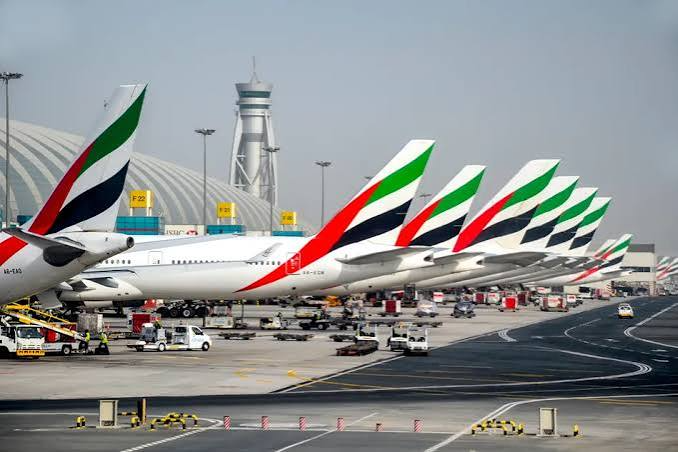
Travelers are confronting a difficult tradeoff this summer: the desire to cross borders is strong, but the cost of getting there has climbed sharply. Airfares rose more than 26 percent from a year earlier in the latest available data, even as headline inflation began to cool. At the same time, airports and airport retailers are testing new ways to make spending easier for travelers, including cryptocurrency payments at Dubai Duty Free.
Air travel costs rise despite easing inflation
For many passengers, the most visible sign of the travel shock appears before they reach the airport. A flight that once seemed manageable can now consume a far larger share of a household budget, especially for families traveling during peak summer periods. Recent reporting based on consumer price data found that average airfares were about 26 percent higher than a year earlier, with prices rising for eight consecutive months.
[cnbc](https://www.cnbc.com/2026/08/02/flights-are-getting-even-more-expensive-as-fuel-prices-rise.html)
The increase has not been limited to one route or one type of traveler. Domestic airfare data in the United States showed a rise of 26.5 percent compared with the previous year, while analysts cited by international media placed broader global increases in the range of 25 percent to 30 percent. That distinction matters because domestic and international ticket prices respond to different forces, including airport charges, fuel costs, aircraft availability, currency movements and the balance between local and overseas demand.
[theguardian](https://www.theguardian.com/business/2026/aug/07/flight-travel-costs-iran-war)
Cooling headline inflation does not necessarily mean that every household expense is falling. Inflation measures the rate at which prices change, not whether prices have returned to earlier levels. If airfare growth slows from its recent peak, passengers may still face tickets that cost substantially more than they did last year. For people planning reunions, religious pilgrimages, weddings or long delayed vacations, that difference can determine whether a journey happens at all.
Why tickets remain expensive
Airlines are operating in a market shaped by strong travel demand and constrained supply. Many passengers postponed trips during earlier periods of economic uncertainty and are now competing for limited seats during the busiest months. When demand rises faster than available capacity, airlines have more room to charge higher fares.
Fuel remains another major concern. Airlines have warned that ticket prices could stay elevated even if energy markets soften, because fuel costs are only one part of the pricing equation. Reduced refining capacity, route planning, labor expenses, aircraft maintenance and higher airport operating costs can continue to influence fares after oil prices move lower.
[cnbc](https://www.cnbc.com/2026/08/02/flights-are-getting-even-more-expensive-as-fuel-prices-rise.html)
International travelers also face the added pressure of currency conversion. A fare listed in dollars can become more expensive for passengers whose income is earned in another currency, particularly when exchange rates move against them. Taxes, baggage charges, seat selection, meals and airport transfers can then add hundreds of dollars to the final cost of a trip.
What passengers can do
Travelers cannot control global fuel markets or airline capacity, but they can reduce some of the financial pressure by changing how and when they book. Flexible dates often make the largest difference. Late August and early September can be less expensive than the height of July, while midweek departures may offer more favorable prices than Friday or weekend flights.
- Compare nearby airports before booking, while including the cost of ground transportation.
- Check the total fare after baggage, seat selection and payment charges rather than relying on the initial advertised price.
- Set fare alerts early and monitor prices over several weeks.
- Consider a longer connection only when the savings justify the added time and risk.
- Review refund, change and disruption policies before choosing the lowest fare.
Passengers should also be cautious about paying for a cheaper ticket with a less reliable itinerary. A missed connection, overnight stay or last minute replacement flight can quickly erase the original savings. The best fare is not always the lowest number on the screen. It is the price that matches the traveler’s schedule, luggage needs and tolerance for disruption.
Dubai Duty Free adds crypto payments
Against this backdrop, Dubai Duty Free has introduced Crypto.com Pay at stores in Dubai International Airport, also known as DXB, and Al Maktoum International Airport, as well as through its online store. The move makes Dubai Duty Free the first airport retailer in the Middle East to introduce the regulated digital payment option, according to the Dubai Media Office announcement.
[mediaoffice](https://www.mediaoffice.ae/en/news/2026/august/04-08/dubai-duty-free-becomes-first-airport-retailer-in-the-middle-east-to-introduce-cryptocom)
The service allows eligible customers to authorize purchases through a Crypto.com account. In physical stores, the checkout system creates a QR code showing the purchase amount in United Arab Emirates dirhams. The customer scans the code through the Crypto.com application, reviews the transaction and approves it from the account. Once authorization is complete, the retailer’s existing point of sale system confirms the purchase.
[mediaoffice](https://www.mediaoffice.ae/en/news/2026/august/04-08/dubai-duty-free-becomes-first-airport-retailer-in-the-middle-east-to-introduce-cryptocom)
The same basic process is available online. Customers select Crypto.com Pay at checkout, scan the generated QR code and approve the payment through the application. Mobile shoppers may be redirected directly to the Crypto.com application before returning to the retailer’s site to complete the order. Dubai Duty Free receives settlement in United Arab Emirates dirhams through Crypto.com’s regulated payment infrastructure, rather than carrying direct exposure to the changing value of the customer’s digital assets.
[mediaoffice](https://www.mediaoffice.ae/en/news/2026/august/04-08/dubai-duty-free-becomes-first-airport-retailer-in-the-middle-east-to-introduce-cryptocom)
A convenience option with clear limits
The announcement may attract attention from international passengers, but the initial service is not available to every person passing through Dubai. The payment option is limited to eligible United Arab Emirates residents who hold a Crypto.com account. A transit passenger who is simply changing planes at DXB may not qualify, even if the traveler has cryptocurrency in another wallet.
[mediaoffice](https://www.mediaoffice.ae/en/news/2026/august/04-08/dubai-duty-free-becomes-first-airport-retailer-in-the-middle-east-to-introduce-cryptocom)
That limitation is significant because airport retail is built around a highly international customer base. A traveler from the United States, India, Pakistan, Europe or Southeast Asia may be comfortable using digital assets but may still need a traditional card or another supported payment method at the counter. The rollout is therefore best understood as an additional checkout choice, not a replacement for cards, mobile wallets or cash.
Crypto payments can offer practical benefits. Travelers who already maintain funds in a digital wallet may avoid a separate exchange into local currency, and QR based authorization can be quick at a busy retail counter. A settlement system that converts the payment into local currency also gives merchants more predictable accounting.
There are risks as well. Digital asset prices can change rapidly, transaction fees may vary and refunds may not follow the same process as a conventional card reversal. Customers should confirm the exchange rate, final amount, supported assets and refund terms before approving a payment. They should also use only the official application and verify the QR code displayed by the retailer.
What the move says about airport commerce
Airports have long served as places where travelers manage multiple currencies, payment networks and identity checks within a matter of minutes. That makes them a natural testing ground for digital wallets. A passenger may be buying cosmetics, food, lounge access or a last minute gift while moving between countries and dealing with limited time.
The Dubai rollout suggests that airport retailers are watching more than cryptocurrency prices. They are also responding to customers who expect payment systems to work across borders with minimal friction. Digital wallets, instant bank transfers and mobile authorization are becoming part of the wider competition for airport spending, particularly among younger travelers and frequent international passengers.
Still, adoption will depend on trust. Travelers need clear pricing, reliable connectivity, strong fraud controls and simple remedies when a payment fails. Airport operators and retailers must also comply with local rules governing financial services, consumer protection, taxation and digital assets.
The traveler’s immediate reality
For now, the most pressing issue for most passengers is not whether they can pay for a duty free purchase with cryptocurrency. It is whether they can afford the flight. Higher fares are forcing travelers to plan earlier, compare more carefully and make harder choices about destinations, luggage and trip length.
The expansion of digital payment options offers a small measure of convenience after a traveler has already paid for the ticket. It does not reduce the fare itself, but it reflects a broader effort to make international travel smoother once passengers reach the terminal. As airfare pressure continues, airport retailers may increasingly compete through payment flexibility, loyalty benefits and faster checkout, while travelers remain focused on the same practical question: how to get where they need to go without spending more than they can afford.