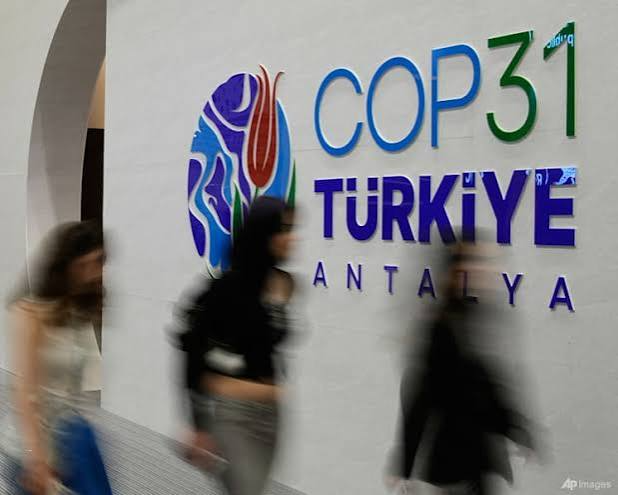
The United Nations COP31 climate summit in Antalya, Türkiye, ended on November 22, 2026, without a consensus agreement after two weeks of intense negotiations and nearly two additional days of overtime discussions. The breakdown followed a major dispute over fossil fuels, with the European Union and several other countries refusing to support a proposed climate agreement that contained no explicit commitment to phase out coal, oil, and natural gas. The failure marks a significant setback for international climate diplomacy at a time when governments face growing pressure to accelerate emissions reductions, strengthen climate financing, and protect communities from increasingly severe environmental impacts.
Why COP31 Ended Without a Global Climate Agreement
The negotiations in Antalya were intended to produce a common international position on climate action, energy transitions, and financial support for countries facing the consequences of global warming. However, disagreements over the future of fossil fuels became the central obstacle to reaching consensus.
The proposed agreement, informally known as the Antalya Pact, was developed under the joint leadership of Türkiye and Australia. Negotiators worked through several versions of the draft in an effort to bridge differences between countries with competing energy priorities. Despite those efforts, the final proposal failed to address one of the most contentious questions in international climate policy: whether governments should commit explicitly to moving away from fossil fuels.
The European Union strongly objected to the omission. Ireland’s Climate and Energy Minister Darragh O’Brien, speaking on behalf of the EU, argued that an agreement without any reference to fossil fuels would not reflect the urgency of the climate crisis. The EU made clear that it could not endorse the proposed text in its existing form.
Other countries, including the United Kingdom, Panama, Norway, the Marshall Islands, and Vanuatu, also expressed concerns or objections. Several developing nations and vulnerable island countries considered the proposed language insufficient to address their environmental and economic concerns.
COP31 President Murat Kurum acknowledged that the negotiations had failed to secure the agreement required for adoption. He confirmed that there was no consensus on the proposed overarching decision and that the document would therefore not be adopted.
Fossil Fuels Remain the Biggest Obstacle to Climate Progress
The disagreement over fossil fuels reflects a much larger conflict within international climate negotiations. Coal, oil, and natural gas remain central to electricity generation, transportation, manufacturing, and economic development across much of the world. At the same time, their combustion releases greenhouse gases that contribute significantly to rising global temperatures.
Many governments and climate scientists argue that reducing dependence on these energy sources is essential to limiting future warming. Countries supporting a stronger fossil fuel transition wanted the Antalya agreement to recognize the need for a clear and measurable shift toward cleaner energy systems.
The issue gained additional importance because earlier versions of the proposed agreement had included language supporting an accelerated transition away from fossil fuels. That language disappeared from a subsequent draft, triggering renewed opposition from countries that believed the summit was moving backward rather than building on previous climate commitments.
For climate vulnerable nations, the omission represented more than a disagreement over diplomatic wording. It raised questions about whether major economies are prepared to make the difficult decisions required to reduce emissions and limit the damage already affecting vulnerable populations.
Concerns Over Carbon Capture and Continued Oil Production
Another contentious issue involved the proposed expansion of carbon capture and storage technologies. These technologies are designed to capture carbon dioxide emissions from industrial facilities and power plants before the gas enters the atmosphere, with the intention of storing it underground or using it in other applications.
Supporters argue that carbon capture could help reduce emissions in industries where replacing fossil fuels is particularly difficult. However, environmental organizations have raised concerns that relying too heavily on these technologies could allow existing fossil fuel operations to continue for longer than necessary.
Critics fear that carbon removal and storage could become an alternative to directly reducing fossil fuel consumption. They argue that clean electricity, energy efficiency, electrification, and renewable energy expansion should remain the primary priorities of climate policy.
The Antalya negotiations highlighted the continuing disagreement over how governments should balance technological solutions with direct reductions in greenhouse gas emissions.
Climate Finance Disputes Add to International Tensions
Although fossil fuels dominated the final negotiations, climate financing was another major source of disagreement. Developing countries have repeatedly called on wealthier nations to provide greater financial assistance for adaptation, disaster preparedness, infrastructure improvements, and recovery from climate related damage.
Many lower income countries contribute relatively little to historical global emissions but face substantial risks from rising temperatures, changing rainfall patterns, stronger storms, droughts, and coastal flooding. For these nations, climate finance is not simply an international funding commitment. It is essential to protecting homes, livelihoods, food supplies, and economic stability.
The proposed Antalya Pact included a pledge to increase adaptation finance substantially, including an objective to triple available support. However, critics questioned the proposal because it did not establish a sufficiently clear baseline for measuring the increase.
Without a transparent starting point, governments could struggle to determine whether financial commitments represent genuine additional assistance or simply changes in how existing funding is reported. Developing nations also want clearer information about when money will become available, which countries will provide it, and whether support will come through grants or loans.
These questions are particularly important for countries already managing climate related economic pressures. Additional debt can make recovery more difficult, especially when governments must simultaneously invest in healthcare, education, infrastructure, and energy security.
What the Proposed Antalya Pact Would Have Delivered
Despite its shortcomings, the proposed agreement contained several measures intended to advance international climate cooperation. Its provisions included expanding electricity access, increasing climate adaptation support, and accelerating the development of technologies designed to remove carbon dioxide from the atmosphere.
One notable proposal called for increasing electricity’s share of global energy use to 35 percent by 2035. The objective reflected growing recognition that electrification could help reduce emissions across transportation, heating, manufacturing, and other economic activities.
Greater electrification, however, would need to be accompanied by cleaner electricity generation. Replacing petrol powered vehicles with electric alternatives, for example, delivers greater climate benefits when electricity comes from renewable and other low emission sources.
The draft also recognized the growing risk of exceeding the 1.5 degree Celsius temperature threshold established under the Paris Agreement. It called for minimizing the scale and duration of any temperature overshoot through stronger international action.
However, without agreement on the main cover decision, these proposals could not become part of a unified political outcome under the Antalya Pact. Separate decisions on other conference matters were still adopted, meaning that the summit did not end with every aspect of its negotiations abandoned.
Why the 1.5 Degree Celsius Target Still Matters
The 1.5 degree Celsius threshold remains one of the most important reference points in global climate policy. Established through the Paris Agreement, the target reflects the ambition to limit the increase in average global temperatures compared with preindustrial levels.
Even relatively small increases in global temperatures can have serious consequences. Higher temperatures can intensify heatwaves, increase pressure on freshwater supplies, damage agricultural production, and contribute to rising sea levels. The impacts are often more severe in regions with limited financial resources and infrastructure to manage environmental emergencies.
Scientific assessments have repeatedly warned that delaying emissions reductions increases the difficulty of limiting long term warming. Countries therefore face growing pressure to strengthen their national climate plans and move from political commitments toward measurable action.
The COP31 outcome adds uncertainty to these efforts. Without a common agreement on fossil fuel transitions, governments may find it harder to coordinate energy policies and establish a shared direction for future negotiations.
What the COP31 Failure Means for Developing Countries
Developing countries face some of the most difficult choices in the global energy transition. Many need to expand electricity access, improve transportation networks, create employment opportunities, and support growing industries. At the same time, they must reduce emissions and prepare for increasingly unpredictable weather conditions.
For countries such as Pakistan, climate negotiations carry particular significance. Flooding, extreme heat, water shortages, and agricultural disruption demonstrate how environmental changes can affect economic security and everyday life.
Pakistan’s vulnerability illustrates why climate adaptation cannot be treated as a secondary issue. Farmers need more reliable water management systems, cities require better drainage and heat preparedness, and communities exposed to flooding need stronger infrastructure and early warning systems.
International climate financing can help developing economies make these investments without placing excessive pressure on already limited public budgets. However, the failure to reach a broader agreement in Antalya leaves important questions about the scale, timing, and reliability of future support.
For vulnerable countries, the outcome also reinforces concerns about fairness. They want wealthier nations to demonstrate leadership through stronger emissions reductions and more predictable financial assistance rather than expecting developing economies to carry a disproportionate share of the transition.
International Climate Diplomacy Faces a Difficult Test
The COP31 breakdown exposes the limitations of a negotiating system that depends on agreement among nearly 200 participating countries. Governments enter climate conferences with different economic structures, energy resources, political priorities, and expectations about financial responsibility.
Reaching a common position requires balancing these competing interests while maintaining sufficient ambition to address the scientific evidence. That balance becomes especially difficult when countries disagree over the pace of fossil fuel reductions and the distribution of climate costs.
The absence of a final overarching agreement is particularly significant because international climate conferences depend on collective decisions to establish political direction and encourage governments to strengthen their commitments.
Nevertheless, the failure of the Antalya Pact does not cancel existing international climate obligations. The Paris Agreement remains in force, and countries continue to carry responsibilities under previously adopted climate decisions.
Previous climate conferences have also demonstrated that progress can continue through national policies, regional cooperation, renewable energy investment, and private sector initiatives, even when negotiations encounter serious obstacles.
What Happens After COP31?
Attention will now turn toward the next stages of international climate negotiations and the possibility of rebuilding agreement around the issues that divided countries in Antalya. The next UN climate summit, COP32, is scheduled to take place in Addis Ababa, Ethiopia, in November 2027.
Future negotiations will need to address several unresolved priorities. These include establishing clearer language on the transition away from fossil fuels, improving accountability for climate finance, supporting vulnerable communities, and ensuring that technological solutions contribute to genuine emissions reductions.
Governments will also face pressure to demonstrate progress through domestic climate policies. Expanding renewable electricity, improving public transportation, strengthening energy efficiency, and protecting forests are among the measures that can deliver practical results regardless of disagreements at international conferences.
Businesses and investors will play an important role as well. Long term investment in solar power, wind energy, battery storage, modern electricity networks, and low emission industrial technologies can help reduce dependence on fossil fuels while creating new economic opportunities.
A Setback for Climate Action, but Not the End of Global Cooperation
The conclusion of COP31 without an overarching climate agreement is a disappointing development for governments, environmental organizations, and communities seeking stronger international action. After two weeks of negotiations and extended overtime discussions, countries were unable to overcome fundamental disagreements about fossil fuels and financial responsibility.
The result highlights a difficult reality: recognizing the climate crisis is not the same as agreeing on how to address it. Governments may share concerns about rising temperatures while disagreeing sharply over the economic sacrifices, financial commitments, and energy policies required to limit future damage.
However, the failure of one summit does not eliminate the need or opportunity for climate progress. The transition toward cleaner energy, stronger adaptation systems, and more resilient communities can continue through national action and international partnerships.
We should view the Antalya outcome as a warning about the consequences of delayed cooperation rather than a reason to abandon climate ambitions. The countries most exposed to environmental damage cannot afford another decade of uncertain commitments and insufficient support.
The challenge now is to turn diplomatic disappointment into practical action. Future negotiations must produce clearer commitments, credible financing arrangements, and meaningful progress toward reducing dependence on fossil fuels. The success of international climate policy will ultimately be measured not by the promises made inside conference halls, but by the improvements people experience in their homes, communities, economies, and natural environments.
As governments prepare for the next round of negotiations, the central question remains whether international cooperation can move beyond political disagreements and deliver the urgent climate action that science and vulnerable communities demand.
Further Reading
For official information about the conference, negotiations, and international climate priorities, visit the United Nations Climate Change COP31 platform. Readers can also explore the United Nations overview of COP31 for additional information about the summit and the global climate agenda.