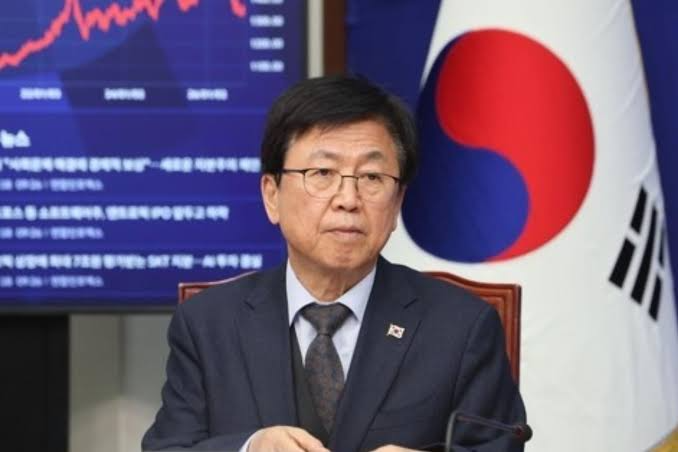
South Korea’s Education Minister Choi Kyo-jin resigned on November 22, 2026, following a growing national controversy over artificial intelligence assisted cheating and last minute security changes surrounding the country’s highly competitive university entrance examinations. President Lee Jae Myung accepted the resignation approximately one hour after Choi announced his decision to step down. The controversy has raised serious questions about examination security, government preparedness, and the growing challenges artificial intelligence presents to traditional education systems. What began as a cheating scandal involving a national professional qualification examination quickly developed into a nationwide education crisis, forcing authorities to introduce emergency safeguards just days before South Korea’s annual College Scholastic Ability Test, commonly known as the CSAT or Suneung.
Why South Korea’s Education Minister Decided to Resign
Choi Kyo-jin announced his resignation after acknowledging that the Education Ministry had failed to prepare adequately for the risks of technology assisted cheating. His decision followed mounting criticism from students, parents, teachers, lawmakers, and the wider public over repeated changes to examination security procedures immediately before the national university entrance test.
In a statement released through the Education Ministry, Choi accepted responsibility for the disruption caused by the last minute changes. He acknowledged that the revised measures had inconvenienced examination candidates and members of the public. He also recognized that the ministry faced criticism for failing to anticipate the threat and establish appropriate procedures earlier.
President Lee Jae Myung accepted the resignation shortly after it was submitted, according to presidential spokesperson Kang Yu-jung. The presidential office confirmed that the process of selecting a successor would proceed through established government procedures.
The resignation represents a significant political consequence of a scandal that exposed weaknesses in the country’s examination security system. Although the CSAT concluded without major disruptions, the preparations revealed how quickly emerging technology can challenge traditional methods of preventing academic dishonesty.
How an AI Assisted Cheating Scandal Triggered a National Education Crisis
The controversy intensified on November 15, when the top scorer in South Korea’s national certified tax accountant examination admitted to using concealed technology to cheat. The candidate reportedly used a miniature camera to photograph examination questions, transmitted the information through a smartphone, and relied on generative artificial intelligence to obtain answers.
The revelation shocked a country where competitive examinations are widely regarded as an important pathway toward professional success and financial stability. South Korean students spend years preparing for demanding examinations, often attending private academies and following intensive study schedules to secure places at prestigious universities.
The possibility that someone could use concealed electronic equipment and artificial intelligence to gain an unfair advantage raised concerns about whether examination results could still be trusted.
The incident also demonstrated a new challenge for examination authorities. Traditional cheating prevention procedures generally focus on unauthorized notes, communication devices, and conventional methods of obtaining answers. However, miniature cameras, smartphones, wireless connections, and generative AI systems create opportunities for candidates to obtain assistance without obvious signs of misconduct.
Authorities began investigating the reported cheating, while public pressure increased for stronger examination security ahead of the upcoming national university entrance test.
Last Minute Security Changes Created Confusion Among Students
With the CSAT approaching, South Korean authorities faced pressure to prevent similar incidents during one of the country’s most important academic events. Instead of introducing a fully established security framework well in advance, officials announced a series of additional restrictions during the final days before the examination.
The revised measures included stricter controls over personal belongings, additional inspections, and restrictions intended to prevent candidates from using concealed electronic equipment. Some of the most unusual measures involved covering buttons on students’ clothing with stickers to prevent miniature cameras from being hidden inside them.
Examination officials also introduced additional checks involving glasses and clothing, while candidates were instructed to leave personal belongings and unauthorized devices outside examination rooms.
Authorities also used emergency disaster alert messages sent to mobile phones nationwide to identify candidates who had failed to surrender their smartphones before entering examination halls. Three alerts were transmitted during the examination, creating loud notifications even on devices that had been muted.
Although the measures were designed to protect examination integrity, their late introduction caused considerable anxiety. Students who had spent months preparing for the CSAT suddenly faced unfamiliar restrictions and additional security procedures during an already stressful period.
Teachers and parents questioned why such significant changes had not been prepared earlier, particularly when the consequences of cheating could affect the academic futures of hundreds of thousands of candidates.
What Happened During the 2027 College Entrance Examination?
South Korea conducted its annual College Scholastic Ability Test on November 19, 2026. Commonly called the Suneung, the examination is one of the most consequential academic events in the country.
The examination attracted approximately 551,864 registered candidates across 1,312 testing centers nationwide, according to reports from South Korean authorities. Students faced an extensive testing schedule covering subjects that play a major role in university admission decisions.
The increased security measures produced a substantial number of recorded violations involving electronic devices. Yonhap News Agency reported that authorities detected 111 suspected cheating cases involving electronic devices during the examination.
Other reporting from the examination authorities identified 98 candidates caught in smart device related misconduct, including individuals found carrying prohibited devices and those suspected of using them during the test. The government said that 49 candidates were identified through the nationwide emergency alert system.
These figures highlighted the difficulty of monitoring examination environments when students may have access to increasingly sophisticated electronic equipment. They also raised questions about whether emergency measures can provide reliable protection without creating additional disruption for legitimate candidates.
Minister’s Parliamentary Remarks Added to Public Criticism
Choi Kyo-jin faced additional criticism following his appearance before lawmakers in the National Assembly ahead of the examination. During questioning about the government’s ability to detect artificial intelligence assisted cheating, he was asked whether he could guarantee that authorities would identify every attempt.
Choi responded that he did not believe he could provide such confidence because of his age. His remarks quickly attracted public attention and criticism, with opponents questioning whether the education minister fully understood the technological challenges facing the country’s examination system.
The comments became particularly controversial because they came at a time when students and parents were demanding reassurance about examination security. Many believed that the ministry should have demonstrated stronger preparation and clearer leadership instead of appearing uncertain about its ability to address the threat.
The minister’s limited public appearances during the final preparations also attracted scrutiny. As criticism continued, the controversy expanded beyond the original cheating incident and became a wider debate about administrative responsibility.
Why the Suneung Examination Matters So Much in South Korea
The Suneung is far more than an ordinary academic assessment. For many South Korean students, it represents years of preparation, family investment, personal sacrifice, and expectations about future opportunities.
Admission to prestigious universities can significantly influence employment prospects, professional networks, and long term career development. As a result, examination performance carries considerable social and economic importance.
Students frequently spend long hours attending school, studying independently, and participating in private tutoring programs. Families may make substantial financial sacrifices to support their children’s preparation.
For candidates who have invested years in reaching this single examination, the possibility of artificial intelligence assisted cheating can be deeply discouraging. If some individuals gain access to unauthorized technology while others follow the rules, the credibility of the entire assessment system becomes questionable.
This is why the scandal has generated such a strong reaction. The issue is not simply whether a small number of individuals violated examination regulations. It is whether the system can guarantee that every candidate competes under fair and consistent conditions.
How Artificial Intelligence Is Changing Examination Security
The South Korean controversy highlights a challenge facing education authorities worldwide. Generative artificial intelligence can now process written questions, analyze complex information, and produce answers within seconds. When combined with concealed cameras and smartphones, these capabilities can create new opportunities for examination misconduct.
Educational institutions have traditionally relied on invigilators, identity verification, device restrictions, and controlled examination environments. These methods remain relevant, but they may require substantial revision as technology becomes smaller, more accessible, and increasingly sophisticated.
Several areas deserve greater attention as schools, universities, and professional examination organizations reconsider their security policies.
- Stronger examination planning: Security procedures should be developed and tested well before examination dates rather than introduced at the last minute.
- Modern device detection: Examination centers need appropriate methods for identifying concealed cameras, unauthorized communication equipment, and smart devices.
- Clear candidate guidelines: Students should receive detailed information about permitted and prohibited equipment before examinations begin.
- Consistent enforcement: Rules must apply equally to all candidates, with transparent procedures for investigating suspected violations.
- Responsible AI policies: Educational institutions should distinguish legitimate AI assisted learning from unauthorized use during assessments.
These steps can help protect academic integrity without creating unnecessary pressure for students who are following examination rules.
What the Resignation Means for South Korea’s Education System
Choi’s departure places additional attention on the government’s responsibility to modernize examination procedures and restore public confidence. The appointment of a new education minister will provide an opportunity to review how the controversy developed and determine which administrative failures require correction.
However, replacing one minister will not resolve the wider technological challenge. South Korea will need a coordinated approach involving education officials, examination administrators, technology specialists, schools, and law enforcement authorities.
Future examination policies will likely require more comprehensive preparation, improved communication, and carefully tested security arrangements. Authorities must also ensure that stronger controls do not unfairly disadvantage students or compromise the accessibility of examinations for candidates with legitimate needs.
The government faces a delicate responsibility: protecting the fairness of national examinations while ensuring that students can complete them in a predictable and supportive environment.
A Global Warning About AI and Academic Integrity
South Korea’s experience offers an important lesson for education systems beyond its borders. Artificial intelligence is changing how students learn, research, and complete academic work. While these tools can support education when used responsibly, they also create new risks for traditional assessment methods.
Universities and professional examination bodies worldwide are already reconsidering how they evaluate student knowledge and verify independent performance. Some institutions are exploring more supervised assessments, oral examinations, practical assignments, and redesigned testing procedures.
The central challenge is finding a balance between technological progress and academic fairness. Artificial intelligence should support learning rather than provide an unfair advantage to individuals willing to violate examination rules.
For students, the controversy reinforces the value of honest preparation and genuine knowledge. For governments and educational institutions, it demonstrates that examination security must evolve alongside the technology available to potential offenders.
What Happens Next for South Korea?
Following Choi’s resignation and President Lee’s acceptance, the immediate priority will be establishing new leadership at the Education Ministry and reviewing the events surrounding the 2027 CSAT.
Authorities will also need to address the investigations connected to the original tax accountant examination cheating incident and determine whether additional safeguards or regulatory changes are necessary.
The government has discussed stronger penalties for examination misconduct, including extending restrictions on retaking examinations for individuals found guilty of cheating. Such measures could serve as a deterrent, although enforcement must remain fair and supported by reliable evidence.
For students and families, the most important outcome will be whether future examinations can take place under transparent, consistent, and well communicated rules. Restoring confidence will require more than additional inspections or stricter penalties. It will require demonstrating that examination authorities can anticipate technological risks and respond without placing unnecessary burdens on legitimate candidates.
Conclusion: A Major Setback for Education Leadership and Examination Trust
The resignation of South Korean Education Minister Choi Kyo-jin marks a significant moment in the country’s response to artificial intelligence assisted examination cheating. What began with a candidate’s admission of using concealed technology and generative AI developed into a national controversy over government preparedness, examination fairness, and the security of high stakes academic assessments.
Although the 2027 Suneung concluded without major disruptions, the last minute restrictions and recorded electronic device violations exposed weaknesses that education authorities cannot afford to ignore.
We should view this incident as a broader warning about the relationship between artificial intelligence and academic integrity. Technology will continue to change how people study and demonstrate their knowledge, but fairness must remain at the center of every credible education system.
South Korea now faces the task of rebuilding confidence among students, parents, and educators. The lasting success of its response will depend on whether the government can develop reliable examination safeguards, communicate clearly, and ensure that every student receives an equal opportunity to succeed through genuine effort and ability.
Further Reading
For continuing coverage of the minister’s resignation and the national examination controversy, readers can follow Yonhap News Agency’s report on the Education Minister’s resignation. Additional information about the wider impact of artificial intelligence on education and examination policies is available through UNESCO’s digital education resources.