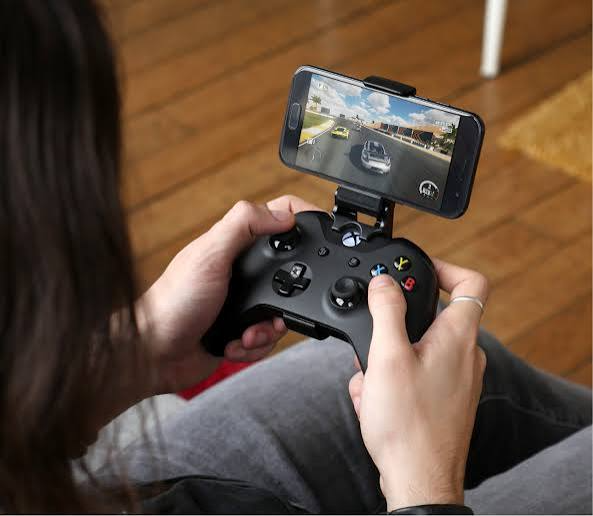
Cloud gaming is entering another important stage as advances in low latency streaming, edge computing and cross platform infrastructure make it increasingly practical to run demanding games in remote data centers and deliver them instantly to phones, tablets, laptops and desktop computers. The shift is changing a basic assumption of modern gaming: that players need powerful local hardware to experience the latest graphics intensive titles.
The latest developments reported around September 15, 2026 point toward a broader industry effort to make cloud gaming more responsive and accessible across different types of devices and networks. Rather than depending entirely on a console or gaming PC, players can increasingly connect to remote game instances while their device receives a live stream of the rendered experience. The underlying technology is complex, but the experience for a player can be remarkably simple: open a supported service, connect a controller and start playing.
Cloud Gaming Is Moving Computing Away From the Player
Traditional gaming places most of the workload directly on the player’s device. A console or gaming computer renders the game, processes input and stores the necessary files locally. Cloud gaming reverses that arrangement. The demanding computation takes place on remote servers, while the player’s device receives a continuous stream of video and audio and sends controller or touch input back to the cloud.
The International Telecommunication Union describes cloud gaming as a model in which game storage, computing and rendering can be completed in the cloud while players access the experience through different terminals. Its infrastructure recommendations cover hardware resources, resource management and individual game instances, reflecting how much more sophisticated cloud gaming has become as a technical discipline.
This architecture can remove some of the traditional hardware barriers. A phone with modest graphics capability does not necessarily need to render a large open world locally if a remote GPU is doing that work. The phone instead becomes a window into a much more powerful computing environment.
Low Latency Is the Key to Making Streaming Feel Like Gaming
Video streaming and interactive gaming have very different requirements. A movie can buffer several seconds of content and continue playing if the network briefly slows down. A competitive game cannot rely on the same approach because every movement, button press and camera adjustment needs to reach the remote game server quickly.
When a player presses a button, the input travels through the network to the remote game instance. The server processes the action, renders a new frame and sends that visual information back to the player. Any delay in this cycle can make controls feel sluggish.
Research published in 2026 has highlighted the importance of high throughput, low latency and minimal packet loss for cloud gaming quality. Streaming systems can also adapt their behavior to changing network conditions, adjusting the delivery experience when bandwidth or connection quality changes.
NVIDIA, for example, currently lists latency requirements for GeForce NOW and recommends a significantly lower latency level for the best experience. Its published requirements illustrate a basic reality of cloud gaming: remote computing can remove local hardware limitations, but it cannot eliminate the physical and network limitations involved in moving data between a player and a data center.
Edge Computing Brings Game Servers Closer to Players
One of the most important technologies behind low latency cloud gaming is edge computing. Instead of processing every gaming session in a small number of distant data centers, providers can distribute computing resources across locations closer to users.
The difference can be felt in milliseconds. A shorter network path means input can reach the game server faster and rendered frames can return more quickly. Meta has previously described using edge computing sites and orchestration systems to host games closer to players, while NVIDIA has promoted edge based infrastructure for real time game streaming.
The International Telecommunication Union has also developed technical requirements for cloud gaming platforms using mobile edge computing. Its recommendations describe systems that can schedule users to appropriate edge nodes and manage computing and network resources according to demand.
This distributed model becomes particularly important as providers attempt to support players across continents. A global cloud gaming service cannot simply place all of its infrastructure in one region and expect identical performance everywhere. The physical distance between users and servers remains a fundamental part of the experience.
Why Edge Locations Matter
- Shorter network paths can reduce input and streaming delays.
- Regional capacity can help services manage large numbers of simultaneous players.
- Game instances can be created closer to users when demand changes.
- Mobile networks can connect players to computing resources near their location.
Cross Platform Streaming Could Change How Games Are Accessed
The most significant promise of modern cloud gaming is not simply better streaming. It is the possibility of separating the game experience from a particular piece of hardware.
A player could begin a session on a desktop computer and later continue from a phone or tablet without downloading the full game to each device. NVIDIA already supports cloud gaming across a broad range of devices, including laptops, desktops, Macs, Chromebooks, mobile devices, televisions and handheld systems, although availability and features vary by platform and region.
This model could make gaming libraries more portable. Instead of asking whether a particular device has enough graphics memory or processing power, users can increasingly ask whether their device has a compatible client and a sufficiently reliable internet connection.
The distinction is especially relevant for AAA games, which can require substantial storage and powerful graphics hardware. Cloud rendering can place much of that burden on remote infrastructure while the user’s device handles display, input and communication.
The Technology Behind a Cloud Gaming Session
Although the player sees a familiar game screen, a cloud gaming session involves several systems working together. A provider must allocate computing resources, launch a game instance, process player input, render frames, encode video, transmit the stream and maintain the connection while responding to changing network conditions.
Modern infrastructure can use virtual machines, containers or physical machines depending on the service and game requirements. The International Telecommunication Union’s cloud gaming infrastructure framework identifies hardware resources, resource management and game instances as core parts of the architecture.
Resource management is particularly important because a cloud provider cannot simply dedicate a powerful server to every player indefinitely. Capacity must be scheduled according to demand. Game instances need to start quickly, use resources efficiently and shut down when sessions end.
That creates an enormous infrastructure challenge during major releases. A popular AAA game can attract large numbers of players at the same time. Cloud platforms must anticipate demand and provide enough GPU, CPU, storage and network capacity without maintaining excessive unused infrastructure during quieter periods.
Mobile Gaming Could Benefit From the Shift
Mobile devices are among the clearest beneficiaries of cloud gaming because their compact design creates unavoidable limits on sustained computing power, cooling and battery capacity.
A phone does not need to contain a desktop class graphics processor if demanding game rendering happens remotely. The device can focus on decoding the stream, displaying frames and transmitting player input.
However, this does not mean mobile cloud gaming is automatically seamless. Cellular coverage, network congestion, data limits and signal quality can affect the experience. A player sitting in a strong network environment may have a very different experience from someone using an unstable connection in a crowded area.
Battery consumption also remains relevant. Although the phone is not performing the full game rendering workload, continuous high quality video decoding and network communication can still consume substantial power.
Cross Platform Gaming Still Has Important Limits
The phrase cross platform can mean several different things, and those distinctions matter. Streaming a game to multiple device types does not automatically mean that every game supports shared multiplayer accounts, shared progress or unrestricted movement between platforms.
Game licensing can also create limitations. A cloud service may provide access to certain titles while another service offers a different catalog. Publishers can impose regional restrictions or require users to connect existing store accounts.
Controller support is another practical issue. A game designed around a physical controller may not translate comfortably to a touchscreen. Some services can support keyboard and mouse input, while others may prioritize controllers depending on the title and platform.
These details mean that the future of cloud gaming will not be defined only by server performance. Compatibility, licensing, user accounts and platform policies will also determine how seamless the experience becomes.
Infrastructure Costs Remain a Major Challenge
Cloud gaming can reduce the need for expensive local hardware, but the computing cost does not disappear. It moves from the player to the service provider.
Running a high end game remotely requires powerful GPUs, networking capacity, storage and data center infrastructure. Each active player consumes computing resources for the duration of a session. Unlike conventional game sales, where a customer may purchase a title once and run it locally for years, cloud gaming providers must continually supply server capacity whenever users play.
Recent reporting has also highlighted the difficulty cloud gaming services have faced in reaching mainstream adoption. Infrastructure costs, bandwidth consumption and competition from conventional consoles and gaming PCs remain significant factors.
This makes efficient resource scheduling increasingly important. Providers need systems capable of assigning computing power dynamically, scaling capacity during demand spikes and releasing resources when players leave.
What Better Cloud Gaming Could Mean for Players
If these infrastructure improvements continue, the practical effect for consumers could be a gradual reduction in the importance of local gaming hardware. Players may still purchase consoles and powerful PCs because those devices provide predictable performance, offline capabilities and direct control over the gaming environment.
Cloud gaming offers a different proposition. Instead of replacing every gaming device, it can become another layer of access. A player could use a high end computer at home while relying on a phone or lightweight laptop when traveling.
That flexibility could be especially valuable for people who cannot justify purchasing expensive gaming hardware. A capable internet connection and compatible device could provide access to experiences that would otherwise require a major hardware investment.
The Road Ahead for Global Game Streaming
The September 2026 milestone reflects a broader technological direction rather than a single feature or service. Cloud gaming infrastructure is becoming more distributed, streaming protocols are becoming more responsive and computing resources can increasingly be coordinated across regions and device categories.
The International Telecommunication Union’s technical work provides evidence that cloud gaming infrastructure is being treated as a serious networking and computing field, with formal attention given to game instances, resource scheduling, edge nodes, network management and security.
For players, the most meaningful measure will remain simple. A cloud game must respond when a button is pressed, maintain a stable image and continue working when the network becomes less than perfect. If providers can consistently deliver that experience across phones, tablets, laptops and desktops, the distinction between gaming on a powerful local machine and gaming through a remote server may become much less visible.
We are not yet at a point where cloud gaming removes every hardware or connectivity constraint. Distance, bandwidth, infrastructure costs, licensing and network quality continue to matter. Yet the direction is unmistakable. The game itself is increasingly becoming a service that can follow the player rather than a piece of software tied permanently to one machine.
For more technical background, the International Telecommunication Union provides published recommendations covering cloud gaming infrastructure and network requirements, while NVIDIA publishes current information about cloud gaming hardware, streaming services and performance requirements.