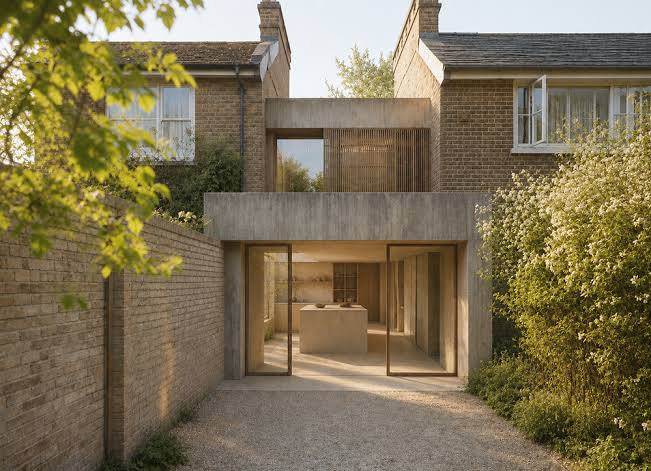
Urban housing is moving into a new phase of climate policy as architects, infrastructure specialists and city planners call for stronger standards governing the renovation of older homes. Discussions surrounding the United Nations General Assembly in September 2026 have placed residential retrofits, thermal efficiency and lower emission building materials closer to the center of international urban policy, reflecting a growing recognition that cutting emissions will require attention not only to new construction but also to the homes people already live in.
For millions of households, the climate transition will not begin with moving into a newly built apartment or house. It will begin with replacing inefficient windows, improving insulation, repairing roofs, upgrading heating and cooling systems and choosing materials with lower environmental impacts. That makes retrofit policy deeply connected to everyday life, from household energy bills to indoor temperatures during extreme weather.
Why Older Homes Are Becoming a Climate Priority
The global building stock represents one of the largest opportunities for reducing energy demand. Many older homes were constructed before modern energy performance requirements became common. Their walls, roofs, windows and heating systems can allow large amounts of energy to escape or require substantial energy to maintain comfortable indoor temperatures.
The International Energy Agency has repeatedly identified renovation of existing buildings as a central part of reducing building sector emissions. Its analysis says deep energy retrofits can significantly reduce energy demand associated with heating, particularly when improvements to insulation and windows are combined with efficient heating systems and cleaner energy sources.
The scale of the challenge is substantial. The IEA has noted that a large share of the building floor area in developed economies was constructed before effective thermal regulations became widespread. Much of that stock will remain occupied for decades, meaning decisions made during renovation can influence energy consumption for an entire generation.
We can think of an old house as a long lived piece of infrastructure rather than simply a private dwelling. Every roof replacement, window replacement or wall renovation becomes an opportunity to determine how much energy that structure will require for years to come.
Why Building Materials Are Part of the Equation
Energy efficiency is only one side of the retrofit debate. The materials used to renovate a building also have an environmental footprint. Cement, steel, aluminum, insulation products, glass and other construction materials require energy and resources during extraction, manufacturing, transportation and installation.
That concern is commonly described as embodied carbon. Operational emissions come from activities such as heating, cooling and lighting a building, while embodied emissions are associated with the materials and construction processes used to create or renovate it.
The United Nations Environment Programme has highlighted the importance of reducing emissions associated with construction materials. Its work on building materials points toward three broad strategies: avoiding unnecessary material production, increasing the use of regenerative materials where appropriate and reducing emissions from conventional materials.
That distinction is becoming increasingly relevant to retrofit policy. Replacing an inefficient building component can reduce future energy consumption, but policymakers also need to consider the environmental cost of manufacturing and installing the replacement.
What New Retrofit Standards Could Require
The emerging policy discussion points toward standards that consider the complete performance of a renovation rather than focusing on one product or technology. A comprehensive residential retrofit framework could establish minimum requirements for thermal performance, energy demand, material selection and building resilience.
Possible requirements could include:
- Improved insulation for roofs, walls and floors
- High performance windows and doors that reduce unwanted heat transfer
- Efficient heating, ventilation and cooling equipment
- Materials with lower embodied carbon where technically suitable
- Durable products that reduce the need for repeated replacement
- Energy monitoring systems that help residents track consumption
- Design measures that improve resilience against heat, flooding and other climate risks
The exact requirements would vary by climate, building type and national regulation. A cold climate has different insulation and heating needs from a hot climate, while humid regions may require particular attention to ventilation and moisture control.
Thermal Efficiency Could Bring Immediate Household Benefits
Climate policy can sometimes feel distant from daily household concerns, but thermal efficiency is unusually tangible. A poorly insulated home can feel cold near windows during winter and excessively hot near the roof during summer. Residents may compensate by running heating or cooling equipment for longer periods, increasing electricity or fuel consumption.
Better insulation and improved windows can reduce those losses. Efficient heating and cooling systems can then deliver the required comfort using less energy.
The IEA has identified building envelope improvements, including insulation and better glazing, as important retrofit measures. It has also pointed to heat pumps and renewable energy integration as ways of reducing energy demand and emissions when conditions and electricity systems support them.
For residents, the benefit is not necessarily about climate targets alone. A more thermally stable home can mean fewer uncomfortable rooms, lower energy use and better protection from extreme temperatures.
Low Emission Materials Need More Than a Green Label
One challenge facing policymakers is deciding what qualifies as a lower emission material. A product may have low emissions during one stage of its life cycle while producing larger impacts elsewhere.
That is why experts increasingly focus on life cycle assessment rather than simple labels. The environmental impact of a building material can depend on where its raw materials come from, how it is manufactured, how far it travels, how long it lasts and what happens when the building is eventually renovated again.
A serious retrofit standard would therefore need reliable methods for comparing materials. Without consistent measurement, different manufacturers could make environmental claims that are difficult for homeowners, contractors and regulators to evaluate.
Standards could also encourage greater transparency about material composition, manufacturing emissions, expected service life and opportunities for reuse or recycling. Such information would give architects and builders a stronger basis for making renovation decisions.
The Economics of Retrofitting Millions of Homes
The environmental case for retrofits is closely connected to the financial challenge. Renovating an entire home can be expensive, and many households cannot simply pay for insulation, windows, heating equipment and structural improvements at the same time.
This is where governments and financial institutions may have an important role. The IEA has identified measures such as renovation incentives, energy performance requirements, green financing and targeted financial support as tools that can accelerate building efficiency improvements.
The UNEP and Global Alliance for Buildings and Construction report published in 2026 estimated that global investment in building energy efficiency needs to reach about 5.9 trillion dollars by 2030 to keep climate objectives within reach. The same report noted that buildings and construction account for roughly 37 percent of global carbon dioxide emissions and nearly half of global material extraction.
Those figures illustrate why retrofit standards cannot operate independently of financing. A technically excellent standard will have limited impact if homeowners and landlords cannot afford to comply with it.
Housing Affordability Must Remain Part of the Conversation
There is a human side to every renovation requirement. For a homeowner with substantial savings, a new window system or efficient heating unit may be a manageable investment. For a low income household, even a relatively modest renovation can create financial stress.
Policy designers therefore face a practical question: who pays for the transition?
Possible approaches include grants for vulnerable households, low interest renovation loans, tax incentives, public housing investment and financing models linked to measured energy savings. Programs can also prioritize buildings where efficiency improvements would produce large reductions in energy demand.
Making renovations more affordable can help prevent climate policy from becoming a burden concentrated on households least able to absorb higher costs.
Retrofitting Can Also Improve Urban Resilience
Energy efficiency is only one reason to renovate older housing. Climate risks are changing the conditions under which buildings operate. Cities are experiencing greater pressure from extreme heat, heavy rainfall, flooding and other hazards.
A well designed retrofit can address several problems at once. Better insulation can reduce indoor heat exposure, while shading can limit solar heat gain. Improved roofs can help manage rainfall, and ventilation systems can support healthier indoor conditions when outdoor temperatures permit.
UN Habitat has highlighted the connection between urban development, housing and climate resilience during its work surrounding the 2026 United Nations General Assembly. The organization has pointed to the role of cities and local governments in turning international climate commitments into practical improvements for communities.
This local dimension matters because buildings are not isolated objects. They are part of streets, neighborhoods, electricity systems, water networks and transportation infrastructure.
Why Renovation Standards Need International Cooperation
Construction practices differ widely around the world, but many of the underlying problems are shared. Cities have aging buildings, rising energy demand and increasing exposure to climate risks. International cooperation can help governments compare successful retrofit programs, establish compatible measurement methods and improve access to technical expertise.
The International Energy Agency building sector resources provide examples of policy approaches involving energy efficiency, building codes, renovation programs and cleaner heating systems. Such information can help national and municipal authorities adapt proven approaches to local conditions.
International standards do not necessarily mean identical building rules everywhere. Instead, they can provide common principles for measuring energy performance, assessing material emissions and determining whether renovation projects are delivering the promised results.
The Construction Industry Will Need New Skills
Retrofit policy also creates a workforce challenge. Millions of homes cannot be renovated without architects, engineers, electricians, heating specialists, insulation installers and other skilled workers.
Training will become increasingly important as building standards become more sophisticated. A contractor who understands traditional construction methods may need additional knowledge about airtightness, moisture control, thermal bridging, heat pumps and low emission materials.
The transition therefore has potential implications for employment as well. Renovation programs can create demand for local construction workers and technical specialists, particularly when governments establish long term programs rather than short bursts of funding.
What Homeowners Should Watch For
For homeowners, the growing focus on retrofit standards does not mean every property needs an expensive renovation immediately. The most useful starting point is often an assessment of where energy is being lost and which improvements offer the greatest value.
A sensible renovation plan can begin with the building envelope before replacing major equipment. Insulation, windows, air leakage and moisture problems can influence how effectively heating and cooling systems perform. After those issues are addressed, efficient equipment and renewable energy options can be evaluated based on local conditions.
Homeowners should also look beyond the purchase price of a material. Durability, maintenance requirements, energy performance and environmental impact can all influence the long term value of a renovation.
A Major Shift From Building New to Improving What Already Exists
The most consequential part of the retrofit debate may be its focus on existing housing. Building new efficient homes is important, but replacing the world’s older housing stock is neither fast nor financially realistic on a global scale.
Renovation offers a different path. Instead of demolishing functioning homes and rebuilding them, cities can improve structures that already exist. This can preserve neighborhoods, reduce construction waste and allow residents to remain in familiar communities.
The IEA has previously described deep renovation of existing buildings as a key element of the pathway toward zero carbon ready buildings. Its analysis has also highlighted the need to increase annual renovation rates substantially from the low levels seen across many major markets.
The Next Stage of Urban Climate Policy
The discussions surrounding residential retrofit standards point toward a broader change in how cities think about climate action. The question is no longer limited to how efficiently a new building can be designed. Increasingly, the focus is on how existing homes can be improved without creating unaffordable costs for residents.
That requires cooperation between governments, architects, engineers, manufacturers, landlords, homeowners and construction workers. It also requires standards that are measurable enough to enforce while remaining flexible enough to reflect different climates, building traditions and household circumstances.
The United Nations Environment Programme’s buildings work shows why material choices and energy performance need to be considered together. A building can consume less energy during operation while still carrying significant environmental impacts from its materials, and the strongest retrofit strategies consider both sides of that equation.
For cities preparing their housing stock for the coming decades, the central task is clear. Older homes need to become more efficient, more resilient and less carbon intensive, but the transition must also remain practical for the people who live inside them. If international standards can provide reliable guidance while governments pair those standards with financing and workforce support, residential retrofits could become one of the most tangible ways for urban climate policy to reach ordinary households.