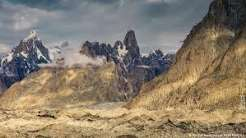
Rapid warming in fragile mountain ecosystems is no longer a distant environmental concern. It is changing how people farm, herd animals, travel, trade and preserve cultural traditions in some of the world’s highest communities. Discussions surrounding the 81st United Nations General Assembly have brought renewed attention to the human consequences of climate change in mountain regions, where melting glaciers, shifting snowfall, unstable slopes and changing water patterns are placing pressure on indigenous livelihoods and regional economies.
Mountain Communities Are Experiencing Climate Change Up Close
For people living at high elevations, climate change is often experienced through changes in ordinary routines rather than through abstract temperature statistics. A pasture may become drier at the wrong time of year. A familiar trail may become dangerous after a landslide. A river that once followed a predictable seasonal rhythm may rise earlier because snow and ice are melting differently.
The United Nations has repeatedly highlighted the close relationship between indigenous peoples and the ecosystems that support their food, income, culture and social structures. Indigenous communities in mountain regions have developed detailed knowledge of weather, plants, animals, water sources and seasonal movement over generations. When environmental patterns shift quickly, that knowledge can become harder to apply with the same reliability.
The challenge is particularly significant because mountain ecosystems are both environmentally sensitive and economically important. Mountains support agriculture, grazing, tourism, natural products and freshwater systems. The United Nations estimates that mountainous areas cover almost one third of the planet’s land surface and are home to about 1.1 billion people.
Glacier Loss Is Changing Water and Livelihood Security
Glaciers are among the clearest indicators of warming in high altitude environments. Their retreat affects far more than the appearance of mountain landscapes. Snow and ice provide water that supports farming, livestock, households and downstream communities.
When glaciers and seasonal snowpacks change, communities can experience a complicated sequence of risks. Increased melting can contribute to flooding and unstable water flows in the short term, while continued loss of stored ice can reduce water availability over longer periods. The consequences can extend well beyond the mountain valleys themselves.
The United Nations has reported that people living in high mountain regions depend on snow and glaciers for water, food security, transportation, livelihoods and cultural practices. Scientific assessments have also linked changing mountain cryosphere conditions with hazards including landslides and sudden flood events.
For families whose income depends on agriculture, even a small shift in the timing of water availability can affect planting and harvesting decisions. For livestock herders, changing pasture conditions can influence where animals can graze and when seasonal movement is possible.
Traditional Knowledge Faces a Changing Environment
One of the most overlooked consequences of climate change is the pressure it places on traditional environmental knowledge. Mountain communities have long relied on observations of clouds, snow, wind, plants, animal behavior and water conditions to make decisions about farming, herding and travel.
That knowledge remains valuable, but rapidly changing conditions can make historical patterns less dependable. A weather signal that once indicated a predictable seasonal change may no longer carry the same meaning. A frozen route that once provided safe winter access may become unstable because temperatures fluctuate more frequently.
The United Nations has documented how indigenous communities are among the first groups to experience direct consequences from environmental changes because of their close dependence on surrounding ecosystems. Its recent work on indigenous peoples and the climate crisis also highlights the role these communities can play in conservation, adaptation and ecosystem management.
We should therefore view indigenous knowledge as more than cultural heritage. It can also provide practical information for climate adaptation, especially when local observations are combined with modern weather forecasting, satellite monitoring and scientific research.
Regional Trade Routes Are Becoming More Vulnerable
Mountain trade routes connect remote communities with markets, health services and neighboring regions. In many areas, goods still move through narrow valleys and steep roads where transportation depends heavily on predictable weather and stable terrain.
Climate related hazards can disrupt these connections. Landslides can block roads, floods can damage bridges and sudden changes in snowfall can make passes difficult to cross. When transportation is interrupted, farmers may struggle to reach markets with fresh produce, while households may face higher prices for food, fuel and essential supplies.
The problem can become particularly serious in border regions where mountain routes support trade between several countries. The Hindu Kush Himalaya is one example of a region where environmental changes affect communities across national boundaries. United Nations development officials have previously highlighted biodiversity loss, increased glacier melting and less predictable water availability as shared challenges for countries across the region.
These disruptions are not limited to commercial activity. Mountain routes are also used by students, medical workers, seasonal laborers and families traveling between villages. A damaged road can therefore create social consequences that extend far beyond the immediate loss of trade.
Climate Pressure Is Also Reshaping Agriculture
Farming at high altitude has always required careful adaptation to short growing seasons and difficult terrain. Climate change is adding another layer of uncertainty.
Warmer conditions can alter growing seasons and create opportunities for some crops at higher elevations, but they can also increase exposure to pests, water shortages, extreme rainfall and soil degradation. A warmer climate does not automatically mean better agricultural conditions because mountain farming depends on the interaction between temperature, precipitation, soil, water availability and terrain.
Livestock systems face similar pressures. Pastoral communities depend on seasonal access to grasslands and reliable routes between grazing areas. When snow patterns change or pasture conditions deteriorate, families may have to purchase additional feed, move animals differently or seek alternative sources of income.
Women and Remote Households Carry Significant Pressure
Climate disruption can also affect households unevenly. When crops fail, livestock productivity falls or roads become inaccessible, women often take on additional responsibilities for food production, household income, water management and family care.
A 2026 United Nations story from northern Pakistan illustrates how climate adaptation can become closely connected with household livelihoods. In Upper Chitral, women affected by climate related disasters have used activities including beekeeping, vegetable production and handicrafts to rebuild income and strengthen household resilience.
Such examples show why adaptation policies need to consider income generation alongside physical infrastructure. A stronger road is useful, but communities also need reliable markets, training, financial access, agricultural support and disaster preparedness.
What Mountain Regions Need From Climate Policy
Climate adaptation in mountain areas cannot rely on a single solution. Communities need approaches that respond to local geography and cultural practices while also improving access to modern technology and public services.
Several priorities stand out:
- Better monitoring of glaciers, snow cover, rivers and landslide risks
- More reliable early warning systems for floods and other mountain hazards
- Climate resilient roads, bridges, irrigation systems and communications networks
- Support for indigenous participation in adaptation planning
- Protection of traditional knowledge and community based environmental management
- More diversified income opportunities for households dependent on climate sensitive livelihoods
International cooperation is particularly important because mountain ecosystems do not follow political borders. Water originating in one country can support communities in another. Trade routes can connect several economies. A landslide or flood in one valley can interrupt transportation far beyond the location where the disaster occurs.
Why Mountain Climate Action Matters Beyond the Mountains
The consequences of warming in high altitude regions reach far beyond people who live on mountain slopes. Mountains provide freshwater to large populations, influence river systems and support biodiversity. Their ecosystems are connected to agriculture, energy production, tourism and regional commerce.
The United Nations notes that mountains provide freshwater for a substantial share of humanity and support ecosystems with important biological diversity. Climate pressure in these regions can therefore create consequences for cities and agricultural areas located hundreds of miles away.
For readers seeking broader information about the global role of mountains and sustainable development, the United Nations provides extensive material on climate, indigenous peoples and mountain communities. The United Nations Environment Programme also provides research and policy information covering climate adaptation, ecosystems and environmental protection.
Adaptation Must Keep People at the Center
The discussion around mountain climate change ultimately comes back to people. A glacier is a physical system, but its disappearance can mean a different planting season for a farmer, a longer journey for a trader or a difficult decision for a family whose livestock depends on seasonal pasture.
Climate policy is most effective when these human realities are considered alongside scientific measurements. Communities need a meaningful role in deciding how adaptation money is spent, which infrastructure is prioritized and how traditional knowledge is incorporated into planning.
The message emerging from international climate discussions is therefore broader than a warning about warming peaks. Mountain communities are already adapting to a changing environment, but the speed and scale of current changes can exceed what local households can manage alone. Protecting livelihoods, trade routes, water systems and cultural traditions will require sustained investment and cooperation across communities and borders.
A Future for Mountain Communities Depends on Resilience
High altitude regions have always demanded resilience from the people who live there. Yet resilience should not be interpreted as an expectation that communities must simply endure worsening conditions. It should mean giving people the resources, infrastructure, information and political voice needed to shape their own future.
As the climate continues to warm, protecting mountain lifestyles will require both global action on emissions and practical adaptation on the ground. The experience of indigenous communities offers a valuable reminder that climate change is not only about changing temperatures. It is also about changing relationships between people, land, water, trade and culture.